Cybersecurity Threats 2026: AI Defenses for US Infrastructure
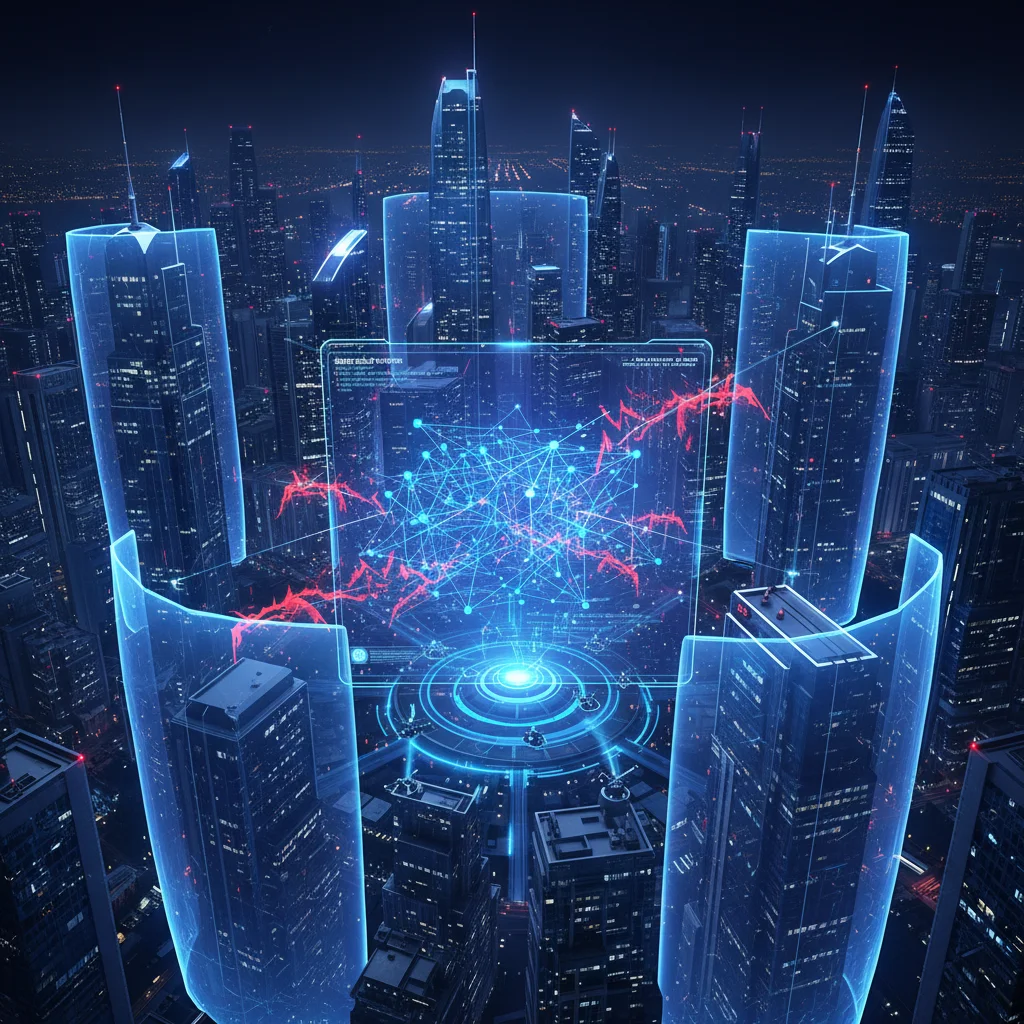
The year is 2026, and the digital landscape is more intricate, more interconnected, and undeniably more perilous than ever before. As global geopolitical tensions simmer and technological advancements accelerate, the cybersecurity threats facing US critical infrastructure have grown exponentially in sophistication and scale. Nation-state actors, sophisticated criminal organizations, and even rogue AI entities are constantly probing defenses, seeking vulnerabilities that could trigger catastrophic disruptions. From energy grids to financial networks, water treatment plants to transportation systems, the stakes could not be higher. The integrity of these systems is not just a matter of economic stability; it is a matter of national security and public safety. This necessitates a paradigm shift in defense strategies, moving beyond traditional, reactive measures to proactive, intelligent, and adaptive solutions.
Traditional cybersecurity approaches, while foundational, are increasingly proving insufficient against the polymorphic and rapidly evolving nature of modern cyberattacks. Signature-based detection, for instance, struggles against zero-day exploits and highly customized malware. Rule-based systems can be outmaneuvered by adversaries employing advanced evasion techniques. The sheer volume of data generated within complex operational technology (OT) and information technology (IT) environments makes manual analysis an impossible task. This is where Artificial Intelligence (AI) steps in, not as a silver bullet, but as an indispensable force multiplier. AI’s ability to process vast datasets, identify subtle patterns, predict future threats, and automate responses is transforming the battleground, offering a glimmer of hope in an otherwise daunting scenario. The integration of AI Cybersecurity Defenses is no longer a futuristic concept but a present-day imperative for securing the nation’s most vital assets.
The Escalating Threat Landscape for US Infrastructure in 2026
Before delving into the specifics of AI Cybersecurity Defenses, it’s crucial to understand the magnified threat landscape of 2026. The convergence of IT and OT systems has expanded the attack surface dramatically. Industrial control systems (ICS) and supervisory control and data acquisition (SCADA) systems, once isolated, are now often connected to broader corporate networks, making them accessible to external threats. The rise of the Internet of Things (IoT) and Industrial Internet of Things (IIoT) further complicates this, introducing a myriad of new endpoints, many with inherent security vulnerabilities that are difficult to patch or monitor effectively. Furthermore, the sophistication of attack methodologies has reached unprecedented levels.
Advanced Persistent Threats (APTs)
APTs remain a primary concern, characterized by long-term campaigns against specific targets, often by state-sponsored groups. These attacks are highly stealthy, using custom malware, social engineering, and supply chain compromises to establish persistent footholds within critical infrastructure networks. Their goal is not just disruption but often espionage, data exfiltration, or the laying of groundwork for future coercive actions. Detecting APTs requires deep behavioral analysis and the ability to correlate seemingly disparate events over extended periods, an area where AI Cybersecurity Defenses excel.
Ransomware 2.0 and Extortionware
Ransomware has evolved beyond simple file encryption. In 2026, we are witnessing Ransomware 2.0, where attackers exfiltrate sensitive data before encryption, threatening to leak it if the ransom isn’t paid. This double extortion tactic significantly increases pressure on organizations, including critical infrastructure operators. Furthermore, extortionware now targets operational disruption directly, demanding payment to prevent outages or restore services. The rapid propagation and evasive techniques of these threats necessitate real-time, AI-driven detection and isolation capabilities to prevent widespread impact.
Supply Chain Attacks
The SolarWinds incident was a stark reminder of the devastating potential of supply chain attacks. In 2026, these attacks are even more prevalent and sophisticated. Adversaries compromise software updates, hardware components, or third-party service providers to gain access to target networks. Identifying malicious code injected deep within legitimate software or hardware requires advanced static and dynamic analysis, often augmented by machine learning to detect anomalies in code behavior and provenance. Ensuring the integrity of the supply chain is a monumental task that increasingly relies on intelligent automation provided by AI Cybersecurity Defenses.
AI-Powered Attacks and Counter-AI
Perhaps the most concerning development is the advent of AI-powered attacks. Adversaries are now using AI to automate reconnaissance, develop polymorphic malware, craft highly convincing phishing campaigns, and even discover zero-day vulnerabilities more rapidly. This creates an ‘AI vs. AI’ arms race. To effectively counter these threats, defensive systems must also leverage AI, operating at machine speed and scale to detect, analyze, and respond to threats that are too fast and complex for human defenders alone. This necessitates robust AI Cybersecurity Defenses to maintain a competitive edge.
Top 7 AI-Powered Defenses for US Infrastructure in 2026 (Insider Knowledge)
The strategic imperative is clear: embrace advanced AI Cybersecurity Defenses. Here are the top 7 AI-powered defenses being deployed and developed to protect US critical infrastructure in 2026, offering an insider’s perspective on where the cutting edge truly lies.
1. Predictive Threat Intelligence and Behavioral Analytics
Gone are the days of purely reactive threat intelligence. In 2026, AI-driven predictive threat intelligence platforms analyze vast quantities of global cyber activity data, dark web forums, geopolitical shifts, and even social media trends to forecast potential attack vectors and adversary intentions. Machine learning models identify emerging attack patterns, correlate indicators of compromise (IOCs) across diverse sources, and generate actionable intelligence before an attack even materializes. Behavioral analytics, powered by unsupervised learning, establishes baselines of normal network and user behavior within critical infrastructure environments. Any deviation from these baselines, no matter how subtle, triggers alerts. This allows for the early detection of insider threats, compromised accounts, and lateral movement by attackers before they can achieve their objectives. For example, an AI might detect an unusual login time combined with an attempt to access a sensitive SCADA system, flagging it as suspicious even if individual actions appear benign. This proactive stance is a cornerstone of modern AI Cybersecurity Defenses.
2. Autonomous Endpoint Detection and Response (EDR) with AI
Endpoints – servers, workstations, IoT devices, and OT controllers – are often the initial point of compromise. Traditional EDR solutions have been instrumental, but in 2026, autonomous EDR, augmented by AI, takes protection to the next level. These systems use AI to continuously monitor endpoint activity, including process execution, file access, network connections, and memory usage. They can automatically detect and respond to threats in real-time, without human intervention. This includes isolating infected endpoints, terminating malicious processes, rolling back unauthorized changes, and even generating incident reports. The autonomous nature of these AI Cybersecurity Defenses is crucial for critical infrastructure where rapid response times are paramount and manual intervention might be too slow or impractical.
3. AI-Enhanced Network Traffic Analysis (NTA) and Micro-segmentation
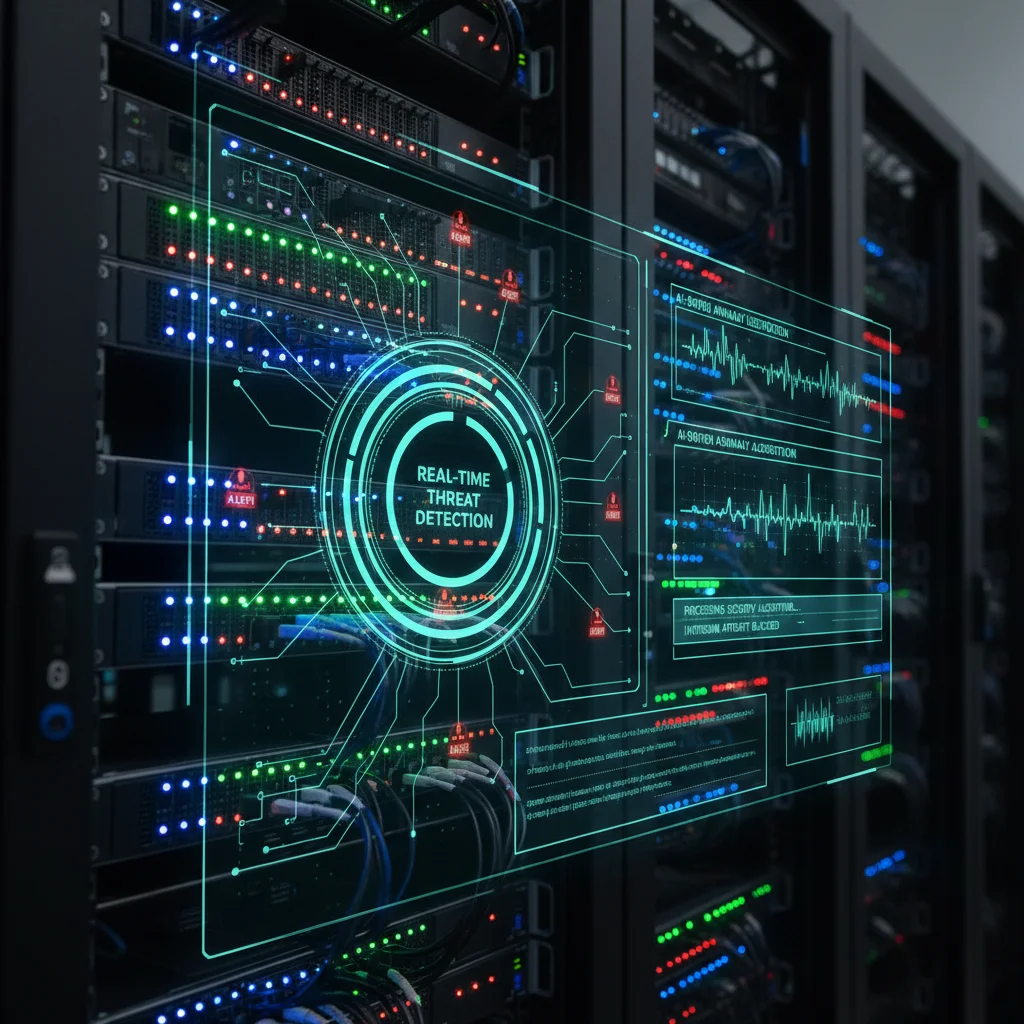
Network traffic is a rich source of intelligence, but its sheer volume makes manual analysis impossible. AI-enhanced NTA solutions employ deep learning to analyze network flows, packet contents, and protocol behaviors to detect anomalies that signify malicious activity. This includes identifying command-and-control (C2) communications, data exfiltration attempts, and lateral movement within segmented networks. Coupled with AI-driven micro-segmentation, these AI Cybersecurity Defenses create highly granular network zones, limiting the blast radius of any successful breach. AI dynamically adjusts segmentation policies based on real-time threat intelligence and behavioral analysis, ensuring that only necessary communications are permitted between critical assets.
4. AI-Powered Vulnerability Management and Patch Orchestration
Managing vulnerabilities across vast and complex critical infrastructure environments is a continuous challenge. AI-powered vulnerability management platforms prioritize patching efforts by assessing the exploitability of vulnerabilities in the context of an organization’s specific threat landscape and asset criticality. They leverage machine learning to predict which vulnerabilities are most likely to be exploited, allowing security teams to focus resources effectively. Furthermore, AI is increasingly being used to orchestrate patch deployment, identifying optimal times to apply updates to minimize disruption to operational systems, and even testing patches in simulated environments before widespread deployment. This intelligent approach to vulnerability management significantly strengthens overall AI Cybersecurity Defenses.
5. Quantum-Resistant Cryptography Development and AI Validation
While not a direct defensive measure against current threats, the development of quantum-resistant cryptography is a critical long-term strategy. In 2026, the threat of quantum computers breaking current encryption standards is a tangible concern for sensitive data and communications within critical infrastructure. AI plays a crucial role in accelerating the research and development of post-quantum cryptographic algorithms, analyzing their mathematical robustness, and validating their implementation against known and potential future attack vectors. AI is also used to identify and prioritize which critical infrastructure systems and data require early migration to quantum-resistant standards, ensuring future proofing of these vital assets. This forward-looking aspect of AI Cybersecurity Defenses is essential for national resilience.
6. AI for Deception Technologies and Honeypots
Deception technologies create artificial lures and honeypots within a network to detect, deflect, and learn from attackers. AI significantly enhances these systems. AI-powered deception platforms can dynamically generate realistic-looking fake credentials, sensitive data, and system configurations that mimic legitimate assets. When an attacker interacts with these decoys, AI immediately detects the intrusion, analyzes the attacker’s tactics, techniques, and procedures (TTPs), and provides valuable threat intelligence. This allows security teams to understand adversary motives and methods without risking real operational systems. The adaptive nature of AI in creating and managing these deceptive environments makes them incredibly effective components of AI Cybersecurity Defenses.
7. Collaborative AI for Threat Sharing and Collective Defense
The concept of collective defense is gaining significant traction. In 2026, federated learning and other collaborative AI models enable critical infrastructure sectors to share anonymized threat intelligence and attack patterns without compromising sensitive operational data. AI algorithms can learn from the collective experiences of multiple organizations, identifying widespread campaigns and emerging threats more rapidly than any single entity could. This creates a powerful network effect, where each participant contributes to and benefits from a continuously improving global threat picture. This collaborative approach, facilitated by advanced AI Cybersecurity Defenses, is vital for building a resilient national cybersecurity posture, allowing for proactive defense against coordinated attacks.
Challenges and Considerations for Implementing AI Cybersecurity Defenses
While the benefits of AI Cybersecurity Defenses are undeniable, their implementation in critical infrastructure comes with its own set of challenges that require careful consideration. Insider knowledge reveals that these are not merely technological hurdles but also involve policy, ethics, and human factors.
Data Quality and Volume
AI models are only as good as the data they are trained on. Critical infrastructure environments generate immense volumes of data, but ensuring its quality, completeness, and relevance for training AI models is a significant undertaking. Inaccurate or biased data can lead to false positives or, worse, blind spots that attackers can exploit. The challenge lies in curating, cleansing, and labeling vast datasets from diverse operational systems, often with proprietary protocols and legacy equipment.
Explainability and Trust
The ‘black box’ nature of some advanced AI models can be a barrier to adoption in critical infrastructure, where trust and explainability are paramount. Operators need to understand why an AI system made a particular decision, especially when it involves potentially disruptive actions like isolating a system or blocking critical communications. Developing explainable AI (XAI) models that provide transparent insights into their decision-making processes is an ongoing area of research and critical for building confidence in AI Cybersecurity Defenses.
Adversarial AI Attacks
Just as AI is used for defense, it can also be used for offense. Adversaries can employ adversarial AI techniques to trick or manipulate defensive AI models. This includes data poisoning (feeding malicious data to corrupt training sets) or adversarial examples (subtly altering input data to evade detection). Developing robust and resilient AI models that can withstand these sophisticated attacks is a continuous arms race and a key challenge for maintaining effective AI Cybersecurity Defenses.
Integration with Legacy Systems
Many critical infrastructure systems rely on decades-old operational technology (OT) that was not designed with cybersecurity in mind. Integrating modern AI-powered security solutions with these legacy systems, often without disrupting ongoing operations, presents significant technical and logistical challenges. Creating secure interfaces and ensuring compatibility without introducing new vulnerabilities requires specialized expertise and careful planning.
Regulatory and Ethical Frameworks
The deployment of autonomous AI Cybersecurity Defenses raises important regulatory and ethical questions. Who is accountable if an AI system makes an erroneous decision that leads to a service disruption or, in extreme cases, physical harm? Establishing clear legal and ethical frameworks, along with robust governance structures, is essential to guide the responsible development and deployment of AI in these sensitive sectors. This includes defining levels of human oversight and intervention.

The Future of Cybersecurity: Human-AI Teaming
Ultimately, the future of securing US critical infrastructure against sophisticated threats lies not in replacing humans with AI, but in fostering effective human-AI teaming. AI excels at processing vast amounts of data, identifying subtle patterns, and executing rapid, high-volume tasks. Humans bring critical thinking, contextual understanding, ethical judgment, and the ability to adapt to truly novel situations that even the most advanced AI hasn’t been trained for. The most effective AI Cybersecurity Defenses will be those that empower human analysts and operators, augmenting their capabilities rather than supplanting them.
This means designing AI systems that are intuitive to use, provide clear and actionable insights, and allow for human override when necessary. Training programs will need to evolve to equip cybersecurity professionals with the skills to effectively interact with and manage AI tools, transforming their roles from manual data analysis to strategic oversight and incident response orchestration. The synergy between human ingenuity and AI’s processing power will be the defining characteristic of successful critical infrastructure defense in 2026 and beyond.
Conclusion: Securing Tomorrow with AI Cybersecurity Defenses
As we navigate the complex and dangerous waters of the 2026 cybersecurity landscape, the protection of US critical infrastructure stands as a paramount concern. The evolving nature of threats, from advanced persistent threats and sophisticated ransomware to AI-powered attacks, demands a robust, intelligent, and adaptive defense. The top 7 AI-powered defenses discussed herein – predictive threat intelligence, autonomous EDR, AI-enhanced NTA, AI-powered vulnerability management, quantum-resistant cryptography validation, AI for deception technologies, and collaborative AI for threat sharing – represent the vanguard of this protection. These AI Cybersecurity Defenses are not just technological advancements; they are strategic imperatives for national security.
However, the journey is not without its challenges. Addressing issues of data quality, AI explainability, adversarial AI, integration with legacy systems, and the development of sound regulatory and ethical frameworks will be crucial for the successful and responsible deployment of these powerful tools. The ultimate success will hinge on a symbiotic relationship between advanced AI systems and skilled human professionals, working in concert to safeguard the foundational elements of our society. By embracing these cutting-edge AI Cybersecurity Defenses, the US can build a resilient digital fortress, capable of withstanding the most severe cyber assaults and ensuring the continued stability and prosperity of the nation.