AI’s Impact on Human Connection: 2026 Forecast & Ethical Considerations

The Impact of AI on Human Connection: A 2026 Forecast of Social Interaction Shifts and Ethical Considerations
In an era defined by rapid technological advancement, Artificial Intelligence (AI) has emerged as a transformative force, reshaping industries, economies, and our daily lives in ways previously unimaginable. As we look towards 2026, the discussion around AI’s influence extends far beyond mere efficiency or automation; it delves deep into the very fabric of human existence, particularly concerning AI human connection. The profound shifts in social interaction, the rise of AI companions, and the intricate ethical dilemmas these developments present are not just theoretical constructs but imminent realities that demand our collective attention and foresight.
The concept of AI human connection might sound like a paradox to some. Traditionally, human connection has been characterized by empathy, shared experiences, non-verbal cues, and the nuanced complexities of emotional intelligence – attributes often considered uniquely human. Yet, AI is increasingly demonstrating capabilities that mimic, facilitate, and even challenge these traditional notions. From sophisticated chatbots that offer emotional support to virtual reality platforms that enable immersive social experiences, AI is already an undeniable presence in our relational landscape. The question is no longer if AI will impact human connection, but how deeply and in what unforeseen directions these interactions will evolve by 2026.
This article aims to provide an insider’s knowledge and a comprehensive forecast of the evolving dynamics between AI and human connection. We will explore the burgeoning trends, the potential benefits, the inherent risks, and the crucial ethical considerations that must guide our progress. Understanding these shifts is paramount for individuals, societies, and policymakers alike to navigate this new frontier responsibly and harness AI’s potential while safeguarding the essence of human relationships.
The Shifting Landscape of Social Interaction: 2026 and Beyond
By 2026, the landscape of social interaction will likely be significantly altered by the pervasive integration of AI. We are moving beyond simple chatbots to highly sophisticated AI entities capable of nuanced conversation, emotional recognition, and even proactive social engagement. These advancements will manifest in several key areas, redefining how we connect with others and ourselves.
AI as Social Facilitators and Connectors
One of the most immediate impacts of AI on human connection will be its role as a social facilitator. AI-powered platforms are becoming increasingly adept at identifying common interests, suggesting social activities, and even translating languages in real-time, bridging geographical and cultural divides. Imagine AI applications that not only recommend a restaurant but also suggest conversation starters based on your dining companion’s known interests, or AI assistants that help individuals with social anxieties practice interactions in a safe, simulated environment. By 2026, these tools will be more commonplace, making it easier for people to initiate and maintain connections, particularly in an increasingly globalized and digitally mediated world.
Furthermore, AI will play a crucial role in managing our digital social lives. Tools that summarize lengthy group chats, filter out irrelevant information, and highlight important messages will become indispensable, allowing us to engage more effectively without feeling overwhelmed. This efficiency, while seemingly minor, can significantly reduce digital fatigue and free up mental space for more meaningful interactions, both online and offline. The goal here is not to replace human effort but to augment it, making social navigation smoother and more accessible for everyone.
The Rise of AI Companions and Emotional Support Systems
Perhaps the most profound shift in AI human connection will be the proliferation of AI companions. These are not merely sophisticated algorithms but entities designed to offer emotional support, companionship, and even intellectual stimulation. Projects like Replika, already in existence, provide a glimpse into this future. By 2026, these AI companions will be far more advanced, capable of learning individual preferences, adapting their personalities, and engaging in conversations that feel genuinely empathetic and supportive.
For individuals facing loneliness, social isolation, or specific mental health challenges, AI companions could offer a valuable resource. They can provide a non-judgmental space for expression, help process emotions, and offer consistent interaction that human relationships sometimes cannot. This is particularly relevant for elderly populations, individuals with chronic illnesses, or those who live in remote areas, where human contact might be limited. The ability of AI to provide constant, personalized attention could significantly improve mental well-being for many, bridging gaps in human support systems.
Navigating the Blurring Lines: AI in Romantic and Familial Relationships
The implications of AI companions extend beyond platonic friendships. By 2026, we might see the emergence of more sophisticated AI designed to simulate romantic partners or even familial figures. While this concept raises significant ethical questions, the demand for such companionship could grow, especially in societies experiencing declining birth rates or increasing social atomization. Imagine AI entities that can engage in shared hobbies, offer personalized affection, and even evolve their ‘personalities’ over time, creating a semblance of a developing relationship.
This blurring of lines between human and artificial relationships will force us to confront fundamental questions about the nature of love, intimacy, and connection. What does it mean to form a bond with an entity that doesn’t genuinely feel emotions? How will these relationships impact our expectations for human partners? These are not easy questions, and the answers will likely be complex and varied across different cultures and individual experiences. The impact on AI human connection in this domain will be one of the most debated and fascinating areas of study.
Ethical Considerations and Societal Implications of AI in Human Connection
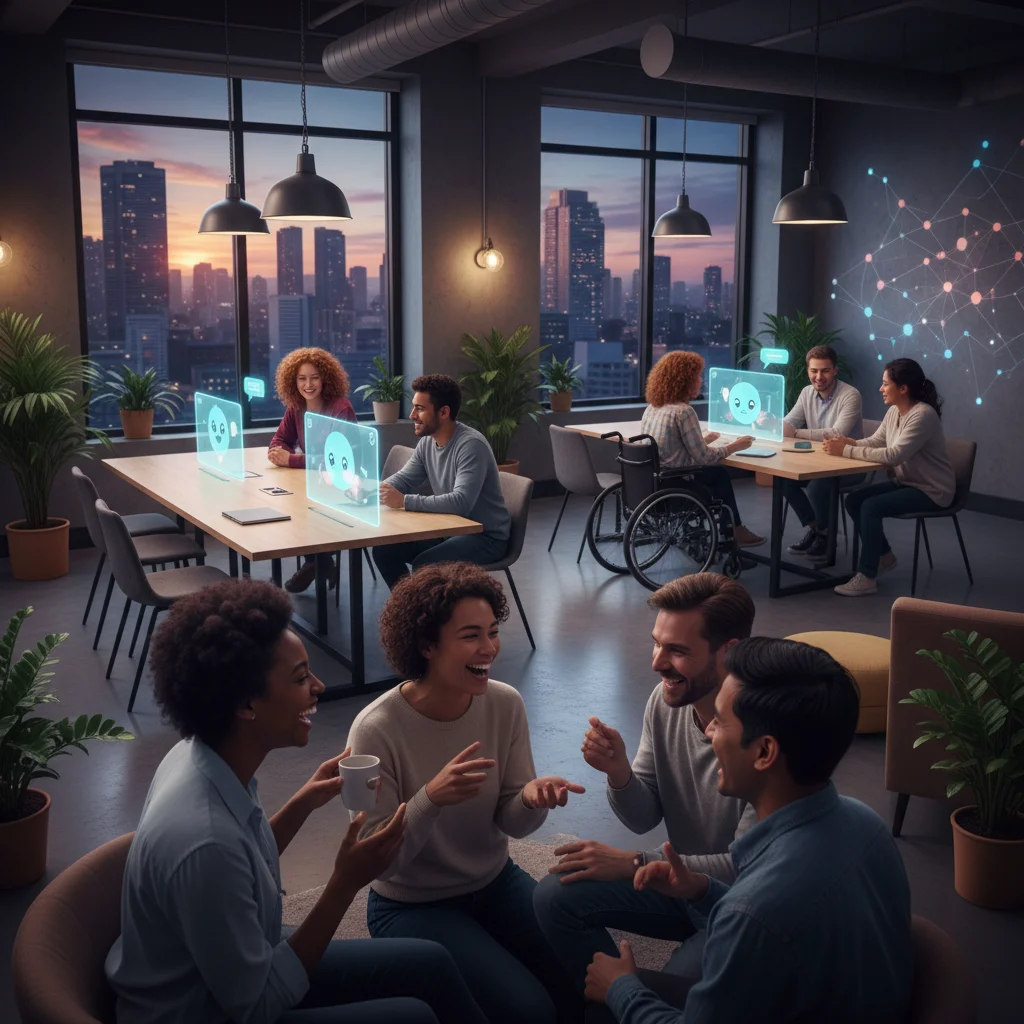
As AI’s role in human connection expands, so too do the ethical considerations and societal implications. Navigating this new territory requires careful thought, proactive policy-making, and a deep understanding of human psychology.
The Risk of Diminished Human-to-Human Interaction
One of the primary concerns is that an over-reliance on AI for social and emotional needs could lead to a decline in genuine human-to-human interaction. If AI companions become too effective at fulfilling our need for connection, will we still invest the time and effort required for complex, often challenging, human relationships? The nuances of human interaction – the empathy, the vulnerability, the shared struggles – are crucial for developing deep, resilient bonds. If AI offers a frictionless alternative, there’s a risk that individuals might opt for the path of least resistance, potentially leading to social atrophy and a weakening of community ties.
Furthermore, the development of social skills is often a product of navigating real-world interactions, including conflict resolution, understanding subtle social cues, and managing expectations. If AI mediates too much of our social experience, these vital skills might not be adequately developed, hindering our ability to form and maintain strong connections in the physical world. This is a critical aspect of AI human connection that needs constant monitoring.
Privacy, Data Security, and Manipulation
AI companions and social facilitators collect vast amounts of personal data, including our preferences, emotional states, communication patterns, and even our most intimate thoughts. This raises significant concerns about privacy and data security. Who owns this data? How is it protected from misuse? The potential for this data to be exploited for targeted advertising, psychological manipulation, or even surveillance is a serious ethical challenge. Companies developing these AI systems must adhere to the highest standards of data protection and transparency, and robust regulatory frameworks will be essential to prevent abuse.
Another concern is the potential for AI to manipulate human emotions and behaviors. If an AI is designed to be highly persuasive or to elicit specific emotional responses, it could be used for nefarious purposes, from influencing consumer choices to shaping political opinions. The ethical design of AI, prioritizing user well-being over engagement metrics, will be crucial to mitigate these risks. We must ensure that AI serves humanity, rather than the other way around.
Authenticity and the Nature of Connection
The fundamental question of authenticity lies at the heart of the debate surrounding AI human connection. Can a relationship with an AI, no matter how sophisticated, be considered truly authentic? If an AI simulates empathy without genuinely feeling it, are we engaging in a form of self-deception? These philosophical questions have practical implications for our understanding of ourselves and our relationships.
While AI can provide comfort and support, it cannot replicate the unique, reciprocal nature of human relationships, which are built on shared consciousness, genuine vulnerability, and the unpredictable beauty of another human being’s subjective experience. Distinguishing between genuine human connection and AI-mediated interaction will become increasingly important, and society will need to establish clear norms and expectations around these different forms of relationship.
Mitigating Risks and Fostering Positive AI Human Connection
Despite the challenges, the potential for AI to enhance human connection is immense. The key lies in strategic development, ethical design, and informed societal adoption. By 2026, we need to have robust frameworks in place to guide this evolution.
Promoting Digital Literacy and Critical Thinking
As AI becomes more integrated into our social lives, digital literacy will be paramount. Individuals need to understand how AI systems work, their capabilities, and their limitations. Critical thinking skills will be essential to discern between authentic human interaction and AI-generated content, to question the information presented by AI, and to make informed decisions about how and when to engage with AI companions. Educational initiatives, starting from a young age, will be crucial in preparing future generations for this AI-infused social landscape.
Ethical AI Design and Regulation
The responsibility for ethical AI human connection extends to developers and policymakers. AI systems designed for social interaction must be built with ethical principles at their core, prioritizing user well-being, transparency, and accountability. This includes:
- Transparency: Users should always be aware when they are interacting with an AI, not a human.
- Bias Mitigation: AI algorithms must be rigorously tested and continuously monitored to prevent the perpetuation or amplification of societal biases.
- User Control: Individuals should have significant control over their data and their interactions with AI, including the ability to opt-out or customize their experience.
- Safety and Security: Robust measures must be in place to protect user data and prevent AI systems from being exploited for harmful purposes.
Governments and international bodies will need to develop comprehensive regulatory frameworks that address these issues, ensuring that AI development aligns with societal values and protects fundamental human rights. This proactive approach is vital to prevent unintended negative consequences and foster a beneficial future for AI human connection.
Integrating AI as a Complement, Not a Replacement
The most beneficial path forward for AI’s impact on human connection is to view AI as a complement to, rather than a replacement for, human interaction. AI can enhance our social lives by facilitating connections, providing support, and freeing up time. However, it should not be seen as a substitute for the rich, complex, and deeply human experience of connecting with other people.
Encouraging a balanced approach, where individuals consciously choose to engage in both AI-mediated and human-to-human interactions, will be key. This could involve promoting offline social activities, fostering community engagement, and emphasizing the unique value of human empathy and shared experiences. The goal is to leverage AI’s strengths to enrich our social lives, while simultaneously preserving and strengthening the core of human connection.
Case Studies and Emerging Trends by 2026
By 2026, we can expect several specific trends and case studies to illustrate the evolving nature of AI human connection:
Personalized Mental Health Support
AI-powered mental health applications will become more sophisticated, offering personalized therapy, mindfulness exercises, and emotional coaching. These tools will not replace human therapists but will serve as accessible, affordable, and immediate resources for millions, particularly in regions with limited access to mental health professionals. AI will analyze speech patterns, facial expressions (via camera access, with consent), and text inputs to understand emotional states and provide tailored interventions, significantly impacting global mental well-being.
Enhanced Remote Work and Virtual Collaboration
The post-pandemic world has normalized remote work, and AI will continue to enhance virtual collaboration. By 2026, AI will power more immersive virtual meeting environments, complete with realistic avatars, real-time emotion detection to gauge participant engagement, and AI facilitators that summarize discussions and assign tasks. This will make remote interactions feel more ‘human’ and productive, bridging the gap created by physical distance and fostering stronger professional connections.
AI-Driven Educational Social Platforms
Educational platforms will leverage AI to create more engaging and socially interactive learning environments. AI tutors will not only provide academic assistance but also facilitate peer-to-peer learning, connect students with similar interests, and even identify social isolation among learners, prompting human intervention where necessary. This will foster a sense of community within online education, strengthening student-to-student and student-to-mentor connections.
AI in Elder Care and Support
AI will revolutionize elder care by providing companionship, monitoring health, and facilitating communication with family members. Smart home devices integrated with AI will offer proactive assistance, remind seniors of appointments, and provide engaging conversational interactions, reducing feelings of loneliness and enhancing their quality of life. These systems will also alert human caregivers to potential issues, creating a robust support network.
Preparing for the Future: A Call to Action
The forecast for AI’s impact on human connection by 2026 is one of profound transformation, characterized by both immense opportunity and significant challenge. As we stand at the precipice of this new era, it is imperative that we approach AI development and integration with thoughtfulness, responsibility, and a deep commitment to human flourishing.
For individuals, the call to action is to cultivate digital literacy, practice critical thinking, and prioritize genuine human interactions. Consciously seeking out and nurturing real-world relationships, while leveraging AI as a tool for enhancement, will be key to maintaining a balanced and fulfilling social life.
For technologists and developers, the mandate is clear: build AI systems ethically, with transparency, accountability, and user well-being at the forefront. Prioritize human values over engagement metrics, and design AI that empowers, rather than diminishes, human agency and connection.
For policymakers and regulators, the task is to establish robust frameworks that protect privacy, prevent manipulation, and ensure equitable access to AI’s benefits. Proactive legislation, international collaboration, and continuous adaptation to technological advancements will be crucial for guiding the ethical evolution of AI in society.
The journey into an AI-augmented future of human connection is complex, but it is also filled with incredible potential. By understanding the shifts, addressing the ethical considerations, and fostering a collaborative approach, we can ensure that AI serves to enrich, rather than erode, the most fundamental aspect of our existence: our ability to connect with one another.
The future of AI human connection is not predetermined; it is being shaped by the choices we make today. Let us choose wisely, for a future where technology amplifies our humanity, strengthens our bonds, and creates a more connected, empathetic world for all.
Related Posts: