Robotics Automation 2026: Boosting US Business Efficiency by 20% – Financial Impact Analysis

Robotics Automation 2026: Boosting US Business Efficiency by 20% – Financial Impact Analysis
The landscape of American business is on the cusp of a profound transformation, driven by the relentless march of technological innovation. Among the most impactful of these advancements is robotics automation. By 2026, it’s not just a prediction but a strategic imperative for US businesses to leverage robotics automation to achieve significant efficiency gains. Industry experts and forward-thinking enterprises are eyeing a realistic and achievable target: a 20% boost in operational efficiency. This isn’t merely about doing things faster; it’s about fundamentally reshaping how businesses operate, leading to substantial financial benefits, enhanced competitiveness, and a redefined workforce.
The journey towards this 20% efficiency boost through robotics automation 2026 involves understanding current trends, anticipating future developments, and meticulously planning implementation. This article delves into the core aspects of this impending revolution, providing a comprehensive guide for US businesses looking to capitalize on the immense potential of robotics automation.
The Current State of Robotics Automation in the US
Before we project into 2026, it’s crucial to understand where we stand today. The US has been a significant adopter of robotics, particularly in manufacturing, logistics, and healthcare. However, the adoption rate and integration depth vary widely across sectors and company sizes. Large enterprises have historically led the charge, investing heavily in sophisticated automated systems. Small and medium-sized businesses (SMBs), while recognizing the benefits, have often faced hurdles related to initial investment costs, perceived complexity, and a lack of specialized expertise.
Current robotics automation primarily focuses on repetitive, high-volume tasks that are often dangerous or ergonomically challenging for human workers. This includes assembly line operations, material handling, welding, painting, and packaging. The rise of collaborative robots (cobots) has also begun to democratize automation, allowing robots to work alongside humans in shared workspaces, enhancing productivity without requiring extensive safety barriers.
Data from industry reports indicates a steady increase in robot installations in the US. The International Federation of Robotics (IFR) consistently highlights North America as a key market for industrial robots. This growth is fueled by factors such as labor shortages, the need for increased productivity to remain competitive globally, and advancements in robotic capabilities that make them more versatile and cost-effective. However, the full potential of robotics automation is far from realized, setting the stage for significant expansion by 2026.
Why a 20% Efficiency Boost is Achievable by 2026
The target of a 20% efficiency boost through robotics automation 2026 is ambitious but entirely within reach for several compelling reasons:
- Technological Maturation: Robotics technology is evolving at an unprecedented pace. Advances in artificial intelligence (AI), machine learning (ML), computer vision, and sensor technology are making robots more intelligent, adaptable, and capable of handling complex tasks that were once exclusively human domains. This maturation reduces deployment time and increases the scope of automation.
- Decreasing Costs: While initial investments can be substantial, the overall cost of robotics hardware and software is trending downwards. Manufacturers are offering more affordable and modular solutions, making automation accessible to a broader range of businesses, including SMBs. The return on investment (ROI) periods are also shortening as efficiency gains become more pronounced.
- Increased Accessibility and Ease of Use: Modern robots are designed with user-friendliness in mind. Intuitive programming interfaces, drag-and-drop functionalities, and simplified integration processes are lowering the barrier to entry for businesses without dedicated robotics engineers.
- Growing Ecosystem of Support: The robotics industry is supported by a robust ecosystem of integrators, consultants, and training providers. This network helps businesses identify suitable automation solutions, implement them effectively, and train their workforce to manage and maintain the new systems.
- Competitive Pressure: Global and domestic competition necessitates continuous improvement in productivity and cost-effectiveness. Businesses that fail to adopt advanced automation risk falling behind competitors who embrace robotics automation to optimize their operations.
- Labor Market Dynamics: Persistent labor shortages in various sectors, coupled with rising labor costs, make robotics an increasingly attractive solution for maintaining production levels and enhancing operational resilience.
Key Areas for Robotics Automation 2026 Impact
The 20% efficiency boost will not come from a single silver bullet but from strategic applications of robotics automation across various business functions. Here are the key areas where robotics are poised to make the most significant impact:
Manufacturing and Production
This sector remains the vanguard of robotics adoption. By 2026, we’ll see an expansion beyond traditional heavy industry into more intricate and customized manufacturing. Advanced robots will handle precision assembly, quality inspection with greater accuracy, and even personalized production runs. The integration of robots with IoT (Internet of Things) and cloud computing will enable predictive maintenance, reducing downtime and further optimizing production schedules. This leads to higher throughput, fewer errors, and reduced waste, directly contributing to the 20% efficiency goal.
Logistics and Supply Chain Management
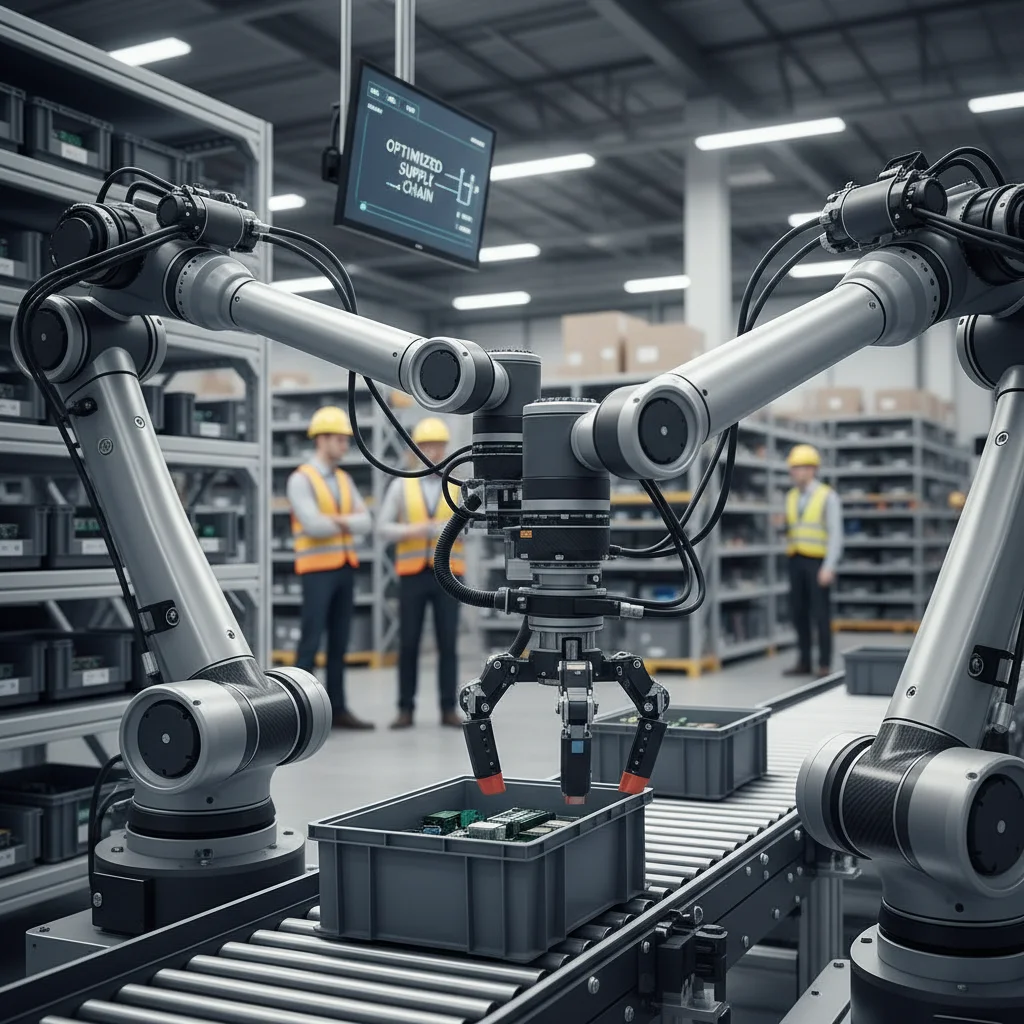
Warehouses and distribution centers are already heavily automated, but the next few years will bring even greater sophistication. Autonomous mobile robots (AMRs) for material transport, automated storage and retrieval systems (AS/RS), and robotic picking solutions will become more prevalent. These technologies address the growing demands of e-commerce, enabling faster order fulfillment, improved inventory accuracy, and reduced labor costs associated with manual handling. The efficiency gains here are critical for meeting customer expectations for speed and reliability, directly impacting profitability.
Healthcare and Life Sciences
Robotics automation 2026 will revolutionize healthcare beyond surgical robots. We’ll see more widespread use of robots for dispensing medications, sterilizing equipment, assisting with patient monitoring, and automating laboratory tasks. These applications free up highly skilled medical professionals to focus on direct patient care, reduce the risk of human error, and enhance the overall efficiency of healthcare operations. The ability to automate repetitive lab processes can significantly accelerate research and development, particularly in drug discovery.
Retail and Hospitality
While less overtly robotic, automation is making inroads in these sectors. Inventory management robots, automated checkout systems, and even robotic kitchen assistants are improving operational efficiency. In hospitality, robots can assist with cleaning, food delivery, and concierge services, enhancing guest experience while reducing labor intensity for mundane tasks. The efficiency here translates to better customer service and optimized staffing.
Agriculture
Agricultural robotics is a rapidly expanding field. Autonomous tractors, drones for crop monitoring, and robotic harvesters are addressing labor shortages and improving yields. Precision agriculture, powered by robotics and AI, can optimize resource use (water, fertilizers), leading to significant cost savings and environmental benefits. The efficiency gains in this sector are vital for food security and sustainable practices.
Financial Impact of a 20% Efficiency Boost
Achieving a 20% efficiency boost through robotics automation 2026 translates directly into substantial financial benefits for US businesses. This isn’t just about cutting costs; it’s about increasing revenue, improving asset utilization, and enhancing overall profitability.
- Cost Reduction:
- Labor Costs: Automation reduces the need for manual labor in repetitive tasks, leading to savings in wages, benefits, and recruitment.
- Operational Costs: Robots can operate 24/7 without fatigue, reducing overtime expenses and increasing throughput. They also often consume less energy per unit produced than human-intensive processes.
- Waste Reduction: Precision robotics minimizes errors, rework, and material waste, leading to direct savings in raw materials and disposal costs.
- Safety Costs: Automating dangerous tasks reduces workplace accidents, lowering insurance premiums, workers’ compensation claims, and legal liabilities.
- Increased Productivity and Throughput: A 20% efficiency gain means businesses can produce more goods or services with the same or fewer resources. This directly translates to higher sales volumes and increased market share.
- Improved Quality and Consistency: Robots perform tasks with high precision and repeatability, leading to consistent product quality, fewer defects, and enhanced customer satisfaction. This reduces warranty claims and builds brand reputation.
- Faster Time to Market: Automated processes can significantly accelerate product development and production cycles, allowing businesses to bring new products to market faster and respond more agilely to customer demands. This is a critical competitive advantage.
- Enhanced Competitiveness: Businesses that can produce more efficiently, with higher quality, and at a lower cost gain a significant edge over competitors. This allows for more aggressive pricing strategies or higher profit margins.
- Better Resource Utilization: Robotics automation helps optimize the use of capital equipment and floor space. Automated systems can operate in smaller footprints and maximize machine uptime.
- Resilience and Agility: Automated systems offer greater resilience to labor shortages, supply chain disruptions, and sudden shifts in market demand. Businesses can scale production up or down more easily.
Consider a manufacturing plant with an annual operating budget of $50 million. A 20% efficiency boost could translate to $10 million in direct savings or increased output value. For a logistics company, optimizing routing and picking with robotics might reduce operational costs by 15% while increasing delivery speed by 25%, leading to both cost savings and revenue growth through improved service.
Challenges and Mitigation Strategies
While the benefits are clear, achieving a 20% efficiency boost through robotics automation 2026 is not without its challenges. Proactive planning and mitigation strategies are essential.
Initial Investment Costs
Challenge: The upfront capital expenditure for purchasing and integrating robotic systems can be substantial, especially for complex setups. This is often the biggest hurdle for SMBs.
Mitigation:
- Phased Implementation: Start with smaller, less complex automation projects that offer quick ROI to build internal expertise and demonstrate value.
- Leasing and Robot-as-a-Service (RaaS): Explore financing options like leasing or RaaS models, which allow businesses to pay for robot usage as an operational expense rather than a large capital outlay.
- Government Incentives: Research federal and state government grants, tax credits, or subsidies designed to encourage automation and technological adoption.
- Focus on ROI: Conduct thorough cost-benefit analyses to clearly demonstrate the long-term financial benefits and justify the initial investment.
Workforce Displacement and Reskilling
Challenge: Automation often leads to concerns about job losses, requiring careful management of the human element.
Mitigation:
- Reskilling and Upskilling Programs: Invest in training programs to reskill employees for new roles that emerge with automation, such as robot operators, maintenance technicians, data analysts, or automation specialists.
- Human-Robot Collaboration: Design workflows where humans and robots collaborate, leveraging the strengths of each. Robots handle repetitive tasks, while humans focus on problem-solving, decision-making, and creative work.
- Change Management: Communicate openly and transparently with employees about the benefits of automation and how it will impact their roles, emphasizing opportunities for growth and skill development.
- New Job Creation: Highlight how automation often creates new, higher-skilled jobs within the organization.
Integration Complexity
Challenge: Integrating new robotic systems with existing legacy infrastructure, software, and operational processes can be complex and time-consuming.
Mitigation:
- Modular and Open Architectures: Opt for robotic systems with modular designs and open APIs (Application Programming Interfaces) that facilitate easier integration with existing systems.
- Expert Integrators: Partner with experienced robotics integrators who specialize in your industry and can manage the complexities of system integration.
- Pilot Projects: Conduct small-scale pilot projects to test integration capabilities and identify potential issues before a full-scale rollout.
- Standardization: Where possible, standardize data formats and communication protocols across different systems to streamline integration.
Maintenance and Technical Expertise
Challenge: Robotic systems require ongoing maintenance and specialized technical expertise to ensure optimal performance and minimize downtime.
Mitigation:
- Internal Training: Develop in-house expertise by training maintenance staff on robotics operation, troubleshooting, and repair.
- Service Contracts: Establish service and support contracts with robot manufacturers or integrators to ensure access to specialized technical assistance.
- Predictive Maintenance: Implement IoT-enabled predictive maintenance strategies to monitor robot health and anticipate potential failures, reducing unplanned downtime.
- Remote Monitoring: Utilize remote monitoring capabilities to diagnose and resolve issues efficiently.
Strategic Roadmap for Robotics Automation 2026
To successfully achieve a 20% efficiency boost, US businesses need a clear and actionable strategic roadmap for robotics automation 2026. This roadmap should encompass several key stages:
1. Assessment and Identification of Opportunities
Begin by conducting a thorough audit of current operations. Identify repetitive, labor-intensive, dangerous, or bottleneck-prone tasks. Prioritize areas where automation can yield the greatest impact on efficiency, quality, and cost reduction. Consider processes with high volume, low variability, and clear, measurable outcomes. Engage employees from all levels in this assessment, as they often have invaluable insights into operational inefficiencies.
2. Feasibility Study and ROI Analysis
For each identified opportunity, conduct a detailed feasibility study. This involves evaluating the technical viability of automation, assessing the availability of suitable robotic solutions, and performing a robust return on investment (ROI) analysis. The ROI should consider direct cost savings (labor, waste, energy), increased revenue from higher output, improved quality, and intangible benefits like enhanced safety and employee morale. This step ensures that investments are strategically sound and financially justifiable.
3. Pilot Project Implementation
Before a full-scale rollout, implement a pilot project in a controlled environment. This allows the business to test the chosen robotic solution, identify any integration challenges, refine operational procedures, and gather real-world data on performance and efficiency gains. A successful pilot project builds confidence, provides valuable lessons learned, and helps secure further buy-in from stakeholders.
4. Scaled Deployment and Integration
Based on the success and learnings from the pilot, proceed with scaled deployment. This involves integrating the robotic systems into the broader operational infrastructure. Ensure seamless data flow between robotic cells, enterprise resource planning (ERP) systems, manufacturing execution systems (MES), and other relevant platforms. This stage requires meticulous planning and coordination to minimize disruption to ongoing operations.
5. Workforce Training and Development
Simultaneously with deployment, invest heavily in training the workforce. This includes training operators, maintenance technicians, and even management on how to interact with, manage, and leverage the new automated systems. Emphasize upskilling and reskilling to prepare employees for new roles and responsibilities that emerge in an automated environment. Foster a culture of continuous learning and adaptation.
6. Performance Monitoring and Optimization
Post-implementation, continuously monitor the performance of the robotic systems. Track key metrics such as uptime, throughput, quality, and actual cost savings against projected figures. Use data analytics to identify areas for further optimization, fine-tune programming, and implement predictive maintenance strategies. Regular performance reviews ensure that the business continues to maximize the efficiency gains from its robotics automation investments.

The Future Beyond 2026: The AI-Powered Robotic Enterprise
While a 20% efficiency boost by 2026 is a significant milestone, the journey of robotics automation doesn’t end there. The future promises even deeper integration of AI, machine learning, and advanced sensor technologies, giving rise to truly intelligent and autonomous systems. Expect to see:
- Hyper-Personalization: Robots capable of adapting to individual customer preferences and producing highly customized products on demand.
- Swarm Robotics: Multiple robots working collaboratively and autonomously to complete complex tasks, dynamically reconfiguring their roles as needed.
- Self-Healing Systems: Robots and automated systems that can self-diagnose issues, order replacement parts, and even perform minor repairs without human intervention.
- Ethical AI and Robotics: Increased focus on developing ethical guidelines and regulatory frameworks for autonomous systems, ensuring responsible deployment.
- Robotics in New Frontiers: Expansion into sectors like urban infrastructure maintenance, environmental monitoring, and even space exploration, further broadening the scope of automation’s impact.
The continuous evolution of robotics automation will demand ongoing investment in research, development, and workforce adaptation. Businesses that embrace this continuous innovation will not only maintain their competitive edge but also redefine what’s possible in their respective industries.
Conclusion: Seizing the Robotics Automation Opportunity
The prospect of achieving a 20% efficiency boost through robotics automation 2026 is a tangible and transformative opportunity for US businesses. It’s a strategic imperative that promises not just cost savings but also enhanced productivity, superior quality, improved safety, and unparalleled agility in a dynamic global market. The financial implications are profound, offering a clear path to increased profitability and sustained growth.
However, realizing this potential requires a proactive, well-planned approach. Businesses must move beyond incremental improvements and embrace a holistic strategy that encompasses technological adoption, workforce development, and a culture of continuous innovation. By understanding the trends, addressing the challenges, and meticulously executing a strategic roadmap, US businesses can confidently navigate the future, harness the power of robotics automation, and secure a leading position in the global economy of tomorrow.
The time to act is now. The businesses that strategically invest in robotics automation today will be the ones that thrive and lead in 2026 and beyond, reshaping industries and setting new benchmarks for operational excellence.
Related Posts: