Social Media’s Political Impact 2026: Polarization & Engagement Analysis
This comprehensive analysis delves into social media's profound influence on American political discourse in 2026, examining its dual role in fostering engagement and exacerbating polarization, alongside the challenges of disinformation and the future of digital democracy.
By: Emilly Correa on January 28, 2026
Last updated on: July 28, 2026
The Digital Divide: Social Media’s Evolving Role in American Political Discourse in 2026
As we navigate the mid-2020s, the landscape of American political discourse continues to be reshaped by the pervasive influence of social media. In 2026, the platforms that once promised to democratize information and foster global connection have solidified their role as primary arenas for political debate, mobilization, and, controversially, division. The evolution of social media politics is a complex tapestry woven with threads of unprecedented engagement, alarming polarization, and the ever-present challenge of disinformation. This article delves into a comprehensive analysis of social media’s impact on political discourse in the United States in 2026, examining both its empowering potential and its formidable pitfalls.
The year 2026 finds us at a critical juncture. The novelty of social media as a political tool has long worn off, replaced by a more mature, albeit still volatile, understanding of its mechanisms and consequences. From presidential elections to local referendums, social media platforms are no longer just passive conduits for news; they are active participants, shaping narratives, influencing public opinion, and, in many ways, dictating the pace and tone of political conversation. Understanding this dynamic is not merely an academic exercise; it is crucial for safeguarding democratic processes and fostering a more informed and engaged citizenry.
The Dual Edges of Engagement: Mobilization vs. Manipulation
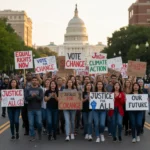
One of the most celebrated aspects of social media’s integration into politics has been its capacity for civic engagement and mobilization. In 2026, this remains a potent force. Grassroots movements find fertile ground on platforms like X (formerly Twitter), TikTok, and Instagram, allowing for rapid organization, information dissemination, and the amplification of marginalized voices. Political campaigns leverage these channels for direct voter outreach, fundraising, and real-time communication, often bypassing traditional media gatekeepers. The immediacy and widespread reach of these platforms mean that political events, policy debates, and social justice issues can quickly gain national, even international, traction.
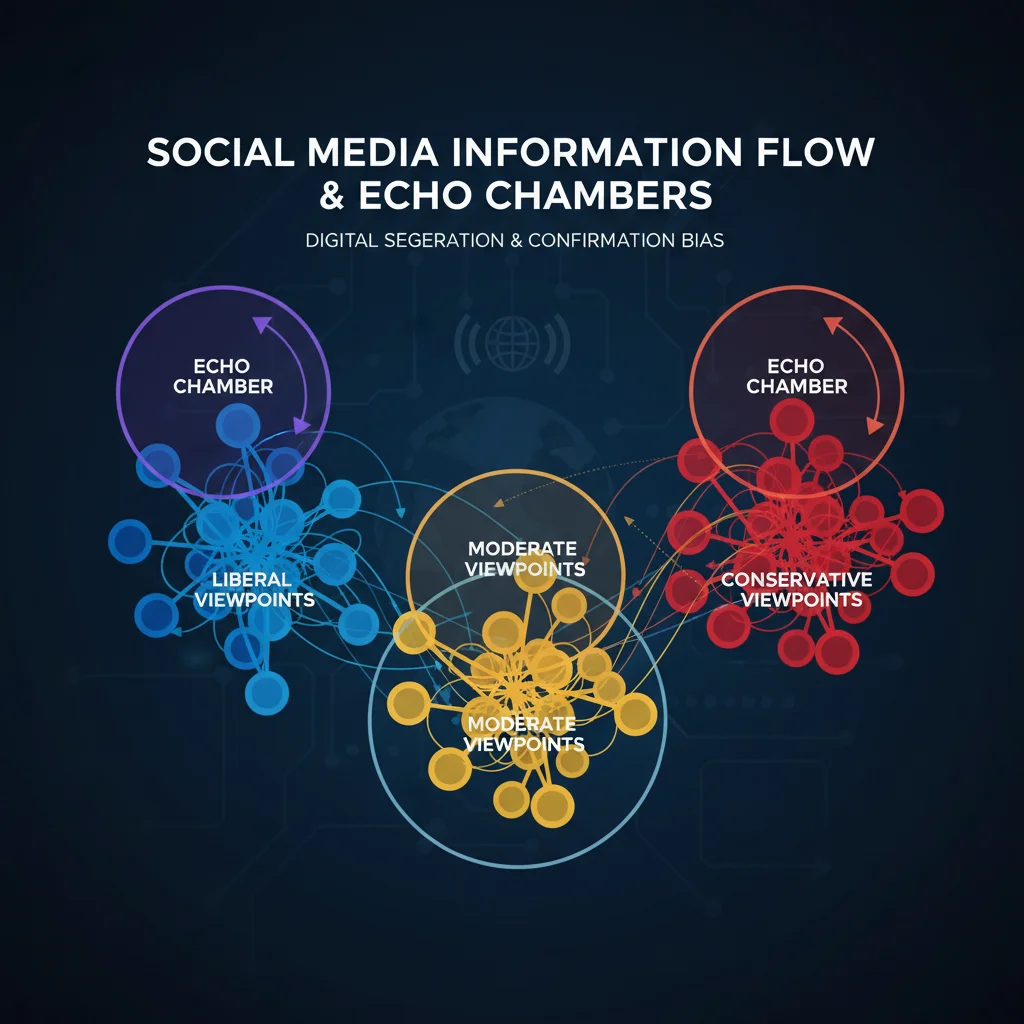
However, this same power for mobilization carries a darker potential for manipulation. The algorithms that personalize user feeds, designed to maximize engagement, inadvertently create echo chambers and filter bubbles. In 2026, these digital enclosures are more sophisticated than ever, often reinforcing existing biases and limiting exposure to diverse viewpoints. This algorithmic curation can be exploited by political actors, both domestic and foreign, to spread targeted disinformation, sow discord, and manipulate public sentiment. The line between genuine grassroots activism and coordinated influence operations has become increasingly blurred, making it challenging for the average user to discern authentic information from propaganda. The impact on social media politics is profound, as trust in online information erodes.
Polarization Amplified: The Echo Chamber Effect in 2026
The issue of political polarization, a long-standing concern in American society, has been significantly exacerbated by social media. In 2026, the echo chamber effect is not just a theoretical concept; it’s a lived reality for millions of Americans. Users are more likely to encounter content and opinions that align with their existing beliefs, leading to a reinforcement of those beliefs and a diminished capacity for empathy or understanding towards opposing viewpoints. This creates a feedback loop where individuals become increasingly entrenched in their ideological camps, viewing those outside as not just wrong, but often as morally corrupt or intellectually inferior.
The design of many social media platforms, prioritizing virality and engagement, often rewards content that is emotionally charged, sensational, or divisive. Nuance and complexity struggle to gain traction in an environment optimized for quick reactions and strong opinions. This dynamic incentivizes extreme rhetoric, as outrageous statements and inflammatory posts are more likely to be shared and discussed, further widening the chasm between political factions. The consequence for social media politics is a public sphere where compromise is increasingly difficult, and constructive dialogue is often drowned out by shouting matches.
The Role of Algorithms in Shaping Political Realities
At the heart of this polarization lies the opaque nature of social media algorithms. These complex systems, constantly learning and adapting, determine what content users see. While platforms claim these algorithms are designed to enhance user experience, their impact on political discourse is undeniable. In 2026, researchers continue to grapple with understanding the full extent of algorithmic bias and its role in fostering political segregation. For instance, if a user consistently engages with content from one political spectrum, the algorithm will prioritize similar content, effectively shielding them from alternative perspectives. This creates individualized political realities that can be vastly different from one another, making it harder to find common ground or agree on basic facts.
Furthermore, the algorithms can inadvertently promote misinformation. Content that generates high engagement, regardless of its accuracy, is often amplified. This means that a sensational but false claim can spread rapidly, reaching millions before it can be fact-checked or debunked. The speed at which information (and disinformation) travels on social media platforms in 2026 poses a significant challenge to traditional journalistic practices and public education efforts. The struggle to combat this ‘infodemic’ is a central theme in contemporary social media politics.
The Disinformation Deluge: A Persistent Threat
Disinformation, defined as intentionally false or misleading information spread to deceive, remains one of the most insidious threats to democratic processes facilitated by social media. In 2026, the methods for generating and disseminating disinformation have become increasingly sophisticated. Deepfakes, AI-generated text, and highly targeted propaganda campaigns are more prevalent and harder to detect. State-sponsored actors, political groups, and even individuals can leverage these tools to create convincing but entirely fabricated narratives that can sway public opinion, incite unrest, or undermine trust in institutions.
The challenge is compounded by the sheer volume of content. Fact-checking organizations, while vital, often struggle to keep pace with the rapid proliferation of false information. By the time a piece of disinformation is debunked, it may have already reached millions and influenced perceptions. This constant barrage of conflicting information leaves many users feeling overwhelmed, cynical, or simply unsure of what to believe, further eroding faith in both traditional media and political processes. The battle against disinformation is an ongoing, high-stakes conflict within social media politics.
The Erosion of Trust and Its Consequences
The continuous exposure to disinformation and hyper-partisan content has led to a significant erosion of trust. Trust in media, trust in government, and even trust in fellow citizens has declined in recent years, a trend arguably accelerated by social media. When individuals are constantly exposed to narratives that demonize opposing viewpoints or question the integrity of democratic institutions, it fosters a climate of suspicion and animosity. In 2026, this erosion of trust manifests in several ways: increased political apathy among some, heightened aggression and hostility among others, and a general fracturing of the social fabric.
Moreover, the personalized nature of social media means that individuals often live in different ‘information universes.’ When people cannot agree on basic facts or share a common understanding of reality, constructive dialogue becomes impossible. This has profound implications for governance, as policymakers struggle to build consensus or implement solutions when the public is deeply divided on fundamental issues, often fueled by conflicting narratives encountered through social media politics.
Regulatory Efforts and Platform Accountability in 2026
In response to these growing concerns, 2026 sees continued, albeit often contentious, efforts to regulate social media platforms. Governments worldwide, including the United States, are grappling with how to balance free speech principles with the need to combat disinformation, hate speech, and foreign interference. Proposed legislation often targets platform transparency, algorithmic accountability, and content moderation practices. However, these efforts are frequently met with resistance from tech companies, who cite concerns about censorship, innovation stifling, and the sheer scale of content moderation required.
Platform accountability is a central theme. Many argue that social media companies, given their immense power and influence, have a moral and ethical responsibility to address the negative externalities of their services. This includes investing more in human moderation, improving AI-driven detection of harmful content, and being more transparent about how their algorithms operate. The debate over Section 230 of the Communications Decency Act, which largely shields platforms from liability for user-generated content, remains a heated topic, with calls for reform to incentivize more responsible platform behavior. The future of social media politics is inextricably linked to these regulatory and accountability debates.
The Shifting Landscape of Content Moderation
Content moderation in 2026 is a complex and resource-intensive undertaking. Platforms employ thousands of moderators, often supported by AI tools, to review and remove content that violates their terms of service. However, the scale of user-generated content makes perfect moderation an impossible task. Critics point to inconsistencies in enforcement, biases in moderation policies, and the psychological toll on moderators themselves. Furthermore, the global nature of these platforms means navigating a patchwork of different legal frameworks and cultural norms regarding speech.
The challenge is further complicated by the rapid evolution of online communication. Memes, emojis, and coded language can convey harmful messages in ways that are difficult for AI or even human moderators to detect. As platforms invest more in AI, the arms race between those trying to spread harmful content and those trying to moderate it continues. The effectiveness and fairness of content moderation will continue to be a defining characteristic of social media politics for the foreseeable future.
The Future of Digital Democracy: Navigating the Path Forward
Despite the challenges, social media’s role in political discourse is not inherently negative. Its capacity to empower citizens, foster collective action, and provide alternative media sources remains invaluable. The question for 2026 and beyond is how to harness these positive aspects while mitigating the detrimental ones. This requires a multi-faceted approach involving technological innovation, policy reforms, media literacy education, and a renewed commitment from platforms to prioritize societal well-being over solely engagement metrics.
One promising avenue is the development of more transparent and accountable algorithms. Imagine platforms that allow users to understand why certain content is shown to them, or that offer options to diversify their feeds. Another critical component is robust media literacy education, equipping citizens with the critical thinking skills to evaluate online information, identify disinformation, and engage in more constructive dialogue. This proactive approach aims to build resilience against manipulation, rather than solely relying on reactive moderation.
Reimagining Social Media for a Healthier Political Sphere
The vision for a healthier digital democracy in 2026 involves a paradigm shift from current models. This could include exploring decentralized social media platforms, which distribute control and reduce the power of a single entity. It might also involve innovative platform designs that incentivize thoughtful discussion over viral outrage, perhaps through features that reward respectful disagreement or penalize inflammatory rhetoric. The concept of ‘digital public squares’ that are curated for civic health rather than just commercial gain is gaining traction among researchers and policymakers.
Ultimately, the future of social media politics will be determined by a collective effort. Users must become more discerning consumers and creators of content. Platforms must accept greater responsibility for the societal impact of their products. Governments must craft thoughtful regulations that protect free speech while safeguarding democratic processes. Only through such a concerted effort can we hope to steer social media towards fulfilling its promise as a tool for a more informed, engaged, and ultimately, more unified society.
Conclusion: A Continuous Evolution
In 2026, social media’s role in American political discourse is undeniably complex and multifaceted. It serves as a powerful engine for civic engagement and mobilization, giving voice to millions and facilitating rapid information exchange. Yet, it simultaneously acts as an amplifier of polarization, a fertile ground for disinformation, and a significant challenge to the health of democratic institutions. The algorithms, while designed for engagement, often inadvertently create echo chambers that reinforce existing biases and limit exposure to diverse perspectives, contributing to an environment where compromise and understanding are increasingly elusive.
The ongoing battle against disinformation sophisticated deepfakes and AI-generated content poses a persistent threat to the integrity of public discourse and elections. The erosion of trust in media and governmental institutions, fueled by conflicting narratives online, is a concerning trend with long-term implications for societal cohesion. While regulatory efforts and calls for greater platform accountability are gaining momentum, the path forward is fraught with challenges, balancing free speech with the urgent need to combat harmful content.
Looking ahead, the evolution of social media politics demands a proactive and collaborative approach. This includes fostering greater media literacy among citizens, encouraging platforms to adopt more transparent and ethically designed algorithms, and exploring novel models for digital public squares that prioritize civic health. The promise of social media as a tool for democratic empowerment remains, but realizing this potential requires continuous vigilance, adaptation, and a shared commitment to fostering a more informed, respectful, and engaged political landscape in the digital age. The journey to navigate this digital divide is far from over, and its outcome will profoundly shape the future of American democracy.
Emilly Correa has a degree in journalism and a postgraduate degree in Digital Marketing, specializing in Content Production for Social Media. With experience in copywriting and blog management, she combines her passion for writing with digital engagement strategies. She has worked in communications agencies and now dedicates herself to producing informative articles and trend analyses.