Space Commercialization: 3 Investment Opportunities for U.S. Investors in 2026

Space Commercialization: 3 Investment Opportunities for U.S. Investors in 2026
The cosmos, once the exclusive domain of governments and scientific endeavors, is rapidly transforming into a vibrant commercial frontier. For astute U.S. investors, this shift represents an unprecedented opportunity to participate in a sector poised for exponential growth. As we approach 2026, the landscape of space commercialization is maturing, presenting distinct and financially impactful investment avenues. This article will delve into three pivotal space investment opportunities that promise significant returns and strategic advantages for those looking to diversify their portfolios into the final frontier.
The global space economy is projected to reach trillions of dollars in the coming decades, driven by technological advancements, decreasing launch costs, and an increasing demand for space-derived services and products. This isn’t merely a speculative boom; it’s a fundamental recalibration of human enterprise, extending our economic reach beyond Earth’s atmosphere. Understanding these financial impact of these developments is crucial for investors seeking to capitalize on this transformative era.
The Dawn of a New Era: Why Space Commercialization Now?
For centuries, humanity has gazed at the stars with wonder. Today, that wonder is being coupled with shrewd business acumen. Several factors converge to make space commercialization an irresistible investment proposition for U.S. investors in 2026:
- Decreasing Launch Costs: Reusable rocket technology pioneered by companies like SpaceX has dramatically reduced the cost of sending payloads into orbit. This cost reduction is a primary catalyst, making more space-based ventures economically viable.
- Technological Advancements: Miniaturization of satellites, advanced propulsion systems, artificial intelligence, and robotics are opening up new possibilities for in-space activities that were once considered science fiction.
- Government Support and Policy: The U.S. government, through agencies like NASA and the Department of Defense, is increasingly embracing commercial partnerships, fostering an environment ripe for private sector innovation and investment.
- Growing Demand for Space-Based Services: From global internet connectivity to advanced Earth observation and in-space manufacturing, the demand for services originating from space is soaring across various industries.
- Strategic Geopolitical Importance: Control and access to space are becoming increasingly vital for national security and economic competitiveness, further incentivizing investment and innovation in the sector.
These drivers collectively create a robust ecosystem for space commercialization, moving it from a niche sector to a mainstream investment frontier. The financial impact of these developments is already being felt, and 2026 is poised to be a critical year for solidifying these trends.
1. Satellite Internet Constellations: Connecting the Unconnected
One of the most immediate and impactful space investment opportunities for U.S. investors is in satellite internet constellations. Companies like Starlink (SpaceX), OneWeb, and Project Kuiper (Amazon) are deploying thousands of low Earth orbit (LEO) satellites to provide high-speed, low-latency internet access globally. This technology has the potential to bridge the digital divide, connecting billions of people in underserved rural areas and remote regions, as well as providing resilient communication infrastructure for various industries.
The Market Potential
The market for satellite internet is enormous. According to industry reports, the global satellite internet market is projected to grow significantly, reaching tens of billions of dollars by the end of the decade. This growth is fueled by:
- Unsatisfied Demand: A substantial portion of the world’s population still lacks reliable internet access. Satellite internet offers a viable solution where terrestrial infrastructure is impractical or too costly.
- Enterprise Applications: Industries such as maritime, aviation, energy, and logistics require robust, global connectivity that traditional networks cannot always provide. Satellite internet offers a seamless solution for these critical operations.
- Government and Defense: Secure and resilient communication is paramount for national security and disaster response. Satellite internet constellations offer enhanced capabilities in these areas.
- 5G Backhaul: Satellite links can provide essential backhaul for 5G networks, especially in remote areas, extending the reach of next-generation mobile connectivity.
Investment Avenues in Satellite Internet
For U.S. investors, opportunities in this sector extend beyond directly investing in the major constellation operators, which are often privately held. Consider:
- Publicly Traded Satellite Companies: While some major players are private, there are publicly traded companies involved in satellite manufacturing, launch services, and ground infrastructure that support these constellations.
- Component Suppliers: Investing in companies that produce critical components for satellites, such as advanced antennas, propulsion systems, and optical communication modules, can offer exposure to the growth of satellite internet.
- Ground Station Technology: Companies developing and manufacturing ground station equipment, user terminals, and network management software are essential to the satellite internet ecosystem.
- Data Analytics and Services: As more data flows through these networks, companies specializing in managing, securing, and analyzing this data will become increasingly valuable.
The competitive landscape is intensifying, but the sheer size of the addressable market suggests that multiple players can thrive. As these constellations become fully operational and expand their subscriber bases, the financial returns for early and strategic investors could be substantial. This is a time-sensitive opportunity, as the foundational infrastructure is being laid now, with significant market share being captured in the next few years.

2. In-Space Manufacturing and Assembly: Building Beyond Earth
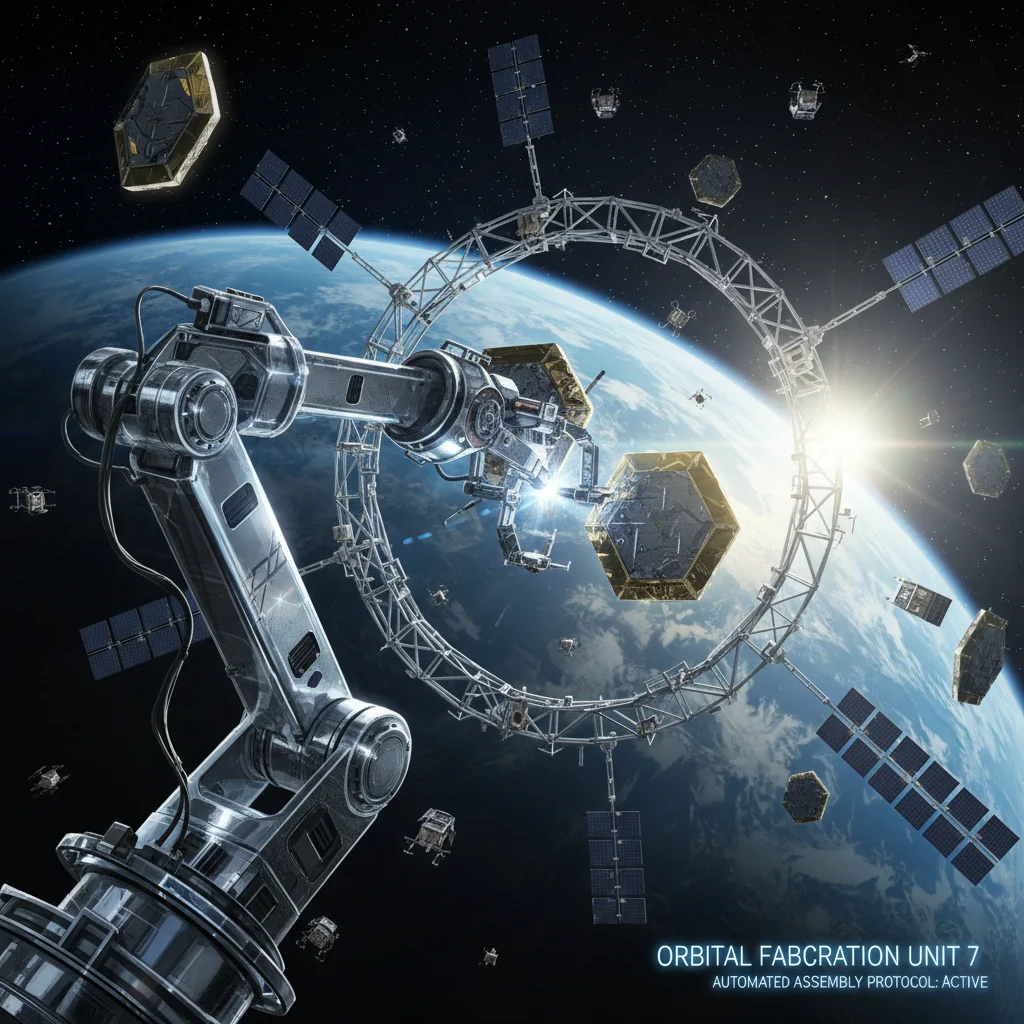
The concept of manufacturing products in space, or assembling large structures in orbit, is no longer confined to science fiction. In-space manufacturing (ISM) represents a revolutionary space investment opportunity with profound implications for how we live, work, and explore. The unique conditions of space – microgravity, vacuum, and abundant solar energy – enable the creation of materials and products impossible or impractical to produce on Earth.
The Promise of In-Space Manufacturing
The advantages of ISM are compelling:
- Unique Materials: Microgravity allows for the creation of ultra-pure optics, advanced alloys, and pharmaceutical crystals with superior properties compared to their Earth-made counterparts.
- Large Structures: Building large telescopes, space stations, and spacecraft components in orbit eliminates the constraints of launch vehicle fairing sizes, enabling the construction of structures far larger than what can be launched from Earth.
- Reduced Launch Mass: Manufacturing replacement parts or new components in space reduces the need to launch everything from Earth, saving significant costs and increasing mission flexibility.
- Sustainability: Utilizing in-situ resources (ISRU) for manufacturing in space can reduce reliance on Earth-sourced materials, promoting a more sustainable approach to space exploration and industrialization.
Investment Prospects in ISM
U.S. investors looking to enter this cutting-edge field should consider:
- 3D Printing in Space: Companies developing and deploying 3D printing technologies capable of operating in microgravity, using various materials from plastics to metals, are at the forefront.
- Robotics and Automation: Investment in advanced robotics for assembly, repair, and maintenance in space environments is critical. This includes AI-driven autonomous systems.
- Materials Science for Space: Companies researching and developing novel materials optimized for in-space production or for use in the harsh space environment.
- Orbital Servicing and Logistics: Firms offering services like satellite refueling, repair, and de-orbiting are foundational to enabling a robust in-space economy, including manufacturing.
- Space Station Infrastructure: As private space stations become operational, companies providing modules, power systems, and life support for these platforms will be key.
By 2026, we anticipate significant milestones in ISM, moving from experimental prototypes to functional demonstrations and early commercial applications. The financial impact here is long-term and transformative, promising entirely new industries and supply chains. This is a frontier space investment opportunity, offering high growth potential for those willing to embrace innovation.
3. Asteroid Mining and Resource Utilization: The Trillion-Dollar Rocks
Perhaps the most audacious and potentially lucrative space investment opportunity is asteroid mining. Asteroids are rich in valuable resources, including precious metals (platinum, gold, silver), rare earth elements, and water (in the form of ice). These resources are essential for advanced electronics, renewable energy technologies, and crucially, for sustaining human presence in space. Water, for instance, can be converted into rocket fuel and breathable air, making it an invaluable commodity beyond Earth.
The Astronomical Value Proposition
The economic potential of asteroid mining is staggering:
- Abundant Resources: A single asteroid can contain trillions of dollars worth of platinum group metals, far exceeding Earth’s known reserves.
- In-Situ Resource Utilization (ISRU): Mining water from asteroids or the lunar surface drastically reduces the cost of space missions by providing propellants and life support consumables in space, rather than launching them from Earth.
- New Supply Chains: Asteroid mining could create entirely new supply chains for critical industrial metals and minerals, reducing reliance on terrestrial sources and mitigating geopolitical risks.
- Enabling Deep Space Exploration: By providing resources in space, asteroid mining will be a cornerstone for future lunar bases, Mars missions, and further exploration of the solar system.
Investment Paths in Asteroid Mining
While still in its nascent stages, the groundwork for asteroid mining is being laid, creating unique space investment opportunities for U.S. investors:
- Asteroid Prospecting and Characterization: Companies developing advanced sensors, spacecraft, and AI for identifying and analyzing resource-rich asteroids.
- Mining Robotics and Extraction Technologies: Investment in robotic systems capable of operating autonomously in harsh space environments to extract and process materials.
- Propulsion Systems for Asteroid Rendezvous: Development of highly efficient, low-thrust propulsion systems necessary for reaching and maneuvering around distant asteroids.
- Refining and Processing Technologies: Companies innovating in methods to refine raw asteroid materials into usable forms in space.
- Space Logistics and Transportation: Firms specializing in the transport of mined resources from asteroids to orbital depots or other destinations.
By 2026, we expect to see more advanced missions focused on asteroid reconnaissance and technology demonstrations for extraction. While full-scale commercial asteroid mining is still some years away, investing in the foundational technologies and early-stage companies now could yield immense long-term returns. This is a high-risk, high-reward space investment opportunity, but one with potentially the largest financial impact.
Navigating the Investment Landscape: Risks and Considerations
While the allure of space commercialization is strong, U.S. investors must also be cognizant of the inherent risks and unique considerations:
- High Capital Requirements: Many space ventures require significant upfront capital for research, development, and infrastructure.
- Long Development Cycles: The timeline from concept to commercial viability can be extended, requiring patience from investors.
- Regulatory Uncertainty: The legal and regulatory framework for space activities, especially for new ventures like asteroid mining, is still evolving.
- Technological Risk: Innovation in space is rapid, but also carries the risk of technological failure or obsolescence.
- Competitive Environment: The sector is attracting significant talent and capital, leading to intense competition.
- Geopolitical Factors: International relations and space policy can influence market access and operational stability.
Despite these challenges, the potential rewards for successful space investment opportunities are substantial. Diversification within the space sector, thorough due diligence, and a long-term investment horizon are crucial strategies for mitigating these risks.
The Role of U.S. Investors in Shaping the Future of Space
U.S. investors have a critical role to play in accelerating the growth of space commercialization. Their capital, combined with American innovation and entrepreneurial spirit, can drive the development of technologies and services that will define the 21st century. By investing in these sectors, U.S. investors are not just seeking financial returns; they are actively participating in the expansion of human capabilities and the creation of a multi-planetary economy.
The U.S. ecosystem, with its robust venture capital community, strong research institutions, and supportive government policies, is uniquely positioned to lead this charge. Access to capital, combined with a culture of innovation, makes the U.S. a powerhouse for space-related ventures.
Conclusion: Seizing the Space Investment Opportunities of 2026
The year 2026 stands as a pivotal moment for space commercialization. The convergence of technological maturity, decreasing costs, and growing demand has created an environment ripe for investment. Satellite internet, in-space manufacturing, and asteroid mining represent three of the most compelling and financially impactful space investment opportunities for U.S. investors. Each sector offers distinct advantages and contributes to the broader vision of a sustainable and prosperous space economy.
While the journey into space investment requires careful consideration of risks, the potential for transformative returns and the chance to be part of humanity’s next great leap are undeniable. For those ready to look beyond traditional markets, the stars are not just for dreaming; they are for investing. The time to explore these future of work opportunities is now, as the foundations for future prosperity in the cosmos are being laid today.
Embrace the future, understand the potential, and consider your place in the unfolding narrative of space commercialization. The financial impact of these ventures in 2026 and beyond promises to be truly astronomical.
Related Posts: