AI’s Financial Impact on American Art 2026: Reshaping Creativity
This article delves into the financial impact of AI on American art in 2026, examining how artificial intelligence is transforming artistic creation, market values, and economic structures within the art world.
By: Emilly Correa on May 8, 2026
Last updated on: July 28, 2026
The Impact of AI on Artistic Expression: 4 Ways Technology is Reshaping American Art in 2026 (FINANCIAL IMPACT)
The dawn of artificial intelligence has ushered in a transformative era across countless industries, and the world of art is certainly no exception. In 2026, the financial impact of AI on American art is not merely a theoretical discussion but a tangible reality, reshaping how art is created, valued, bought, and sold. This profound shift extends beyond the aesthetic, delving deep into the economic structures that underpin the entire art ecosystem. From individual artists to major institutions, the financial implications of integrating AI are vast and multifaceted, promising both unprecedented opportunities and significant challenges.
For centuries, the art market has operated on established principles of scarcity, provenance, and human genius. AI, with its capacity for rapid generation, complex analysis, and even autonomous creation, is challenging these foundational tenets. This article will explore four key ways AI is financially impacting American art in 2026, offering a comprehensive look at the evolving landscape.
1. The Monetization of AI-Generated Art: New Revenue Streams and Valuation Models
One of the most immediate and significant financial impacts of AI on American art is the emergence and rapid growth of a market for AI-generated art. In 2026, we are witnessing a burgeoning ecosystem where algorithms are not just tools but, in many cases, co-creators or even primary creators of artworks. This phenomenon has introduced entirely new revenue streams for artists, developers, and platforms, while simultaneously forcing a re-evaluation of traditional valuation models.
Historically, the value of art has been intrinsically linked to the artist’s unique skill, vision, and often, their personal story. With AI, questions of authorship become complex. Is the value in the algorithm, the data set, the prompt engineer, or the curator who selects and presents the AI’s output? The market is grappling with these questions, leading to innovative approaches to pricing.
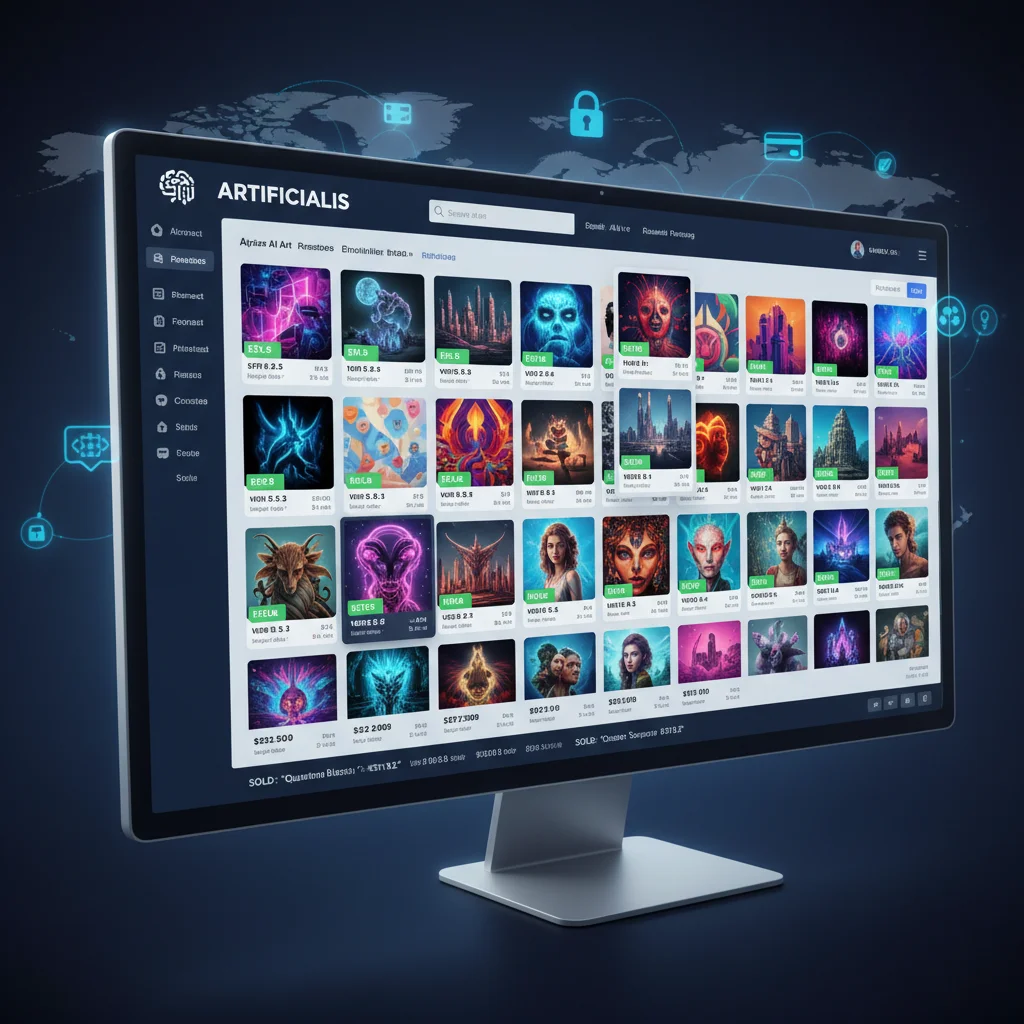
NFTs (Non-Fungible Tokens) have played a crucial role in establishing ownership and scarcity for digital AI art. By tokenizing AI-generated pieces, artists and collectors can verify authenticity and track provenance, addressing a key challenge inherent in digital assets. This has allowed for significant sales, with some AI artworks fetching substantial sums in both primary and secondary markets. The financial success of these early ventures has spurred investment in AI art platforms, further fueling the market’s expansion.
Furthermore, AI is democratizing access to art creation, allowing individuals without traditional artistic training to produce aesthetically compelling works. This broadens the base of potential creators and, consequently, the volume of art entering the market. While this can lead to market saturation, it also creates opportunities for niche markets and diverse artistic expressions that might not have emerged through traditional channels. The financial impact here is two-fold: it creates new avenues for income for a wider range of individuals, but also necessitates new strategies for artists to differentiate their work in a crowded digital landscape.
Valuation models are evolving to incorporate factors such as the complexity of the AI algorithm used, the uniqueness of the generative process, the rarity of the output, and the reputation of the AI artist or developer. Investment firms and art advisors are beginning to specialize in AI art, developing metrics to assess its long-term financial potential. This shift represents a fundamental rethinking of what constitutes artistic value and how that value translates into economic worth.
The financial success of AI art is not limited to individual sales. Major art institutions and galleries are increasingly acquiring AI-generated pieces, lending legitimacy and further driving market interest. Auctions dedicated to digital and AI art are becoming more common, signaling a maturing market with serious financial players. This sustained interest suggests that the monetization of AI-generated art is not a fleeting trend but a foundational shift with lasting financial implications for the American art scene.
2. Economic Shifts for Artists: New Tools, New Skills, and Earning Potential
The advent of AI tools has dramatically altered the economic landscape for American artists in 2026. While some view AI as a threat to traditional artistic livelihoods, many are discovering new avenues for creativity and, crucially, enhanced earning potential. The financial impact on artists is characterized by a need for adaptation, skill acquisition, and a redefinition of the artistic process.
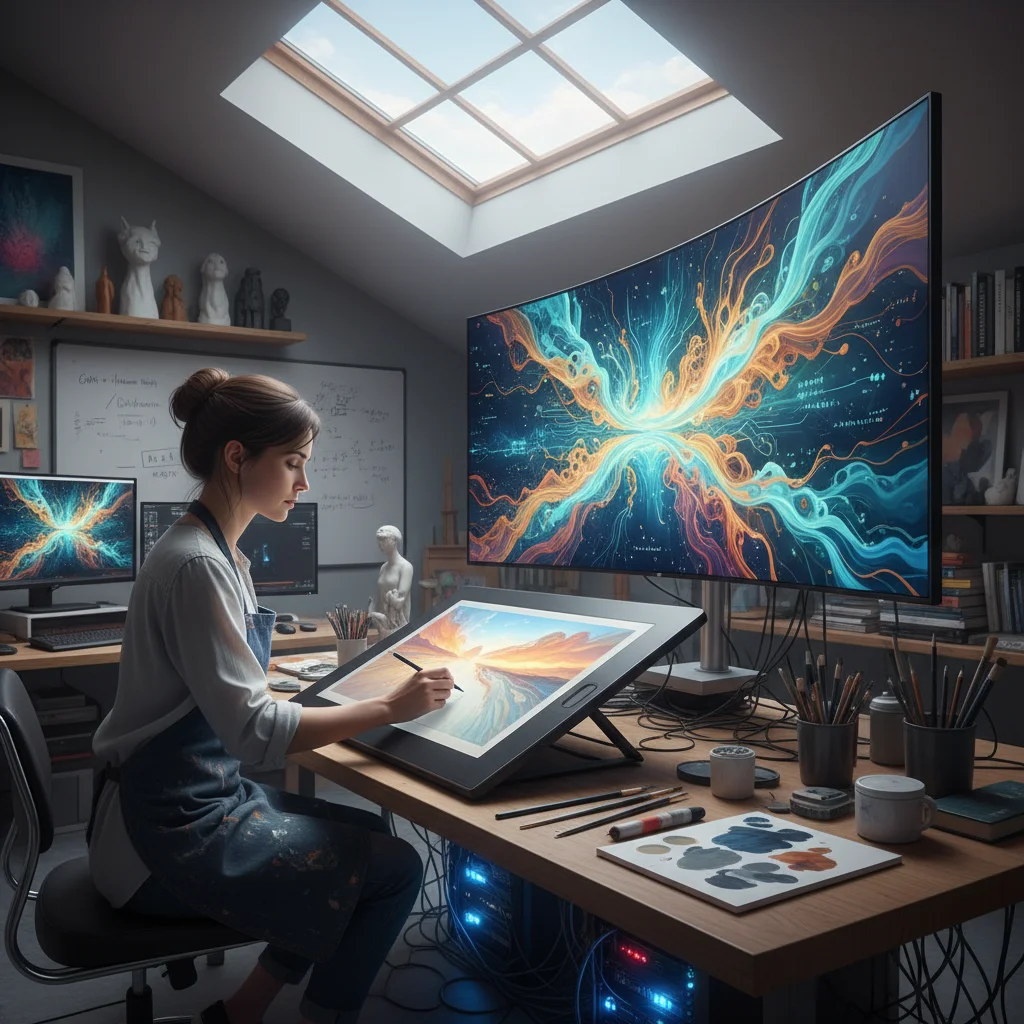
AI acts as a powerful assistant, automating tedious tasks, generating variations, and providing creative inspiration. This allows artists to work more efficiently, explore concepts more rapidly, and ultimately, produce more work. For illustrators, graphic designers, and concept artists, AI tools can significantly reduce production time, enabling them to take on more projects and increase their income. The financial benefit comes from increased output and reduced labor hours on repetitive elements, allowing artists to focus on higher-value creative decisions.
However, this shift also demands new skills. Artists who can effectively prompt AI, understand its capabilities and limitations, and integrate AI-generated elements seamlessly into their unique style are finding themselves in high demand. The ability to curate, edit, and refine AI outputs has become a valuable skill, commanding premium rates for those who master it. This means that while traditional artistic skills remain vital, digital literacy and an understanding of AI methodologies are becoming increasingly important for financial success.
Moreover, AI is opening up entirely new artistic disciplines and job roles. ‘Prompt engineers’ who specialize in crafting effective text prompts for AI image generators are emerging as a new class of creative professionals, often commanding lucrative fees. Artists are also finding opportunities in developing custom AI models, training algorithms on their unique styles, and licensing these models for commercial use. This represents a significant diversification of income streams beyond traditional art sales.
The economic impact also extends to intellectual property and copyright. As AI becomes more sophisticated, questions arise regarding ownership of AI-generated works, especially when trained on existing artistic datasets. Navigating this complex legal landscape is crucial for artists seeking to protect their financial interests. Organizations and legal experts are working to establish frameworks that ensure fair compensation and recognition for artists whose work contributes to AI training data, as well as for those who utilize AI in their creative process.
While some artists express concerns about AI devaluing human creativity or leading to job displacement, the current trend in 2026 suggests that artists who embrace AI as a collaborative partner are the ones thriving financially. The key lies in leveraging AI to augment human creativity, rather than replacing it entirely, thereby unlocking new efficiencies and revenue possibilities in the evolving art market.
3. Investment and Infrastructure: The Financial Backbone of AI Art
The financial impact of AI on American art is not limited to the creation and sale of artworks; it also encompasses a significant surge in investment and the development of new infrastructure. In 2026, venture capital, tech companies, and even traditional art investors are pouring resources into platforms, tools, and research that underpin the AI art ecosystem. This financial backbone is crucial for sustained growth and innovation.
The development of sophisticated AI art generation tools requires substantial investment in research and development. Companies specializing in machine learning, computer vision, and generative adversarial networks (GANs) are attracting significant funding to create more advanced algorithms. These tools, in turn, become the engines for new artistic possibilities, directly influencing the quality and diversity of AI art available on the market. The financial returns for these technology companies can be substantial, through licensing fees, subscriptions, or direct sales of AI-generated content.
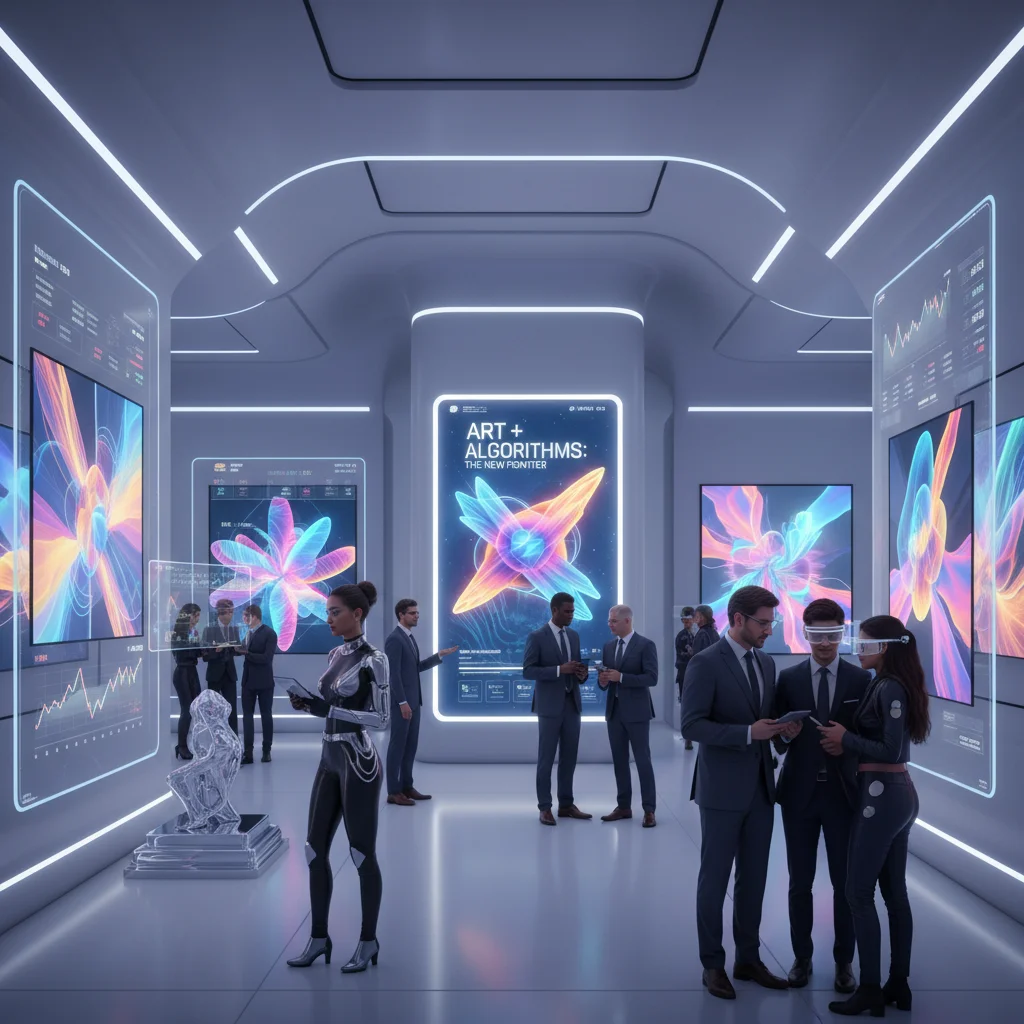
Beyond tool development, there is a growing investment in platforms that facilitate the creation, exhibition, and sale of AI art. Online marketplaces dedicated to digital art, virtual reality galleries showcasing immersive AI experiences, and specialized auction houses are all part of this expanding infrastructure. These platforms require significant financial backing for development, marketing, security (especially for NFT-based art), and ongoing maintenance. The competition among these platforms drives innovation, ultimately benefiting artists and collectors by providing more robust and user-friendly environments.
Furthermore, academic institutions and art organizations are receiving grants and funding to explore the ethical, philosophical, and practical implications of AI in art. This research, while not directly financial in its output, contributes to building a more informed and sustainable ecosystem, which in turn supports long-term financial stability and growth. Understanding the societal impact of AI art is crucial for its responsible development and acceptance, both of which are vital for its financial viability.
Traditional art investors, who once focused solely on established masters, are now diversifying their portfolios to include promising AI artists and AI art-related ventures. This shift indicates a growing confidence in the long-term financial potential of this new art form. Art funds and investment groups are emerging with a specific focus on digital and AI art, signaling a formal recognition of its asset class status. This influx of capital provides stability and liquidity to the market, making it more attractive for both creators and collectors.
The financial infrastructure also includes legal services specializing in AI art copyright, intellectual property, and smart contract development. As the market matures, the need for clear legal frameworks becomes paramount, and specialized legal firms are emerging to meet this demand, adding another layer to the financial ecosystem surrounding AI art. This robust financial and infrastructural support is essential for AI art to evolve from a niche interest into a mainstream, economically significant segment of the American art world.
4. Redefining Art Education and Funding: Preparing the Next Generation for an AI-Infused Art World
The financial impact of AI on American art extends deeply into the realms of art education and funding models. In 2026, educational institutions and grant-making bodies are rapidly adapting to prepare the next generation of artists, curators, and critics for an AI-infused art world, while also rethinking how artistic endeavors are financially supported.
Art schools and universities are integrating AI tools and concepts into their curricula. This means investing in new technology, training faculty, and developing courses that teach students not only traditional artistic techniques but also prompt engineering, data set curation, algorithmic aesthetics, and the ethical implications of AI art. The financial commitment required for these educational overhauls is substantial, but it is seen as a necessary investment to ensure graduates are competitive and employable in a rapidly changing market. Graduates with dual expertise in traditional art and AI are highly sought after, often commanding higher starting salaries and attracting more commissions, underscoring the financial value of this integrated education.
Funding for the arts is also undergoing a transformation. Traditional grants and fellowships are increasingly recognizing and supporting projects that incorporate AI. Funding bodies are creating specific categories for digital art, media art, and AI-driven installations, acknowledging the innovative nature and potential impact of these new forms. This financial backing is crucial for artists who wish to experiment with AI without the immediate pressure of commercial viability, fostering a space for cutting-edge exploration and development.
Furthermore, private foundations and corporate sponsors are showing a growing interest in funding AI art initiatives. Technology companies, in particular, see opportunities to partner with artists, providing resources and platforms to push the boundaries of AI creativity. These partnerships often come with significant financial incentives for artists, including stipends, access to advanced computing resources, and exhibition opportunities, thereby creating new financial lifelines for artistic practice.
The accessibility of AI tools also has a financial impact on education. While high-end AI development can be costly, many user-friendly AI art generators are available at low cost or even for free. This democratizes access to powerful creative tools, enabling a broader range of individuals to engage with art creation and potentially enter the art market. This can reduce the financial barrier to entry for aspiring artists, allowing talent to emerge from diverse socioeconomic backgrounds.
However, there’s also a financial challenge in ensuring equitable access to advanced AI education and resources. Disparities in funding and technological infrastructure can create a digital divide, potentially leaving some artists and institutions behind. Addressing this through targeted funding and educational outreach is a critical aspect of ensuring the long-term financial health and inclusivity of the American art sector.
By actively adapting art education and funding models, the American art world is strategically positioning itself to harness the financial benefits of AI, ensuring a vibrant and economically sustainable future for artistic expression.
Conclusion: The Evolving Financial Canvas of American Art
The financial impact of AI on American art in 2026 is undeniable and far-reaching. From the emergence of entirely new revenue streams for AI-generated art to the fundamental shifts in artists’ economic models, and from the substantial investments in infrastructure to the redefinition of art education and funding, AI is not just a technological trend but a powerful economic force. The art world is navigating a complex landscape where innovation, ethics, and market dynamics intertwine.
While challenges such as intellectual property rights, market saturation, and the digital divide persist, the overwhelming sentiment is one of cautious optimism. The ability of AI to augment human creativity, democratize access to art creation, and open up novel avenues for monetization presents a compelling future for American art. Artists who embrace these tools, institutions that adapt their frameworks, and investors who recognize the long-term potential of AI art are poised to thrive in this evolving environment.
As we move further into the 21st century, the interplay between artificial intelligence and artistic expression will continue to shape the financial canvas of American art. It calls for continuous dialogue, adaptation, and a proactive approach to ensure that technology serves to enrich, rather than diminish, the human creative spirit and its economic viability.
Emilly Correa has a degree in journalism and a postgraduate degree in Digital Marketing, specializing in Content Production for Social Media. With experience in copywriting and blog management, she combines her passion for writing with digital engagement strategies. She has worked in communications agencies and now dedicates herself to producing informative articles and trend analyses.