Beyond 5G: The Next Generation of Connectivity Arriving in the U.S. by 2028
The U.S. is on the cusp of a revolutionary leap in connectivity as technologies beyond 5G emerge. This article delves into the transformative potential of these next-generation networks, expected to arrive by 2028, and their profound impact on industries, daily life, and the digital landscape.
By: Matheus Neiva on July 31, 2026
Beyond 5G: The Next Generation of Connectivity Arriving in the U.S. by 2028
Beyond 5G: The Next Generation of Connectivity Arriving in the U.S. by 2028
The digital world is in constant flux, evolving at an unprecedented pace. Just as 5G has begun to reshape our understanding of speed and connectivity, the horizon is already beckoning with the promise of technologies that go beyond 5G connectivity. The United States, a global leader in technological innovation, is poised to embrace the next generation of wireless networks, with significant advancements and potentially widespread deployment anticipated as early as 2028. This isn’t merely an incremental upgrade; it represents a paradigm shift that will redefine industries, transform daily life, and unlock capabilities previously confined to science fiction.
The journey from 1G to 5G has been marked by exponential leaps in data speed, capacity, and latency. Each generation has brought about new possibilities, from mobile voice communication to the advent of the smartphone and the internet of things (IoT). Now, as we look towards 2028, the focus shifts to what lies beyond: a realm of hyper-connectivity, intelligent environments, and seamless integration between the physical and digital worlds. This article delves into the exciting prospects of Beyond 5G Connectivity, exploring the technological foundations, potential applications, and the profound societal impact expected in the U.S. within the next few years.
Understanding the Evolution: From 5G to Beyond 5G Connectivity
To truly grasp the significance of what’s coming, it’s essential to understand the foundation laid by 5G. While 5G brought unprecedented speeds (up to 10 Gbps), ultra-low latency (around 1 millisecond), and massive capacity for connecting devices, it also highlighted the need for even more advanced capabilities to support emerging technologies. 5G was designed to enable enhanced mobile broadband (eMBB), ultra-reliable low-latency communications (URLLC), and massive machine-type communications (mMTC). These pillars have paved the way for innovations like autonomous vehicles, advanced telemedicine, and smart cities.
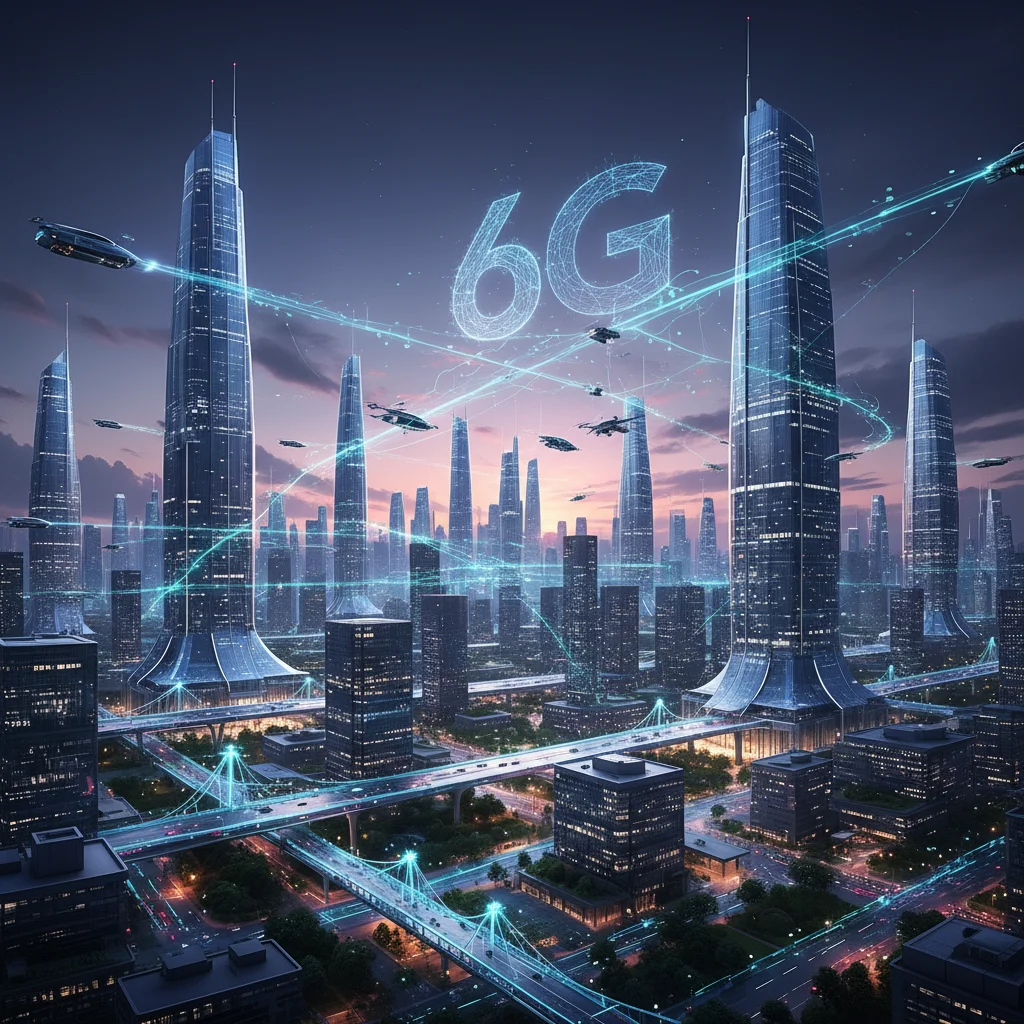
However, the demands of a fully digitized, AI-driven world are pushing the boundaries further. Beyond 5G Connectivity, often referred to as 6G, is envisioned to deliver even more extreme performance. We’re talking about theoretical peak speeds reaching terabits per second (Tbps), sub-millisecond latency, and an ability to connect trillions of devices simultaneously. But speed and latency are just part of the story. The next generation will integrate advanced technologies directly into the network architecture, creating a truly intelligent and adaptive communication fabric.
Key Technological Pillars of Beyond 5G
The development of Beyond 5G Connectivity is not a singular effort but a convergence of several groundbreaking technologies:
Terahertz (THz) Frequencies: While 5G utilizes millimeter-wave (mmWave) frequencies, 6G will push into the terahertz spectrum. These extremely high frequencies offer vast amounts of bandwidth, enabling ultra-fast data transmission. However, they also pose significant challenges in terms of signal propagation and attenuation, requiring innovative antenna designs and beamforming techniques.
Artificial Intelligence (AI) and Machine Learning (ML) Integration: AI will be fundamental to 6G, not just as an application running on the network, but as an integral part of the network’s operation. AI will optimize network performance, predict traffic patterns, manage resources dynamically, and even enable self-healing capabilities. This ‘AI-native’ network will be far more efficient and resilient.
Reconfigurable Intelligent Surfaces (RIS): These are smart surfaces embedded with metamaterials that can dynamically steer and reflect wireless signals. RIS can overcome obstacles and extend coverage in challenging environments, effectively turning passive surfaces into active network elements.
Quantum Communications and Sensing: While still in early research stages, quantum technologies could play a role in Beyond 5G Connectivity for enhanced security through quantum cryptography and for highly precise sensing capabilities.
Integrated Sensing and Communication (ISAC): This technology allows communication systems to simultaneously perform sensing tasks, such as object detection, localization, and environmental mapping, alongside data transmission. This has immense implications for autonomous systems and smart environments.
Holographic and Extended Reality (XR) Communications: The next generation of networks will be designed to seamlessly support immersive experiences like holographic communication, virtual reality (VR), augmented reality (AR), and mixed reality (MR) with unprecedented realism and low latency.
Blockchain for Network Security and Management: Distributed ledger technologies could be used to enhance the security, transparency, and decentralized management of future networks, particularly in areas like spectrum sharing and device authentication.
Transformative Impact on the U.S. by 2028
The arrival of Beyond 5G Connectivity in the U.S. by 2028 will not be a subtle shift but a profound transformation across virtually every sector. The synergy of ultra-fast speeds, near-zero latency, and pervasive intelligence will unlock new possibilities and significantly enhance existing ones.
Redefining Industries
Healthcare: Remote surgery will become more precise and reliable, with haptic feedback and real-time data streaming. AI-powered diagnostics will be accelerated by instantaneous access to vast medical databases. Wearable health monitors will provide continuous, high-fidelity data, enabling proactive healthcare and personalized treatment plans on an unprecedented scale. Imagine a future where a specialist in New York can perform a delicate operation on a patient in rural Alaska with the same precision as if they were in the same room.
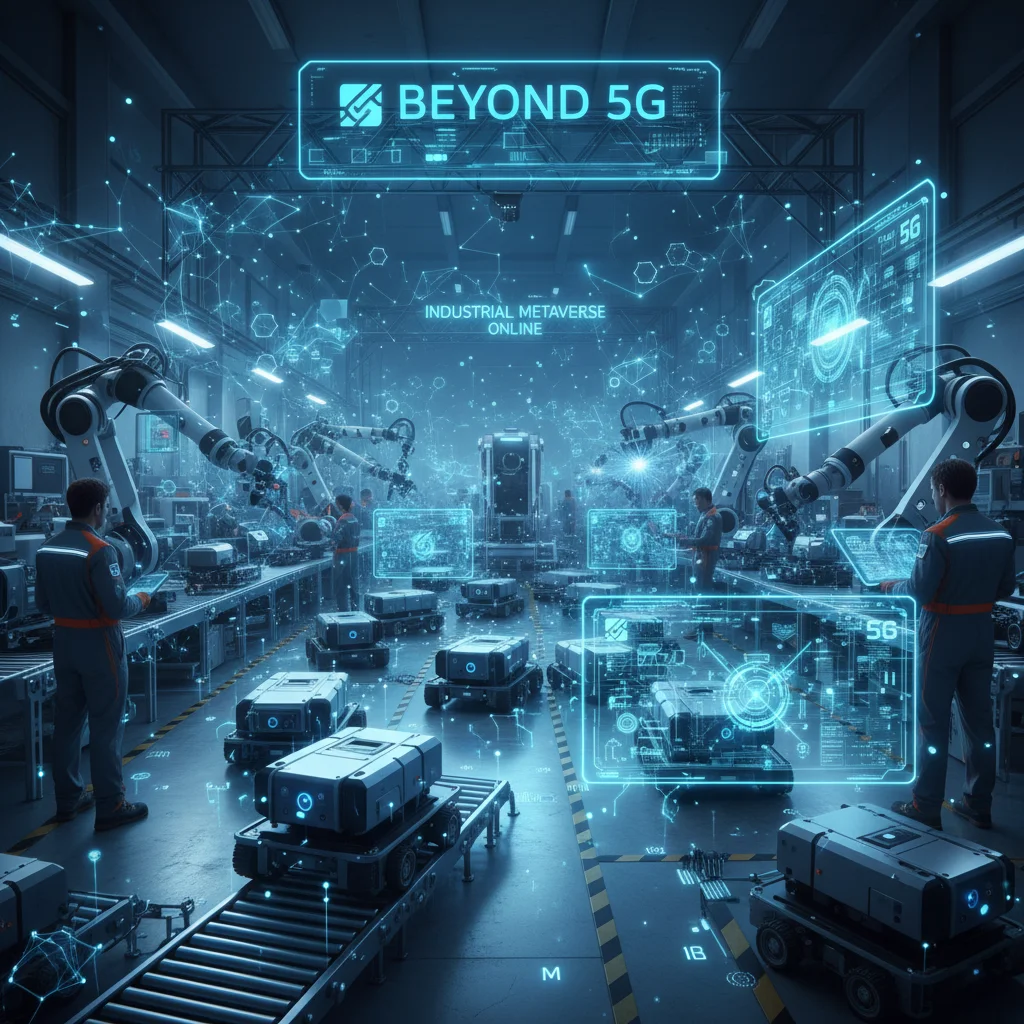
Manufacturing and Industry 4.0: Smart factories will reach new levels of automation and efficiency. Beyond 5G Connectivity will enable hyper-connected robotics, real-time quality control through AI-powered vision systems, and predictive maintenance for machinery, minimizing downtime and maximizing output. Digital twins of entire factory floors will allow for simulations and optimizations in a virtual environment before implementation in the physical world.
Transportation: Autonomous vehicles will communicate with each other and with infrastructure (V2X communication) in real-time, leading to safer roads, reduced traffic congestion, and optimized logistics. Air traffic control could see revolutionary changes with drones and urban air mobility (UAM) systems seamlessly integrated into the airspace, all managed by intelligent networks. The vision of smart, interconnected transportation systems will become a reality.
Agriculture: Precision agriculture will be enhanced with vast networks of sensors monitoring soil conditions, crop health, and livestock in real-time. Autonomous farm equipment will operate with greater efficiency and accuracy, optimizing resource usage and increasing yields. This will be crucial for food security and sustainable farming practices.
Entertainment and Media: Immersive experiences like holographic concerts, interactive VR environments, and high-fidelity cloud gaming will become commonplace. Content creation and distribution will be revolutionized, with massive datasets and high-resolution media seamlessly handled by the network. Imagine experiencing a live event from your living room with the sensation of being physically present.
Societal and Daily Life Enhancements
Smart Cities and Infrastructure: Urban environments will become truly intelligent, with interconnected sensors managing everything from traffic flow and public safety to waste management and energy grids. Real-time data analytics will enable cities to respond dynamically to changing conditions, improving quality of life for residents. Smart streetlights, intelligent waste bins, and dynamic public transportation will all be part of this interconnected ecosystem.
Enhanced Education: Remote learning will evolve beyond video conferencing to fully immersive virtual classrooms and interactive holographic lessons, providing equitable access to high-quality education regardless of location. Students will be able to collaborate in virtual spaces, interact with 3D models, and conduct virtual experiments with unprecedented realism.
AR/VR for Everyday Use: Augmented reality glasses will provide real-time information overlays, enhancing navigation, shopping, and social interactions. Virtual reality will offer new avenues for remote work, training, and entertainment, blurring the lines between the physical and digital. Imagine having a digital assistant that can project information directly into your field of vision, or collaborating with colleagues in a shared virtual workspace that feels like a real meeting room.
Personalized and Predictive Services: From smart homes that anticipate your needs to personalized shopping experiences and proactive health alerts, Beyond 5G Connectivity will enable a new era of highly customized and predictive services that adapt to individual preferences and behaviors. Your environment will become an extension of your digital self, anticipating your needs and seamlessly integrating technology into your daily routines.
The Role of the U.S. in Driving Beyond 5G Innovation
The U.S. is a critical player in the global race for Beyond 5G Connectivity. Government initiatives, academic research, and private sector investment are all contributing to the rapid development and deployment of these advanced technologies.
Research and Development
Leading universities and research institutions across the U.S. are at the forefront of 6G research, exploring new spectrum bands, advanced antenna technologies, AI-driven network architectures, and quantum communication concepts. Significant funding from government agencies like the National Science Foundation (NSF) and the Department of Defense (DoD) is accelerating these efforts.
Industry Leadership
Major U.S. telecommunications companies, alongside semiconductor manufacturers and software giants, are heavily investing in 6G R&D. These companies are collaborating on standardization efforts, developing new hardware and software solutions, and conducting trials to push the boundaries of wireless technology. The competitive landscape is driving rapid innovation, with companies vying to be the first to market with groundbreaking solutions.
Policy and Spectrum Allocation
The Federal Communications Commission (FCC) plays a crucial role in allocating spectrum for future wireless technologies. Proactive policy-making to free up and manage new frequency bands, such as the terahertz spectrum, will be vital for the successful deployment of Beyond 5G Connectivity. The U.S. government is actively working to ensure that the regulatory environment supports innovation while also protecting national security interests.
Challenges and Considerations for Beyond 5G Connectivity
While the prospects of Beyond 5G Connectivity are incredibly exciting, several significant challenges must be addressed for successful widespread implementation by 2028.
Technical Hurdles
Terahertz Signal Propagation: THz waves are highly susceptible to atmospheric absorption, blockage by obstacles, and limited range. Overcoming these challenges will require advanced beamforming, massive MIMO (Multiple-Input Multiple-Output) systems, and a denser network of smaller cells.
Energy Efficiency: The sheer complexity and processing power required for Beyond 5G Connectivity could lead to significant energy consumption. Developing energy-efficient hardware and AI-driven network optimization algorithms will be crucial for sustainability.
Hardware Miniaturization: Integrating advanced components for THz communication, AI processing, and quantum capabilities into compact, affordable devices will be a major engineering challenge.
Security and Privacy
With an exponentially larger number of interconnected devices and the pervasive integration of AI, the attack surface for cyber threats will expand dramatically. Robust security protocols, quantum-resistant cryptography, and advanced AI-driven threat detection systems will be paramount. Protecting user data and maintaining privacy in a hyper-connected world will require continuous innovation and stringent regulations.
Digital Divide and Equity
Ensuring equitable access to Beyond 5G Connectivity across urban, suburban, and rural areas will be a critical societal challenge. Without careful planning and investment, the digital divide could widen, leaving some communities behind. Government subsidies, public-private partnerships, and innovative deployment strategies will be necessary to bridge this gap.
Standardization and Interoperability
Global standardization efforts will be essential to ensure that Beyond 5G Connectivity technologies are interoperable across different vendors and regions. International collaboration among governments, industry players, and standards bodies will be key to avoiding fragmentation and fostering a truly global ecosystem.
Ethical Considerations of AI Integration
As AI becomes deeply embedded in the network, ethical considerations surrounding algorithmic bias, data governance, and autonomous decision-making will need careful attention. Robust frameworks and regulations will be necessary to ensure responsible and ethical deployment of AI-driven networks.
The Road Ahead: Preparing for Beyond 5G
The timeline of 2028 for the initial arrival and significant impact of Beyond 5G Connectivity in the U.S. is ambitious but achievable, given the current pace of technological advancement and investment. For individuals, businesses, and policymakers, preparation is key.
For Businesses:
Strategic Planning: Start envisioning how hyper-connectivity, AI, and new sensing capabilities can transform your business models, operations, and customer experiences.
Talent Development: Invest in upskilling your workforce in areas like AI, data analytics, cybersecurity, and advanced networking to leverage the full potential of these technologies.
Pilot Programs: Explore early adoption and pilot programs for Beyond 5G Connectivity-enabled solutions to gain a competitive edge.
Security Infrastructure: Proactively upgrade your cybersecurity infrastructure to prepare for a more complex and interconnected threat landscape.
For Individuals:
Stay Informed: Keep abreast of the developments in Beyond 5G Connectivity and its potential impact on daily life.
Digital Literacy: Enhance your digital literacy and understanding of emerging technologies to navigate the increasingly complex digital world.
Privacy Awareness: Be mindful of your digital footprint and understand the implications of increased data collection and AI integration.
For Policymakers:
Foster Innovation: Continue to support R&D through funding and favorable regulatory environments.
Spectrum Management: Proactively manage and allocate spectrum to ensure sufficient resources for future networks.
Digital Inclusion: Develop policies and programs to ensure equitable access to Beyond 5G Connectivity for all citizens.
International Collaboration: Engage in global discussions and collaborations to promote standardization and address shared challenges.
Conclusion: A Hyper-Connected Future Awaits
The journey towards Beyond 5G Connectivity is not just about faster internet; it’s about building an intelligent, responsive, and seamlessly integrated digital ecosystem. By 2028, the U.S. is expected to be well on its way to realizing this vision, with profound implications for every aspect of society.
From revolutionizing industries like healthcare and manufacturing to enhancing our daily lives through smart cities and immersive experiences, the next generation of wireless technology promises a future of unparalleled possibilities. While challenges remain, the collaborative efforts of researchers, industry leaders, and policymakers are paving the way for a hyper-connected world that will empower innovation, drive economic growth, and improve the quality of life for millions. The future of connectivity is not just arriving; it’s being actively built, and the U.S. is at its vanguard.
Matheus Neiva has a degree in Communication and a specialization in Digital Marketing. Working as a writer, he dedicates himself to researching and creating informative content, always seeking to convey information clearly and accurately to the public.