Quantum Cryptography 2026: US Data Protection in the Next 12 Months
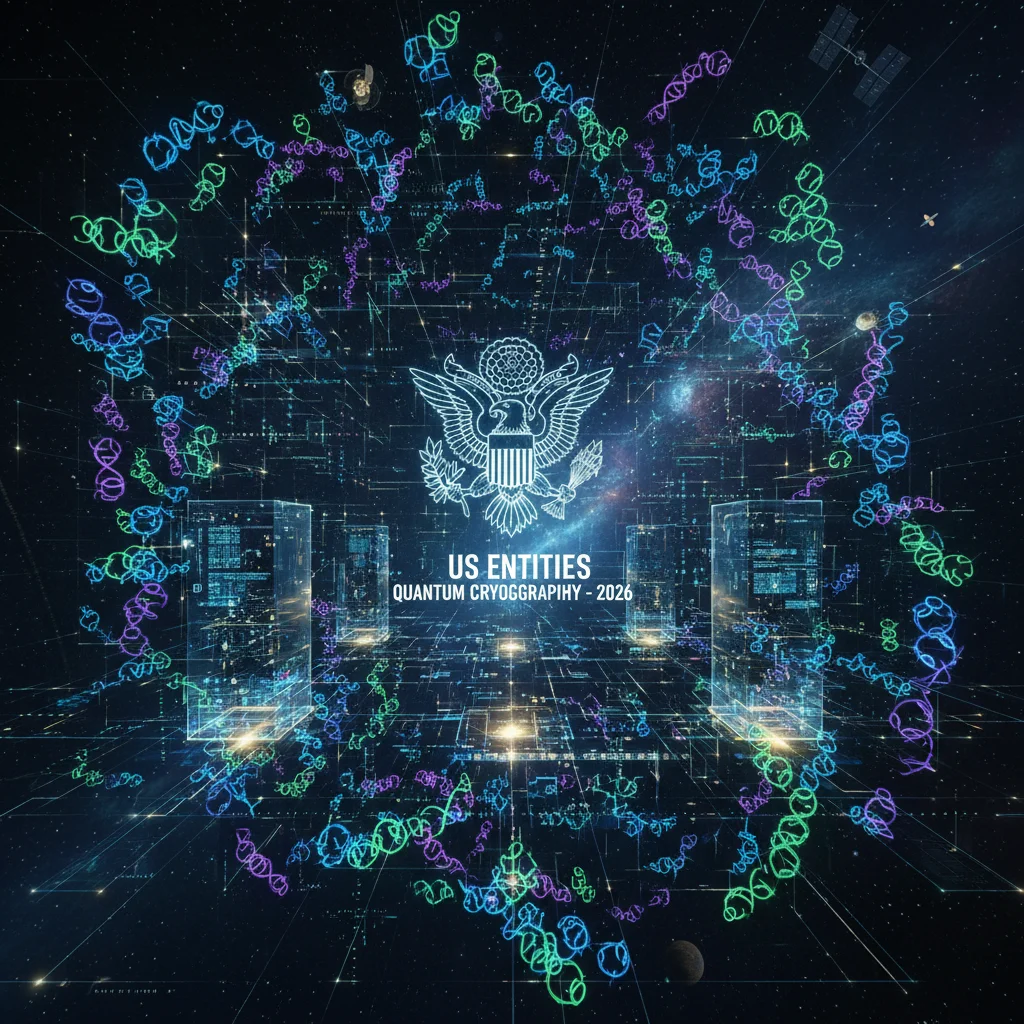
The year 2026 stands as a critical juncture for data protection in the United States. As the specter of quantum computing looms larger, the cryptographic foundations upon which our digital world is built are beginning to show their vulnerability. The next 12 months will not merely be a period of observation but one of intense preparation, strategic implementation, and urgent adaptation for US entities. Understanding quantum cryptography 2026 is no longer a theoretical exercise; it is a pragmatic necessity for safeguarding national security, economic stability, and individual privacy.
For decades, our digital communications, financial transactions, and classified government data have been secured by classical cryptographic algorithms like RSA and ECC. These algorithms rely on mathematical problems that are computationally infeasible for even the most powerful supercomputers to solve within a reasonable timeframe. However, the advent of quantum computers, with their ability to exploit quantum mechanical phenomena such as superposition and entanglement, threatens to render these algorithms obsolete. Shor’s algorithm, for instance, can efficiently factor large numbers, directly undermining the security of RSA, while Grover’s algorithm can speed up brute-force attacks on symmetric key cryptography.
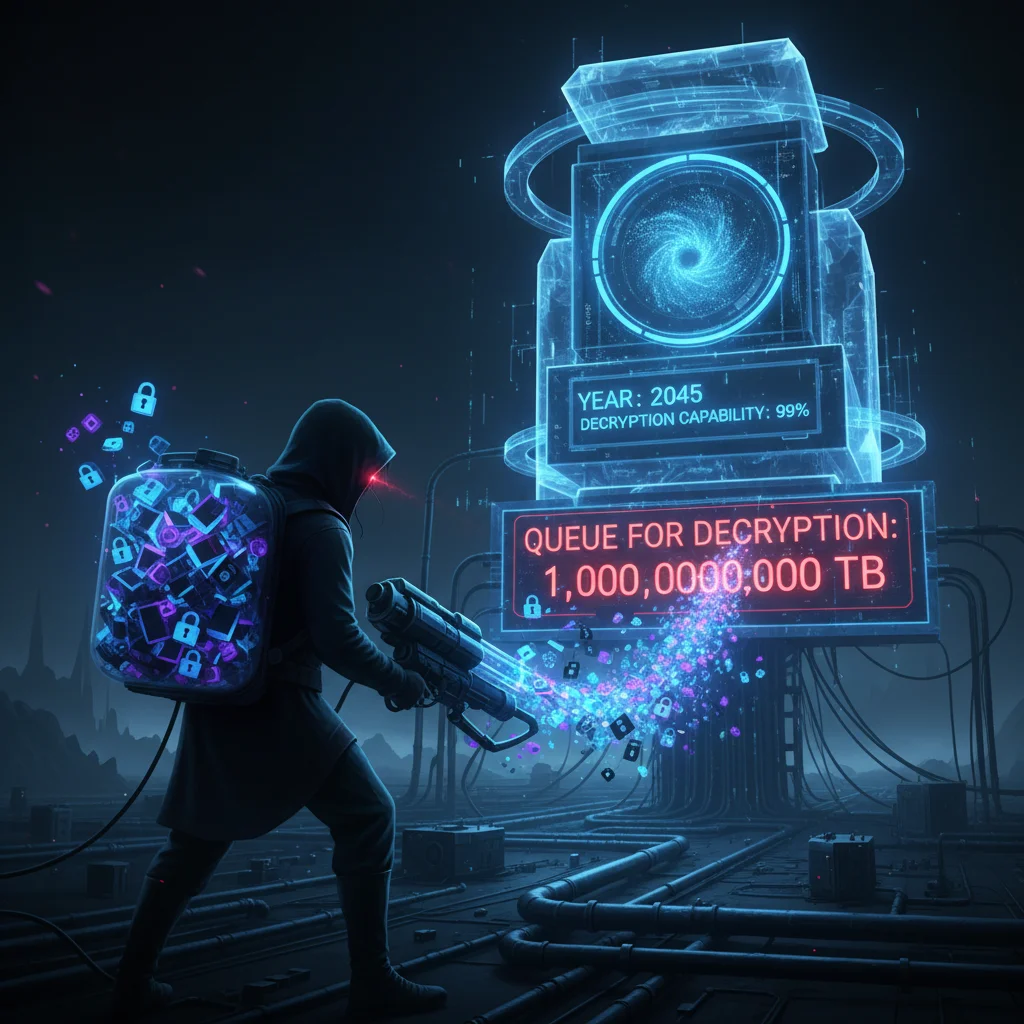
The transition to a quantum-safe cryptographic landscape is not a distant future concern; it is happening now. The urgency is amplified by the ‘harvest now, decrypt later’ threat, where malicious actors are already collecting encrypted data, anticipating the day when powerful quantum computers will allow them to decrypt it. This means that data encrypted today, with classical methods, could be compromised years from now, posing a severe risk to long-term sensitive information. The US government and critical infrastructure providers are acutely aware of this impending crisis, driving significant investment and policy initiatives to address the challenge head-on.
This comprehensive guide will delve into the multifaceted aspects of quantum cryptography 2026, providing US entities with a clear roadmap for understanding the threats, evaluating current progress, and strategizing for a quantum-secure future. We will explore the technologies, policies, and collaborative efforts that define this crucial period, ensuring that organizations are not just reacting to change but actively shaping their resilience against the quantum threat.
The Imminent Quantum Threat: Why 2026 is Critical
The year 2026 represents a critical inflection point for several reasons. Firstly, the pace of quantum computer development is accelerating. While universal fault-tolerant quantum computers are still some years away, the progress in qubit stability, error correction, and computational power is significant. Experts predict that within the next decade, a quantum computer capable of breaking current public-key encryption could emerge. This timeframe places 2026 squarely in the window where proactive measures must be well underway, if not fully implemented, to mitigate future risks.
The ‘Harvest Now, Decrypt Later’ Imperative
As mentioned, the ‘harvest now, decrypt later’ strategy is a paramount concern. Nation-states and sophisticated cybercriminals are likely already collecting vast amounts of encrypted data. This data, even if unreadable today, could be cracked by future quantum computers, exposing state secrets, intellectual property, financial records, and personal information that needs to remain confidential for decades. For instance, diplomatic communications, classified defense information, and sensitive corporate research have long shelf lives. If these are compromised, the repercussions could be catastrophic.
Consider the implications for industries with long data retention requirements, such as finance, healthcare, and government. A patient’s medical records from 2026, encrypted with current standards, could be vulnerable to decryption in 2035 or beyond. Similarly, national security intelligence gathered today could be exposed, leading to severe geopolitical consequences. The only way to counter this threat is to transition to quantum-safe encryption *before* sufficiently powerful quantum computers become available. This foresight underlines the urgency of quantum cryptography 2026 planning.
NIST’s Post-Quantum Cryptography Standardization Process
A major driving force behind the 2026 urgency is the National Institute of Standards and Technology (NIST) and its ongoing Post-Quantum Cryptography (PQC) standardization process. After years of rigorous evaluation, NIST is nearing the finalization of new quantum-resistant cryptographic algorithms. These algorithms are designed to run on classical computers but withstand attacks from quantum computers. The first set of standards, including CRYSTALS-Kyber for key encapsulation and CRYSTALS-Dilithium for digital signatures, were announced in 2022. Further algorithms are expected to be standardized in the coming years.
The finalization of these standards provides a clear target for organizations to begin their migration. While the standards are becoming clearer, the implementation process is complex and time-consuming. It involves inventorying cryptographic assets, understanding dependencies, testing new algorithms, and deploying them across vast and intricate IT infrastructures. This multi-year effort means that by 2026, organizations should ideally be well into their migration, if not approaching completion for critical systems. Any delay could leave them exposed.
Understanding Quantum Cryptography: Two Core Approaches
When discussing quantum cryptography 2026, it’s crucial to distinguish between two primary approaches: Post-Quantum Cryptography (PQC) and Quantum Key Distribution (QKD).
Post-Quantum Cryptography (PQC)
PQC, also known as quantum-resistant or quantum-safe cryptography, refers to cryptographic algorithms that can be run on classical computers but are designed to be resistant to attacks from both classical and quantum computers. This is the primary focus of NIST’s standardization efforts. PQC algorithms are based on hard mathematical problems that are believed to be intractable even for quantum computers. Examples include lattice-based cryptography, code-based cryptography, multivariate polynomial cryptography, and hash-based cryptography.
The significant advantage of PQC is its compatibility with existing infrastructure. These algorithms can be implemented in software and integrated into current communication protocols, operating systems, and applications. This makes them a more practical and scalable solution for widespread adoption in the short to medium term. The challenge lies in the complexity of these new algorithms, their potentially larger key sizes or ciphertext sizes, and the need for thorough testing and validation to ensure their security and performance.
Quantum Key Distribution (QKD)
QKD, on the other hand, is a fundamentally different approach. It leverages the principles of quantum mechanics to establish a shared secret key between two parties with provable security. The Heisenberg Uncertainty Principle dictates that any attempt to observe the quantum state of a photon (used to transmit the key) will inevitably disturb it, alerting the communicating parties to the presence of an eavesdropper. This provides an unparalleled level of security for key exchange.
While QKD offers theoretical ‘unbreakable’ security for key exchange, its practical implementation comes with limitations. QKD requires specialized hardware (quantum devices) and is typically effective over limited distances, often requiring trusted relays for longer-haul communication. It is also primarily used for key exchange, not for encrypting bulk data. Therefore, QKD is currently considered a supplementary technology for highly sensitive, point-to-point communications, rather than a universal replacement for all cryptographic needs. Its role in quantum cryptography 2026 will likely be niche but critical for specific high-security applications.
Current Landscape for US Entities: Challenges and Progress
The journey towards quantum-safe security for US entities is fraught with challenges but also marked by significant progress. By 2026, many organizations will be deep into their transition, while others may still be identifying their cryptographic footprint.
Inventorying Cryptographic Assets and Dependencies
One of the most significant initial challenges is understanding an organization’s complete cryptographic landscape. This involves identifying every instance where cryptography is used, from TLS/SSL certificates protecting web traffic to VPNs, encrypted databases, digital signatures, and code signing. Many organizations have a ‘cryptographic sprawl’ with various algorithms, key lengths, and protocols deployed over many years, often without a centralized inventory.
The process of inventorying these assets, understanding their purpose, and mapping their dependencies is a monumental task. A single application might rely on multiple cryptographic primitives, and changing one could have cascading effects throughout the system. By 2026, organizations that have not yet started this inventory will be significantly behind, increasing their risk exposure.
Technical Implementation and Integration
Once cryptographic assets are identified, the technical challenge of implementing and integrating new PQC algorithms begins. This involves:
- Software Updates: Upgrading operating systems, libraries, and applications to support PQC algorithms.
- Hardware Upgrades: While PQC runs on classical hardware, some older systems might struggle with the increased computational demands or larger key/signature sizes of certain PQC algorithms.
- Protocol Changes: Adapting communication protocols (e.g., TLS 1.3 to support PQC key exchange) and security standards.
- Testing and Validation: Rigorous testing is essential to ensure that PQC implementations are secure, performant, and interoperable with existing systems.
- Hybrid Mode: Many organizations will likely adopt a ‘hybrid mode’ initially, using both classical and PQC algorithms simultaneously. This provides a fallback in case PQC algorithms are later found to have vulnerabilities or to ensure backward compatibility.
Regulatory and Policy Directives
The US government is actively pushing for PQC adoption through various directives and policies. The National Security Agency (NSA) has provided guidance, and the National Cybersecurity Center of Excellence (NCCoE) is developing practical approaches for PQC migration. Executive orders have also emphasized the importance of migrating to quantum-resistant encryption across federal agencies. These directives set a precedent and create a compliance imperative for government contractors and critical infrastructure operators. By 2026, the regulatory landscape will be even more defined, with clear expectations for compliance.
Strategic Roadmaps for US Entities in 2026
For US entities, a well-defined strategic roadmap is paramount for navigating the complexities of quantum cryptography 2026. This involves a phased approach, starting with assessment and moving towards full implementation.
Phase 1: Assessment and Inventory (Ongoing)
This initial phase, which should ideally be well underway by now, focuses on understanding the current cryptographic posture. Key activities include:
- Cryptographic Discovery: Automated tools and manual processes to identify all cryptographic uses within an organization.
- Risk Assessment: Categorizing data based on its sensitivity and required confidentiality lifetime. This helps prioritize which systems need PQC migration first.
- Dependency Mapping: Understanding how different cryptographic components interact and which systems rely on specific algorithms or certificates.
- Skills Assessment: Identifying the need for specialized quantum-safe cryptography expertise within the organization or through external partnerships.
Phase 2: Planning and Piloting (2024-2025)
As NIST standards solidify, this phase focuses on strategic planning and initial testing:
- Strategy Development: Creating a comprehensive PQC migration strategy, including timelines, budgets, and resource allocation.
- Algorithm Selection: Based on NIST’s recommendations and specific organizational needs, selecting appropriate PQC algorithms for various use cases.
- Vendor Engagement: Working with technology vendors (hardware, software, cloud providers) to understand their PQC roadmaps and ensure compatibility.
- Pilot Projects: Implementing PQC in non-critical or isolated environments to test performance, compatibility, and identify potential issues. This is crucial for refining the migration process.
- Hybrid Deployment Planning: Designing strategies for hybrid deployments, where both classical and PQC algorithms run concurrently, providing a graceful transition and mitigating risks.
Phase 3: Phased Rollout and Implementation (2025-2027+)
By 2026, many organizations should be actively in this phase, deploying PQC across their critical infrastructure:
- Prioritized Migration: Rolling out PQC to the most critical systems and data first, based on the risk assessment.
- Infrastructure Upgrades: Implementing necessary hardware and software upgrades to support PQC.
- Monitoring and Management: Establishing robust systems for monitoring the performance and security of PQC implementations.
- Education and Training: Ensuring that IT and security teams are well-versed in PQC principles and management.
- Continuous Evaluation: The quantum threat landscape is evolving, so continuous evaluation of new research, NIST updates, and potential vulnerabilities is essential.
Key Considerations for US Businesses and Government
Beyond the technical roadmap, several overarching considerations will shape the success of PQC migration for US entities.
Supply Chain Security
The interconnectedness of modern supply chains means that an organization’s quantum readiness is only as strong as its weakest link. Software and hardware components from third-party vendors must also be quantum-safe. US entities must engage with their supply chain partners to ensure they are also planning for or implementing PQC. This extends to cloud service providers, managed security service providers, and any vendor providing encrypted solutions.
Interoperability and Standardization
Global interoperability will be crucial. As different countries and regions adopt PQC, ensuring that cryptographic systems can communicate seamlessly across borders and between different organizations is vital. NIST’s global leadership in PQC standardization is key to achieving this, but organizations must actively advocate for and adhere to these standards.
Talent Gap and Education
There is a significant shortage of cybersecurity professionals with expertise in advanced cryptography, let alone quantum-safe cryptography. Addressing this talent gap through education, training programs, and partnerships with academia will be critical. Investing in upskilling existing staff and attracting new talent will be a competitive advantage for organizations in quantum cryptography 2026.
Government and Private Sector Collaboration
The scale of the quantum threat necessitates unprecedented collaboration between the US government, private sector, and academia. Sharing threat intelligence, best practices, and research findings will accelerate the transition. Government initiatives like the NCCoE’s work on PQC migration play a vital role in fostering this collaboration and providing practical guidance.

The Role of Quantum Key Distribution (QKD) in 2026 and Beyond
While PQC is the primary focus for widespread migration, QKD will play a crucial, albeit specialized, role in quantum cryptography 2026. For organizations with extremely high-security requirements and specific point-to-point communication needs, QKD offers an added layer of provable security.
Government agencies handling top-secret data, critical national infrastructure operators, and certain financial institutions might explore QKD for their most sensitive links. The integration of QKD with existing classical networks, often in hybrid solutions, is an area of ongoing research and development. By 2026, we may see more operational deployments of QKD in niche, high-value scenarios, particularly where the data’s confidentiality lifetime is extremely long, and the consequences of compromise are severe.
However, it’s important to manage expectations. QKD is not a silver bullet. Its hardware requirements, distance limitations, and cost make it unsuitable for broad, general-purpose encryption. Instead, it will complement PQC, forming a layered defense strategy against both classical and quantum adversaries.
Beyond 2026: A Continuous Journey
The transition to quantum-safe cryptography is not a one-time event with a definitive end date in 2026. It is an ongoing journey of adaptation and evolution. The quantum computing landscape is dynamic, and new breakthroughs could emerge that challenge even current PQC algorithms. Therefore, organizations must adopt a posture of continuous vigilance and adaptability.
- Algorithm Agility: Designing systems with cryptographic agility, allowing for easy swapping or upgrading of cryptographic algorithms as new standards emerge or vulnerabilities are discovered.
- Research and Development: Continued investment in PQC research and development, exploring new mathematical hardness problems and cryptographic constructions.
- Threat Intelligence: Staying abreast of the latest developments in quantum computing, quantum cryptanalysis, and the evolving threat landscape.
- International Cooperation: Engaging in international dialogues and collaborations to ensure global cryptographic interoperability and a unified defense against quantum threats.
The period leading up to and including quantum cryptography 2026 will be defined by a race against time. US entities, both public and private, have a unique opportunity and responsibility to secure their data against the impending quantum threat. Proactive planning, strategic investment, and collaborative action are not just recommendations; they are imperatives for safeguarding our digital future.
Conclusion: Securing the Digital Frontier in 2026
The year 2026 marks a pivotal moment in the history of cybersecurity. The quantum threat is no longer a theoretical possibility but a tangible challenge that demands immediate and sustained attention. For US entities, understanding and implementing quantum cryptography 2026 strategies is paramount for protecting sensitive data, maintaining national security, and ensuring economic stability.
The transition to post-quantum cryptography will be complex, requiring significant investment in technology, talent, and strategic planning. However, the cost of inaction far outweighs the challenges of proactive migration. Organizations that embrace this challenge will emerge stronger, more resilient, and better prepared for the future of digital security. By working together – government, industry, and academia – the United States can lead the charge in establishing a quantum-safe digital frontier, ensuring that the integrity and confidentiality of our most vital information remain uncompromised for generations to come.
Related Posts: