Biometric Authentication 2026: Top 3 Solutions for US Data Security
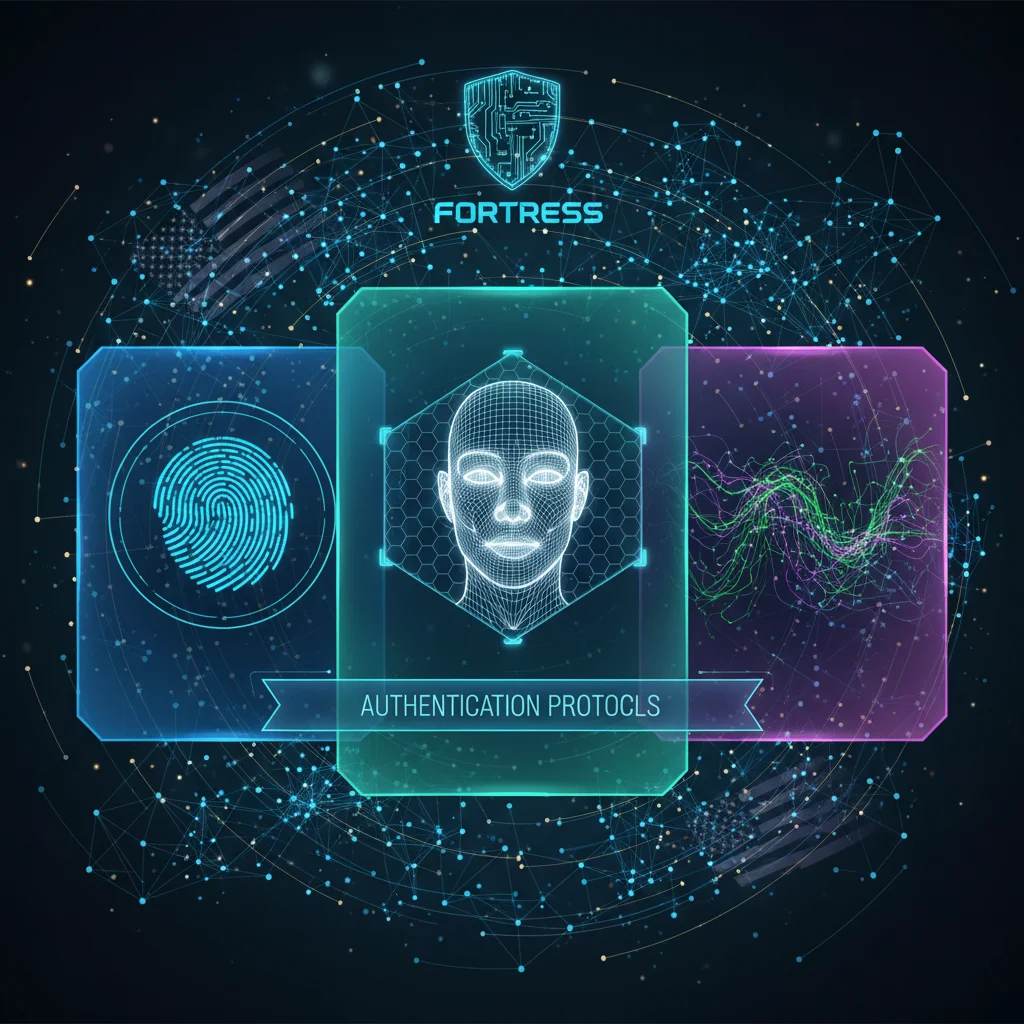
Biometric Authentication in 2026: Comparing 3 Leading Solutions for US Data Security
In the rapidly evolving landscape of cybersecurity, traditional password-based authentication is becoming increasingly vulnerable. As we approach 2026, the demand for more robust, convenient, and secure authentication methods has surged, particularly within the United States, where data privacy regulations and the value of personal information are paramount. Biometric authentication solutions are emerging as the front-runners in this race, promising a future where identity verification is not just a hurdle but an intrinsic, seamless part of digital interaction. This article delves into a comprehensive comparison of three leading biometric authentication solutions poised to dominate the US data security market in 2026: Facial Recognition, Fingerprint Scanning, and Behavioral Biometrics. We will explore their technological underpinnings, security strengths, potential vulnerabilities, user experience, and compliance considerations, offering a vital resource for businesses and individuals seeking to fortify their digital perimeters.
The Imperative for Advanced Biometric Authentication Solutions in 2026
The digital age has brought unprecedented convenience, but with it, an escalating threat landscape. Data breaches are no longer isolated incidents but daily occurrences, costing organizations billions and eroding public trust. In the US, the average cost of a data breach continues to climb, driven by stricter regulatory frameworks like CCPA and evolving federal guidelines. This economic and reputational imperative has driven a significant shift towards more advanced security protocols, with biometric authentication solutions at the forefront.
Biometrics, by definition, uses unique biological and behavioral characteristics to verify identity. Unlike passwords, which can be stolen, forgotten, or guessed, biometrics offer a more inherent and often immutable link to an individual. This inherent uniqueness reduces the risk of unauthorized access significantly. The market for biometric technology is projected to grow exponentially, fueled by advancements in AI, machine learning, and sensor technology, making these solutions more accurate, faster, and more accessible than ever before. For US data security, the adoption of these advanced solutions is not just a matter of convenience but a critical strategic imperative to protect sensitive information, comply with regulations, and maintain consumer confidence.
Understanding the Core Principles of Biometric Authentication
Before diving into specific solutions, it’s crucial to understand the fundamental principles that underpin biometric authentication solutions. All biometric systems operate on a similar cycle:
- Enrollment: A user’s biometric data (e.g., fingerprint, facial features, voice sample) is captured and stored as a unique digital template. This template is not the raw biometric data itself but a mathematical representation, designed to protect privacy.
- Storage: The template is securely stored, often encrypted and distributed, to prevent compromise.
- Comparison: During authentication, a new biometric sample is captured and compared against the stored template.
- Decision: Based on the comparison, the system makes a decision: either a match (identity verified) or no match (access denied).
Key performance metrics for biometric systems include:
- False Acceptance Rate (FAR): The probability that an unauthorized user is incorrectly accepted.
- False Rejection Rate (FRR): The probability that an authorized user is incorrectly rejected.
- Equal Error Rate (EER): The point where FAR and FRR are equal, indicating the overall accuracy of the system.
- Throughput: The speed at which the system can process authentication requests.
The goal is to achieve a low EER with high throughput, ensuring both security and a positive user experience. The US government, through agencies like NIST (National Institute of Standards and Technology), plays a significant role in establishing standards and guidelines for biometric authentication solutions, particularly for federal agencies and critical infrastructure, influencing broader adoption and security best practices.
Solution 1: Facial Recognition – The Visual Key
Technological Overview and How it Works
Facial recognition technology analyzes unique facial features to verify identity. Modern systems use advanced AI and machine learning algorithms to map nodal points on a face – the distance between the eyes, width of the nose, depth of eye sockets, cheekbone shape, jawline, etc. These measurements create a unique facial signature or template. When a user attempts to authenticate, a camera captures their face, and this new image is processed and compared against the stored template. Sophisticated algorithms can even account for variations due to aging, different lighting conditions, glasses, or minor facial changes.
The technology has evolved significantly, moving beyond simple 2D image matching to incorporate 3D mapping and ‘liveness detection.’ Liveness detection is crucial for preventing spoofing attacks using photos, videos, or masks. This can involve analyzing micro-expressions, eye movements, skin texture, or infrared light patterns. The ubiquity of high-quality cameras on smartphones and laptops has made facial recognition a highly accessible and convenient biometric authentication method.
Security Strengths and Vulnerabilities
Strengths:
- Convenience: Non-contact and often passive, offering a seamless user experience.
- Speed: Authentication can be near-instantaneous.
- Ubiquity: Can be implemented on most devices with a camera.
- Liveness Detection: Advanced systems effectively counter spoofing attempts.
Vulnerabilities:
- Spoofing: While Liveness detection mitigates this, sophisticated attackers might still attempt to bypass it with high-fidelity masks or deepfakes.
- Environmental Factors: Poor lighting, extreme angles, or partial obstructions can affect accuracy.
- Privacy Concerns: The ability to identify individuals from public surveillance footage raises significant societal and privacy debates.
- Bias: Some algorithms have shown biases in accuracy across different demographics, leading to higher FRR for certain groups.
User Experience and US Compliance Considerations
For users, facial recognition offers unparalleled convenience. Unlocking a phone or accessing an application simply by looking at the device is a highly intuitive experience. This low friction is a major driver of its adoption in consumer electronics and increasingly in enterprise applications.
In the US, compliance for facial recognition is a complex and evolving area. There is no single federal law specifically governing facial recognition across all applications. However, state laws (like Illinois’ Biometric Information Privacy Act – BIPA) are emerging as significant regulatory forces, requiring explicit consent for the collection and storage of biometric data. Federal agencies, particularly those dealing with law enforcement and national security, adhere to strict NIST guidelines for facial recognition systems, focusing on accuracy, fairness, and security. Businesses deploying facial recognition must navigate this patchwork of regulations, ensuring transparency, consent, and robust data protection measures for the stored facial templates.
Solution 2: Fingerprint Scanning – The Classic Standard
Technological Overview and How it Works
Fingerprint scanning is arguably the most recognized and widely adopted biometric authentication solution. It relies on the unique pattern of ridges and valleys on a person’s finger. There are several types of fingerprint scanners:
- Optical Scanners: Capture a 2D image of the fingerprint using light.
- Capacitive Scanners: Use electrical current to create an image of the fingerprint’s ridges and valleys. These are common in smartphones.
- Ultrasonic Scanners: Use sound waves to create a highly detailed 3D map of the fingerprint, including pores and internal features. This offers superior spoofing resistance.
During enrollment, multiple scans of a finger are taken to create a comprehensive template. During authentication, a new scan is matched against this template. Advanced algorithms can compensate for minor cuts, dirt, or moisture, improving accuracy and reliability.
Security Strengths and Vulnerabilities
Strengths:
- High Accuracy: Modern fingerprint scanners, especially ultrasonic ones, offer very low FAR.
- Widespread Adoption: Familiar to users, leading to high acceptance.
- Cost-Effective: Sensor technology is mature and relatively inexpensive.
- Robustness: Can withstand minor surface damage to the finger.
Vulnerabilities:
- Spoofing: Older or less sophisticated scanners can be fooled by artificial fingerprints (e.g., made from gelatin or latex), though liveness detection and 3D scanning mitigate this.
- Physical Damage: Severe cuts, burns, or wear on fingertips can prevent successful authentication.
- Privacy Concerns: While templates are stored, the uniqueness of fingerprints means their compromise could have long-term implications.
- Contact Requirement: Requires physical interaction with a sensor, which can be perceived as less hygienic in some contexts.
User Experience and US Compliance Considerations
Fingerprint scanning provides a fast and familiar user experience. Most smartphone users are accustomed to unlocking their devices with a touch, making it a highly accepted and intuitive method. Its discreet nature also appeals to users who prefer a less overt form of authentication compared to facial scanning.
From a US compliance perspective, fingerprint data is generally classified as ‘biometric data’ and falls under similar state-specific privacy laws as facial recognition (e.g., BIPA). Organizations must ensure transparency in data collection, obtain explicit consent, and implement robust security measures for storing fingerprint templates. For federal applications, NIST standards provide detailed guidelines on the performance and security requirements for fingerprint authentication systems, emphasizing secure enrollment, template protection, and anti-spoofing capabilities. As with all biometric authentication solutions, adherence to these guidelines is crucial for regulatory compliance and building user trust.
Solution 3: Behavioral Biometrics – The Invisible Guardian
Technological Overview and How it Works
Behavioral biometrics represents a more subtle yet powerful approach to identity verification. Instead of relying on static physical traits, it analyzes unique patterns in how a user interacts with a device. This includes typing rhythm (keystroke dynamics), mouse movements, swipe patterns, gait, voice patterns, and even how a user holds their phone. These behaviors are often subconscious and incredibly difficult to replicate, providing a continuous layer of authentication.
The technology uses machine learning to build a profile of a user’s normal behavior. It then continuously monitors interactions, looking for deviations from this baseline. If significant anomalies are detected (e.g., a sudden change in typing speed, unusual mouse movements, or a different device usage pattern), the system can trigger a step-up authentication challenge or flag the session as suspicious. This ‘continuous authentication’ is a key differentiator, as it verifies identity not just at login but throughout the entire session.
Security Strengths and Vulnerabilities
Strengths:
- Continuous Authentication: Provides ongoing security beyond initial login, detecting unauthorized access in real-time.
- Passive and Frictionless: Operates in the background without requiring explicit user action, leading to an extremely seamless experience.
- Difficult to Spoof: Replicating a person’s precise behavioral patterns is exceedingly challenging for an impostor.
- Adaptive: Learns and adapts to changes in user behavior over time.
- Privacy-Enhancing: Often uses aggregated, anonymized data patterns rather than direct biological identifiers, potentially reducing some privacy concerns associated with physical biometrics.
Vulnerabilities:
- False Positives: Significant changes in a user’s behavior (e.g., stress, injury, using a new device, even illness) can lead to legitimate users being flagged.
- Enrollment Period: Requires a period of data collection to build an accurate baseline profile.
- Context Dependency: Accuracy can be influenced by the context of interaction (e.g., a user might type differently when relaxed vs. under pressure).
- Less Definitive: Unlike a direct match in physical biometrics, behavioral biometrics often provides a probability score, requiring careful tuning to balance security and user convenience.

User Experience and US Compliance Considerations
Behavioral biometrics offers the most frictionless user experience among the biometric authentication solutions. Users are authenticated passively and continuously, often without even realizing it. This is particularly valuable for high-value transactions or sensitive applications where continuous verification adds an extra layer of security without interrupting workflows. The reduced need for explicit authentication steps can significantly improve productivity and satisfaction.
In the US, the regulatory landscape for behavioral biometrics is less defined than for physical biometrics. Because it often relies on indirect patterns rather than direct biological scans, it may not always fall under the stricter definitions of ‘biometric information’ in existing state laws like BIPA. However, organizations must still consider general data privacy principles, such as transparency about data collection and purpose, and ensure that the continuous monitoring does not infringe on user privacy expectations. As the technology matures and becomes more prevalent, it is likely that specific guidelines or regulations will emerge, particularly if the data collected could be used to uniquely identify individuals in a way that raises privacy concerns. Adopting a privacy-by-design approach is crucial for any organization implementing behavioral biometrics.
Comparative Analysis: Facial Recognition vs. Fingerprint vs. Behavioral Biometrics
To provide a clear picture for US data security professionals, let’s compare these three leading biometric authentication solutions across several key dimensions:
Security and Accuracy
- Facial Recognition: High accuracy with advanced liveness detection. Susceptible to sophisticated deepfake spoofing if not state-of-the-art.
- Fingerprint Scanning: Very high accuracy, especially with ultrasonic sensors. Vulnerable to physical spoofing on older systems, but modern systems are robust.
- Behavioral Biometrics: High security due to continuous authentication and difficulty of replication. Accuracy can be influenced by changes in user behavior. Best used as a layer of security rather than a sole authenticator.
User Experience and Convenience
- Facial Recognition: Extremely convenient, non-contact, and fast.
- Fingerprint Scanning: Highly convenient and familiar, requires physical contact.
- Behavioral Biometrics: Most frictionless (passive and continuous), often imperceptible to the user.
Deployment and Cost
- Facial Recognition: Requires high-quality cameras and significant processing power (often cloud-based AI). Costs vary widely depending on scale.
- Fingerprint Scanning: Mature technology, relatively inexpensive sensors, easy to integrate into devices.
- Behavioral Biometrics: Software-based, requires robust analytics platforms and machine learning infrastructure. Can be integrated into existing systems with less hardware cost.
Privacy and Compliance (US Context)
- Facial Recognition: Significant privacy concerns, strict state-level regulations (e.g., BIPA), evolving federal scrutiny. Requires explicit consent and robust data handling.
- Fingerprint Scanning: Similar privacy concerns to facial recognition, subject to state biometric privacy laws. Requires secure template storage and consent.
- Behavioral Biometrics: Generally lower direct privacy risk as it uses patterns, not direct biological scans. However, continuous monitoring raises data collection transparency questions. Less defined regulatory landscape but general data privacy principles apply.
Ideal Use Cases for US Data Security
- Facial Recognition: Consumer device unlocking, secure payment verification, physical access control in corporate environments, identity verification for online services (with strong consent).
- Fingerprint Scanning: Smartphone and laptop unlocking, secure login for applications, point-of-sale transactions, limited physical access control.
- Behavioral Biometrics: Continuous fraud detection in banking and e-commerce, insider threat detection, continuous authentication for high-security enterprise applications, passive user verification in government services.
Emerging Trends and Future Outlook for Biometric Authentication
The field of biometric authentication solutions is far from stagnant. Several trends are shaping its future, particularly in the US context:
- Multi-modal Biometrics: Combining two or more biometric modalities (e.g., facial recognition + fingerprint, or voice + behavioral) to significantly enhance security and accuracy, while reducing FAR and FRR. This offers a layered defense against spoofing.
- Continuous Authentication Expansion: Behavioral biometrics is poised for massive growth, moving beyond login to provide ongoing, real-time identity verification throughout a user’s session.
- Privacy-Enhancing Technologies (PETs): Development of techniques like homomorphic encryption and secure multi-party computation to process biometric data without decrypting it, thereby enhancing privacy and reducing the risk of data breaches.
- Decentralized Biometric Identity: Storing biometric templates on the user’s device or in a blockchain-based decentralized identity system, giving users more control over their data and reducing reliance on centralized databases.
- Standardization and Regulation: As adoption grows, expect more comprehensive federal and international standards for biometric data handling, interoperability, and privacy, moving beyond the current current fragmented US state-level approach.
- AI and Machine Learning Refinement: Continued advancements in AI will make biometric systems even more accurate, faster, and better at detecting spoofing, while also addressing biases.
Implementing Biometric Authentication Solutions: Best Practices for US Organizations
For US organizations considering or implementing biometric authentication solutions, adherence to best practices is paramount to ensure both security and compliance:
- Conduct a Thorough Risk Assessment: Understand the specific threats and vulnerabilities relevant to your data and user base.
- Prioritize Privacy by Design: Integrate privacy considerations from the outset. Minimize data collection, anonymize where possible, and secure templates vigorously.
- Obtain Informed Consent: For physical biometrics, clearly communicate what data is collected, why, how it’s stored, and users’ rights. Obtain explicit, unambiguous consent.
- Implement Multi-Factor Authentication (MFA): Biometrics should ideally be one factor in a multi-factor authentication strategy, combined with knowledge-based (e.g., PIN) or possession-based (e.g., token) factors for maximum security.
- Secure Biometric Templates: Encrypt templates at rest and in transit. Consider secure enclaves (e.g., TrustZone, Secure Enclave Processor) or decentralized storage options.
- Regularly Audit and Update Systems: Biometric technology evolves rapidly. Regular audits, penetration testing, and software updates are essential to counter new threats.
- Train Users and Staff: Educate users on how the system works and how their data is protected. Train staff on proper handling of biometric data and incident response.
- Stay Abreast of Regulations: The US regulatory landscape is dynamic. Continuously monitor changes in federal and state laws regarding biometric data and privacy.
- Consider Vendor Reputation and Standards: Choose vendors with a proven track record, adherence to industry standards, and commitment to security and privacy. Look for NIST compliance where applicable.
Conclusion: The Future is Biometric for US Data Security
As we navigate towards 2026, the shift to biometric authentication solutions is not just a trend but a necessity for robust US data security. Facial recognition offers unparalleled convenience, fingerprint scanning provides a familiar and accurate standard, and behavioral biometrics introduces a continuous, frictionless layer of protection. Each solution has its unique strengths and weaknesses, making the choice dependent on specific use cases, risk tolerance, and compliance requirements.
The future of authentication will likely feature a blend of these technologies, leveraging multi-modal approaches to create highly secure, user-friendly, and adaptive systems. For businesses and government entities in the United States, understanding these leading solutions, their implications for privacy, and adhering to best practices and evolving regulatory frameworks will be critical. By strategically adopting and integrating advanced biometric authentication, organizations can significantly enhance their cybersecurity posture, protect sensitive data, and build enduring trust with their users in an increasingly digital world.
Related Posts: