The landscape of technology is constantly evolving, but few fields promise a transformation as profound as quantum computing. In the last six months alone, we’ve witnessed an astonishing acceleration in quantum computing breakthroughs that are not only pushing the boundaries of scientific understanding but are also profoundly impacting US tech investments. This article delves into three pivotal advancements that have redefined what’s possible, examining their technical merits and the ripple effects they create across the American technology sector.
Understanding these developments is crucial for investors, policymakers, and tech enthusiasts alike. The race to achieve quantum supremacy is heating up, and the United States is a key player, with significant capital flowing into research and development. From enhancing qubit stability to developing more robust error correction mechanisms, these recent quantum computing breakthroughs are paving the way for applications that were once considered science fiction. We’ll explore how these advancements are attracting unprecedented levels of investment and shaping the strategic direction of major tech companies and startups alike.
The journey into quantum computing is complex, involving principles of quantum mechanics that defy classical intuition. However, the potential rewards – from drug discovery and materials science to cryptography and artificial intelligence – are immense. As we unpack these recent advancements, it becomes clear that the United States is positioning itself at the forefront of this revolution, leveraging both public and private sector funding to accelerate progress. The implications for national security, economic competitiveness, and scientific discovery are staggering, making the study of these quantum computing breakthroughs more relevant than ever.
Accelerated Qubit Coherence Times: A Game Changer for Quantum Computing Breakthroughs
One of the most significant challenges in quantum computing has always been maintaining qubit coherence – the ability of a quantum bit to retain its quantum state. Qubits are incredibly fragile and prone to decoherence, where they lose their quantum properties due to interactions with their environment. This instability limits the time available for quantum computations, making complex algorithms difficult to execute. However, recent months have seen remarkable progress in extending qubit coherence times, marking a pivotal moment in quantum computing breakthroughs.
Researchers at several leading US institutions and tech companies have reported achieving significantly longer coherence times across various qubit architectures, including superconducting qubits, trapped ions, and topological qubits. For instance, new material science innovations and improved isolation techniques have allowed superconducting qubits to maintain their quantum states for microseconds, an order of magnitude increase in some cases. This might seem like a fleeting moment in human terms, but in the quantum realm, it’s an eternity, allowing for many more computational operations before decoherence sets in.
The impact of this particular breakthrough is multifaceted. Longer coherence times directly translate to higher fidelity quantum operations and the ability to run deeper quantum circuits. This is fundamental for tackling more complex problems and reducing the error rates that plague current quantum systems. For US tech investments, this means that the pathway to fault-tolerant quantum computers, though still distant, now appears considerably clearer. Companies like IBM, Google, and Intel, all heavily invested in superconducting qubit research, are seeing their long-term visions become more tangible.
Furthermore, extended coherence times are critical for developing effective quantum error correction (QEC) codes. QEC requires a significant overhead of physical qubits to encode and protect logical qubits, and these physical qubits must maintain coherence long enough for the error correction protocols to execute successfully. With improved coherence, the resource requirements for QEC become less daunting, accelerating the development of truly robust quantum computers. This particular area of quantum computing breakthroughs is attracting substantial venture capital, as startups focus on developing specialized hardware and software for enhanced qubit stability and error mitigation.
The ability to sustain quantum states for longer periods also opens up new avenues for quantum communication and networking, which rely on the reliable transmission of quantum information over distances. This has significant implications for secure communication and the potential creation of a quantum internet, an area of strategic interest for both commercial and national security applications in the US. The advancements in qubit coherence are not just incremental improvements; they are foundational shifts that underpin nearly every other aspect of quantum computing development, making them one of the most exciting quantum computing breakthroughs to watch.
Novel Quantum Error Correction Architectures: Paving the Way for Reliable Quantum Computation
While extended qubit coherence times are crucial, they are not a complete solution to the inherent fragility of quantum systems. Even with improved stability, qubits are still susceptible to noise and errors, which can quickly corrupt computations. This is where quantum error correction (QEC) becomes indispensable. In the past six months, there have been significant quantum computing breakthroughs in developing novel QEC architectures and demonstrating their efficacy, moving us closer to fault-tolerant quantum computing.
Traditional QEC schemes require a massive number of physical qubits to protect a single logical qubit, making them resource-intensive and challenging to implement with current hardware. However, recent research has focused on more efficient and hardware-agnostic QEC codes, as well as experimental demonstrations that validate theoretical models. For instance, advancements in topological quantum computing, which intrinsically offers some level of error protection, have shown promising results. Microsoft’s continued investment in topological qubits, despite their experimental nature, underscores the potential of this approach.

Another significant development involves the experimental realization of QEC using fewer physical qubits than previously thought possible, through clever encoding strategies and optimized control pulses. Researchers have successfully demonstrated the protection of quantum information in small-scale quantum processors, showing that errors can be detected and corrected in real-time without destroying the delicate quantum states. These demonstrations, while still on a small scale, provide crucial empirical evidence that QEC is not just a theoretical construct but an achievable engineering feat.
The implications for US tech investments are profound. Companies specializing in quantum software and algorithms are now able to design more robust applications, knowing that the underlying hardware is becoming more reliable. Furthermore, the ability to build fault-tolerant quantum computers will unlock the full potential of quantum algorithms, allowing for the solution of problems currently intractable for even the most powerful supercomputers. This includes breaking modern encryption standards, simulating complex molecular interactions for drug discovery, and optimizing logistics on an unprecedented scale.
The race to develop practical QEC is attracting significant investment from government agencies like the National Science Foundation (NSF) and the Department of Energy (DOE), alongside private capital. Startups are emerging with innovative approaches to QEC, from developing specialized control electronics to designing quantum compilers that can automatically implement error correction protocols. These quantum computing breakthroughs in QEC are not just about fixing errors; they are about building a foundation for the entire quantum computing ecosystem, ensuring that the powerful computations performed by quantum machines are also reliable and trustworthy.
Hybrid Quantum-Classical Algorithms Achieving Practical Speedups: Bridging the Gap to Real-World Applications
While the ultimate goal of quantum computing is to build universal fault-tolerant machines, the path to that future is paved with noisy intermediate-scale quantum (NISQ) devices. These devices, with limited qubits and coherence times, are not yet capable of full error correction. However, the last six months have seen significant quantum computing breakthroughs in developing and implementing hybrid quantum-classical algorithms that can leverage the strengths of both quantum and classical processors, achieving practical speedups for specific problems.
Hybrid algorithms, such as the Variational Quantum Eigensolver (VQE) for chemistry and the Quantum Approximate Optimization Algorithm (QAOA) for optimization problems, offload computationally intensive tasks to quantum processors while classical computers handle optimization and error mitigation. The recent advancements lie in making these algorithms more efficient, robust, and applicable to real-world scenarios. For example, researchers have demonstrated improved convergence rates and accuracy for VQE simulations of molecular energies, bringing quantum chemistry closer to practical utility.
A notable breakthrough involves the development of more sophisticated classical optimizers that can better guide the quantum processor, leading to faster convergence and more accurate results on NISQ devices. This interplay between classical and quantum computing is crucial for extracting useful work from today’s limited quantum hardware. Furthermore, new techniques for noise reduction and error mitigation at the algorithmic level, distinct from full QEC, have allowed for more reliable computations even in the presence of hardware imperfections. This includes methods like error mitigation via classical post-processing and dynamic decoupling sequences.
The impact on US tech investments is immediate and tangible. Companies in sectors like finance, pharmaceuticals, and logistics are actively exploring and investing in hybrid quantum-classical solutions. JPMorgan Chase, for example, is researching how quantum algorithms can optimize financial portfolios, while pharmaceutical giants are looking into accelerating drug discovery through quantum simulations. These practical applications, even with NISQ devices, are demonstrating the near-term value of quantum computing, driving further investment and talent acquisition.
Startups specializing in quantum software development are thriving, creating tools and platforms that make it easier for domain experts to design and run hybrid algorithms. The focus is on developing quantum compilers, programming languages, and cloud-based quantum services that abstract away the complexities of the underlying quantum hardware. These quantum computing breakthroughs are not just about theoretical speedups; they are about delivering measurable advantages in specific, high-value applications, bridging the gap between cutting-edge research and commercial viability. The ability to demonstrate practical utility now is critical for sustaining the momentum and investment in the broader quantum computing ecosystem, positioning the US as a leader in deploying these transformative technologies.
The Broader Impact on US Tech Investments and Global Competitiveness
The cumulative effect of these quantum computing breakthroughs – extended qubit coherence, novel error correction, and practical hybrid algorithms – is a significant boost to US tech investments and its position in the global quantum race. The United States has consistently been a leader in fundamental scientific research, and this is now translating into a robust ecosystem for quantum technology development.
Venture capital funding for quantum startups in the US has seen a steady increase, with investors recognizing the long-term potential of this transformative technology. This influx of capital is fueling innovation, attracting top talent, and accelerating the commercialization of quantum solutions. Major tech giants are not only investing in their own quantum research divisions but also acquiring promising quantum startups, further consolidating expertise and resources within the US tech landscape.
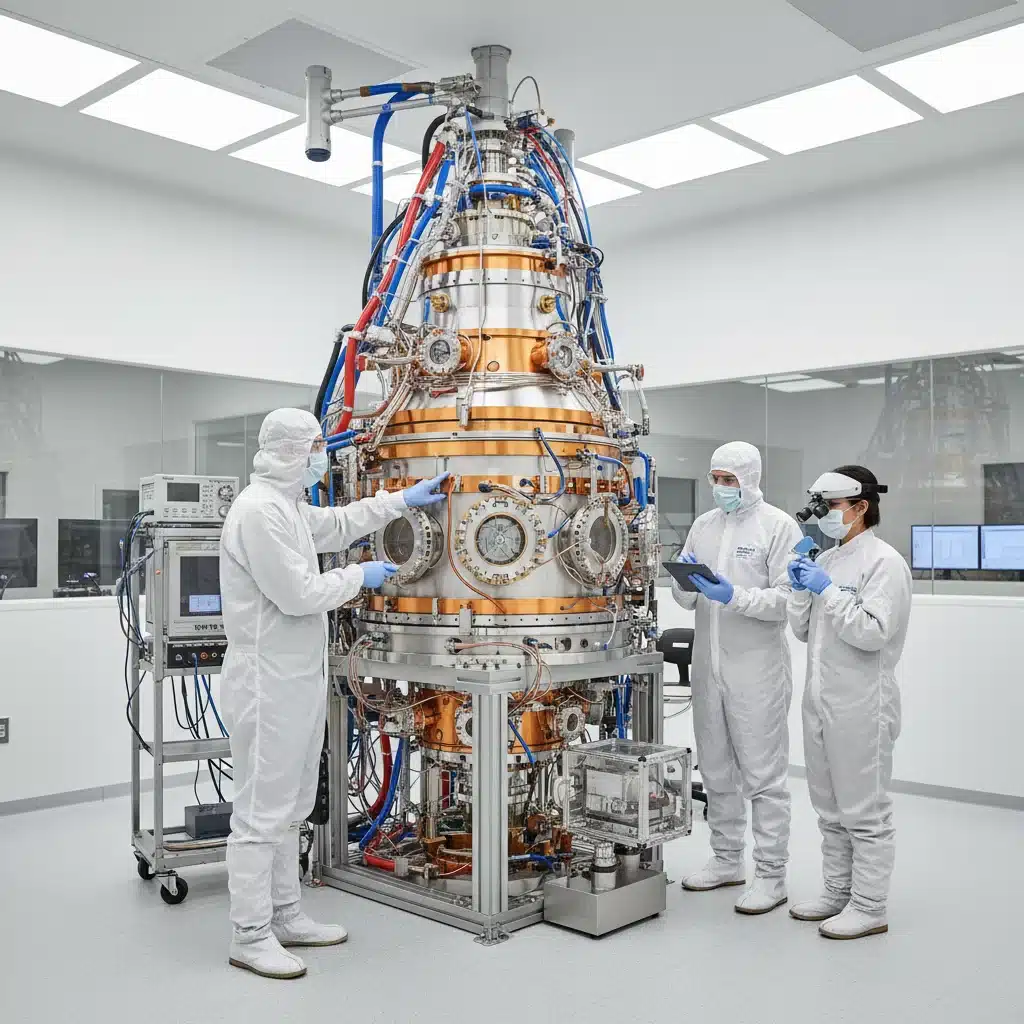
Beyond private investment, the US government plays a critical role through initiatives like the National Quantum Initiative Act, which provides substantial funding for quantum research across national labs, universities, and industry. This strategic investment ensures that the US maintains its competitive edge against other nations, particularly China, which is also heavily investing in quantum technologies. The focus is not just on basic research but also on developing a skilled workforce and fostering a robust supply chain for quantum hardware and software components.
The advancements in quantum computing also have profound implications for national security. Quantum cryptography promises unbreakable encryption, while quantum sensing could revolutionize precision measurement for defense applications. Conversely, the potential for quantum computers to break current encryption standards necessitates immediate investment in post-quantum cryptography, an area where US researchers are also making significant strides. These dual-use aspects of quantum technology underscore its strategic importance and the need for sustained investment.
The development of a strong quantum ecosystem in the US is also fostering collaboration between academia, industry, and government. This synergy is crucial for translating fundamental research into practical applications and for addressing the complex engineering challenges that remain. Conferences, workshops, and joint research projects are creating a vibrant community where ideas are exchanged, and progress is accelerated. These quantum computing breakthroughs are not isolated incidents but rather interconnected pieces of a larger puzzle, each contributing to the rapid maturation of the field.
Challenges and the Road Ahead for Quantum Computing Breakthroughs
Despite the exciting quantum computing breakthroughs of the last six months, significant challenges remain. Scaling quantum computers to thousands or even millions of stable, error-corrected qubits is an enormous engineering feat. The current generation of NISQ devices, while demonstrating practical speedups in specific cases, is still prone to noise and limited in scale.
One of the primary challenges is the sheer complexity of fabricating and controlling quantum processors. Maintaining ultra-low temperatures, isolating qubits from environmental noise, and precisely controlling their quantum states require highly specialized infrastructure and expertise. The development of robust and scalable quantum hardware continues to be a major bottleneck. Furthermore, the development of a full quantum software stack, from compilers to applications, is still in its nascent stages.
Another hurdle is the talent gap. There is a high demand for quantum physicists, engineers, and computer scientists with specialized skills in quantum mechanics and advanced computing. Universities and industry are working to address this through new educational programs and training initiatives, but it will take time to build a sufficiently large and skilled workforce to meet the demands of this rapidly expanding field.
However, the pace of innovation suggests that these challenges are not insurmountable. The recent quantum computing breakthroughs provide strong evidence that the field is progressing rapidly. Continued investment from both the public and private sectors, coupled with international collaboration (where appropriate), will be essential for overcoming these hurdles. The focus will likely remain on improving qubit quality, enhancing error correction capabilities, and developing more sophisticated hybrid algorithms that can extract maximum value from current and near-term quantum hardware.
The next few years are expected to bring even more dramatic advancements. As quantum hardware matures, we will likely see more real-world applications emerge, further solidifying the business case for quantum computing. The journey to universal fault-tolerant quantum computers is a marathon, not a sprint, but the recent progress indicates that we are moving forward with increasing speed and confidence.
Conclusion: A New Era Driven by Quantum Computing Breakthroughs
The last six months have been a period of intense activity and significant progress in the world of quantum computing. The quantum computing breakthroughs in extended qubit coherence times, novel error correction architectures, and practical hybrid quantum-classical algorithms are not just academic curiosities; they are fundamental advancements that are reshaping the technological landscape and driving substantial US tech investments.
These developments signify a crucial step towards realizing the full potential of quantum computing, moving it from the realm of theoretical possibility to tangible, impactful applications. For investors, this means new opportunities in a rapidly growing sector. For businesses, it means the promise of unprecedented computational power to solve some of the world’s most challenging problems. And for the scientific community, it represents a thrilling expansion of our understanding of the universe.
The United States, through its concerted efforts in research, development, and strategic investment, is firmly positioned at the forefront of this quantum revolution. While challenges remain, the momentum generated by these recent quantum computing breakthroughs is undeniable. The future of technology is increasingly quantum, and the innovations emerging today are laying the groundwork for a truly transformative era. Staying informed about these advancements is not just about keeping pace with technology; it’s about understanding the forces that will shape our economic and scientific future.