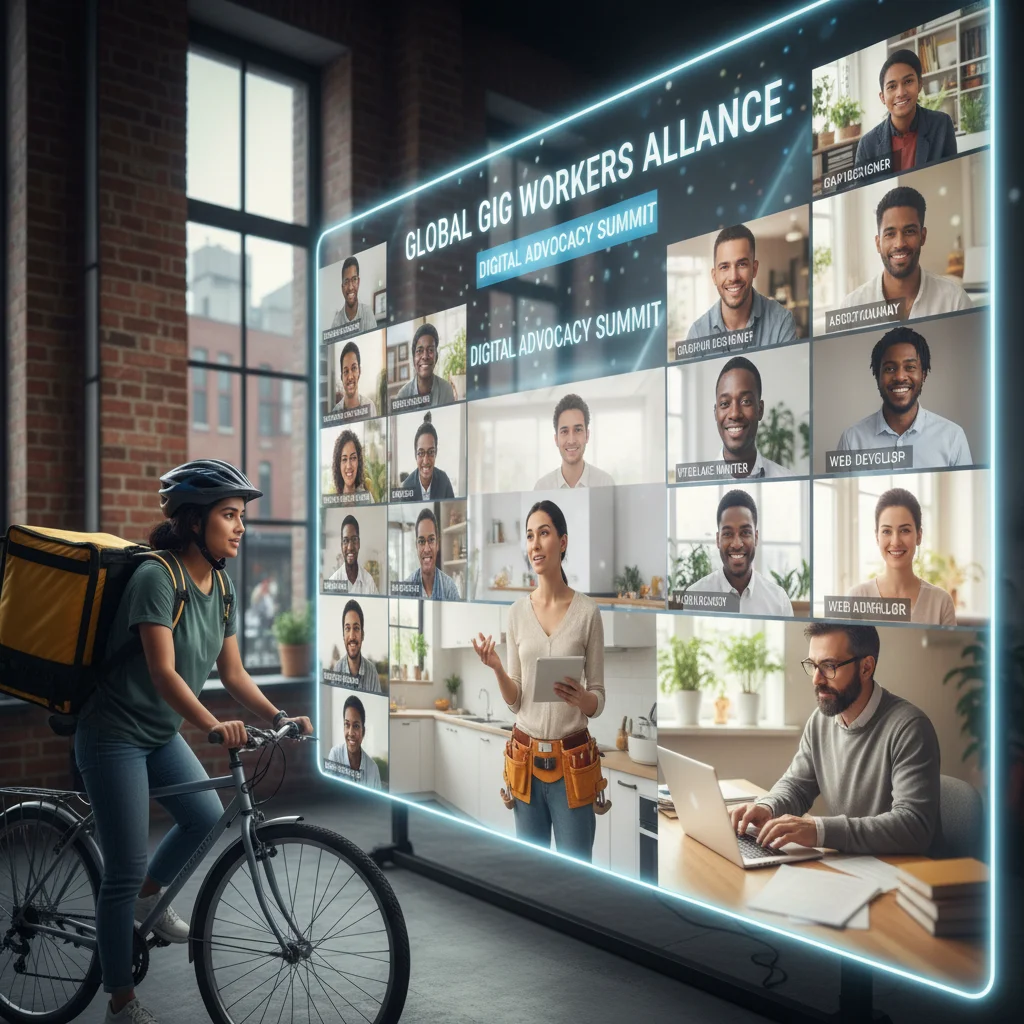
Gig Economy Solidarity: Building Worker Community in 2026
The gig economy continues to reshape labor. This post delves into how gig workers are fostering solidarity and forming communities in 2026, examining challenges, innovative solutions, and the future of collective action.
By: Emilly Correa on June 19, 2026
Last updated on: July 28, 2026
The gig economy, once a nascent concept, has firmly established itself as a dominant force in the global labor market. What began as a flexible alternative to traditional employment has evolved into a complex ecosystem, characterized by both unprecedented opportunities and significant challenges for its workforce. As we navigate 2026, the discussion around the future of work inevitably converges on the experiences of independent contractors, freelancers, and on-demand workers who form the backbone of this economy. A critical aspect of their evolving journey is the increasing emphasis on Gig Worker Solidarity and the formation of communities designed to provide support, advocacy, and a collective voice.
For years, the individualistic nature of gig work often meant isolation for workers. Unlike traditional employment, where unions and workplace communities have long served as pillars of support, gig workers often operated in silos, lacking formal structures for collective action or even informal networks for shared experiences. However, this narrative is rapidly changing. The inherent challenges of gig work – unstable income, lack of benefits, algorithmic management, and limited recourse for grievances – have spurred a powerful movement towards greater connection and mutual aid. This article delves deep into the social fabric of the gig economy in 2026, analyzing how Gig Worker Solidarity is manifesting, the innovative ways communities are forming, and what these developments mean for the future of work.
The Shifting Landscape of Gig Work: Why Solidarity Matters More Than Ever
The gig economy of 2026 is a far cry from its early iterations. Technological advancements, particularly in AI and automation, have further streamlined platforms, but also introduced new complexities for workers. Algorithmic management, while efficient, often lacks transparency and can lead to unfair deactivations or reduced earnings. The precariousness of income remains a significant concern, exacerbated by inflation and the rising cost of living. In this environment, the need for Gig Worker Solidarity has become paramount. It’s no longer just about sharing tips on maximizing earnings; it’s about advocating for fundamental rights, fair working conditions, and a sustainable livelihood.
One of the primary drivers behind this surge in solidarity is the shared experience of precarity. Despite the diversity of roles within the gig economy – from rideshare drivers and food deliverers to freelance writers and coders – many workers face similar challenges. This common ground has fostered a sense of collective identity, leading to a desire for shared solutions and mutual support. The decentralized nature of gig work, paradoxically, has also pushed workers towards digital and localized communities, creating new models of organization that are distinct from traditional labor movements but equally effective in their own right.
From Isolation to Connection: The Rise of Digital Communities
The internet, which facilitated the rise of the gig economy, is now also serving as its most powerful tool for fostering Gig Worker Solidarity. Online forums, social media groups, and dedicated apps have become crucial spaces for workers to connect, share information, and organize. These digital communities offer a platform for gig workers to discuss platform policies, share strategies for maximizing earnings, warn each other about problematic clients or areas, and provide emotional support.
In 2026, these digital communities are more sophisticated than ever. Many platforms now feature encrypted messaging, anonymous reporting mechanisms, and even built-in arbitration support, allowing workers to collectively address grievances with platforms. These aren’t just informal chat groups; they are evolving into semi-formal digital organizations that can quickly mobilize workers for collective action, whether it’s a coordinated ‘log-off’ in protest of a pay cut or a collective petition for better safety measures. The speed and reach of digital communication mean that information can spread rapidly, enabling geographically dispersed workers to act as a unified front.
Key Features of Digital Gig Worker Communities in 2026:
Information Sharing Hubs: Platforms where workers exchange real-time updates on surge pricing, busy zones, or client reviews.
Advocacy and Organizing Tools: Features for signing petitions, coordinating strikes, or communicating directly with platform management.
Peer Support Networks: Spaces for emotional support, mentorship, and sharing personal experiences of gig work challenges.
Skill-Sharing and Training: Groups dedicated to helping workers improve their skills, find new opportunities, or navigate complex tax regulations.
Legal and Rights Advice: Forums where workers can seek advice on their rights, understand platform terms of service, or share legal resources.
Beyond the Screen: The Emergence of Localized Networks and Co-operatives
While digital communities are vital, the drive for Gig Worker Solidarity also extends into the physical world. Localized networks and worker co-operatives are gaining significant traction in 2026. These initiatives bring gig workers together in physical spaces, fostering a deeper sense of community and enabling direct action.
Worker co-operatives, in particular, represent a powerful model for gig workers to reclaim agency. Instead of working for a third-party platform, workers collectively own and manage the platform or service. This model ensures that profits are shared equitably, and workers have a direct say in their working conditions, pricing, and platform policies. Examples include co-operatively owned rideshare services, delivery platforms, or freelance marketplaces that prioritize worker well-being over shareholder profits.
Localized networks, on the other hand, might not be formal co-operatives but focus on building community within specific geographic areas. These can take the form of regular meetups, shared co-working spaces, or local support groups. For instance, a group of delivery drivers in a particular city might organize weekly gatherings to discuss safety concerns, share local knowledge, or even pool resources for vehicle maintenance. These face-to-face interactions build trust and strengthen the bonds of Gig Worker Solidarity in ways that digital platforms alone cannot.
Challenges to Building Solidarity in a Dispersed Workforce
Despite the growing momentum, fostering Gig Worker Solidarity is not without its challenges. The very nature of gig work – its flexibility, independence, and often transient workforce – can make sustained collective action difficult. Some of the key obstacles include:
Worker Classification Debates: The ongoing legal battles around whether gig workers are employees or independent contractors continue to complicate organizing efforts. Different classifications can lead to different rights and legal frameworks for collective bargaining.
High Turnover Rates: Many gig roles experience high turnover, making it difficult to build long-term relationships and consistent participation in solidarity efforts.
Platform Retaliation: Workers who actively organize or speak out against platform policies sometimes face deactivation or reduced work opportunities, creating a climate of fear.
Geographic Dispersion: While digital tools help, the physical dispersion of gig workers can still be a barrier to traditional forms of organizing.
Diversity of Interests: The gig economy encompasses a vast array of roles and worker demographics, leading to diverse interests and priorities that can sometimes make it challenging to form a unified front.
Algorithmic Control: Platforms’ use of algorithms to manage tasks, pricing, and worker performance can be opaque, making it difficult for workers to identify clear targets for collective action or to understand how their efforts might be suppressed.
Lack of Traditional Organizing Structures: Without established unions or workplace representatives, gig workers often have to build organizing structures from scratch, which requires significant time and resources.
Economic Pressure: The immediate need for income often means workers cannot afford to take time off for organizing activities or risk their earning potential by participating in strikes.
Innovative Solutions and Future Outlook for Gig Worker Solidarity
In response to these challenges, gig workers and their advocates are developing innovative solutions that leverage technology, community organizing principles, and legal frameworks. The landscape of Gig Worker Solidarity in 2026 is thus characterized by creativity and resilience.
Emerging Solutions Include:
Portable Benefits Systems: Initiatives that allow gig workers to accumulate benefits (like health insurance or retirement savings) that are not tied to a single platform but are portable across different gigs. This reduces reliance on individual platforms and strengthens workers’ collective bargaining position.
Data Cooperatives: Organizations where gig workers collectively own and control their data, using it to negotiate better terms with platforms or to build alternative worker-owned platforms. This addresses the power imbalance inherent in platform data ownership.
Algorithmic Accountability Initiatives: Efforts to push for greater transparency in algorithmic management, allowing workers to understand how decisions are made regarding their pay, tasks, and ratings. This empowers workers to challenge unfair practices collectively.
Cross-Platform Coalitions: Unions and advocacy groups are increasingly forming coalitions that span multiple gig platforms and industries, recognizing that the challenges faced by a rideshare driver are often similar to those faced by a freelance graphic designer. These broader coalitions amplify the voice of Gig Worker Solidarity.
Hybrid Organizing Models: Combining the rapid communication of digital platforms with the trust-building and localized action of physical meetups to create robust, adaptable organizing strategies.
Legal and Policy Advocacy: Continuous lobbying for legislative changes that recognize gig workers’ rights, establish fair pay standards, and mandate access to benefits. The legal landscape is slowly evolving to catch up with the realities of the gig economy.
The future of Gig Worker Solidarity in 2026 is undoubtedly one of continued evolution. As platforms adapt and new technologies emerge, so too will the strategies employed by workers seeking collective power. The trend suggests a move towards more formalized, yet still flexible, structures of organization. The goal is not necessarily to replicate traditional union models but to create new paradigms of collective action that fit the unique characteristics of gig work.
The Impact of Gig Worker Solidarity on the Broader Labor Movement
The rise of Gig Worker Solidarity has significant implications not just for gig workers themselves, but for the broader labor movement. It is forcing traditional unions to rethink their strategies and embrace new models of organizing. Many established unions are now actively engaging with gig workers, offering support, resources, and a platform for their advocacy.
Furthermore, the innovations pioneered by gig worker communities – particularly in digital organizing and cross-platform collaboration – are providing valuable lessons for workers in other sectors. The challenges faced by gig workers often highlight systemic issues within the modern labor market, and their efforts to build solidarity can serve as a blueprint for collective action in an increasingly fragmented and flexible workforce.
The conversation around Gig Worker Solidarity is also influencing public discourse and policy debates. As more stories of collective action and successful advocacy emerge, public awareness of the working conditions in the gig economy grows. This increased scrutiny puts pressure on platforms and governments to address worker concerns, leading to potential legislative changes and a more equitable distribution of power within the gig economy.
Case Studies in Collective Action: Success Stories from 2026
To truly understand the impact of Gig Worker Solidarity, it’s helpful to look at real-world examples from 2026. While specific company names might vary, the types of actions and their outcomes illustrate the power of collective organizing:
The ‘Fair Fare’ Coalition: In a major metropolitan area, a coalition of rideshare drivers from multiple platforms successfully negotiated a minimum per-mile and per-minute rate with local authorities, bypassing direct platform negotiations. This was achieved through extensive digital organizing, local community meetings, and a coordinated ‘app-off’ campaign that garnered significant media attention.
Freelance Artists’ Guild Online: A global online guild for freelance artists and designers established a standardized contract template and a peer-review system for clients. Members collectively boycott clients who violate the terms, leading to improved payment practices and project clarity across the industry. Their success was built on a strong digital presence and a commitment to mutual protection.
Delivery Workers’ Safety Alliance: Facing increasing traffic accidents and lack of insurance, delivery workers in several cities formed a ‘Safety Alliance.’ They successfully lobbied city councils for dedicated bike lanes, safer delivery zones, and mandated platform contributions to a portable accident insurance fund, demonstrating the effectiveness of localized, issue-specific solidarity.
These examples underscore that Gig Worker Solidarity is not a theoretical concept but a living, breathing movement that is actively shaping the working lives of millions. These successes, often achieved against significant odds, provide inspiration and a roadmap for future collective action.
Conclusion: The Enduring Power of Collective Action in the Gig Economy
The gig economy in 2026 is a testament to human adaptability and the enduring power of collective action. What was once perceived as a fragmented, individualized workforce is steadily coalescing into a powerful force for change. The growth of Gig Worker Solidarity, facilitated by both digital innovation and grassroots organizing, is reshaping the dynamics between workers, platforms, and policymakers.
As we move forward, the focus will continue to be on building sustainable models of support, advocacy, and community for gig workers. This includes refining portable benefits systems, strengthening worker-owned platforms, pushing for greater algorithmic transparency, and advocating for comprehensive legislative reform. The journey towards a more equitable gig economy is ongoing, but the foundation of solidarity has been firmly laid. The collective voice of gig workers, once a whisper, is now a chorus, demanding recognition, fairness, and a sustainable future for all who contribute to this vital sector of the global economy.
The lessons learned from the gig economy’s social fabric will undoubtedly reverberate across the entire labor market, influencing how we think about work, rights, and community in the 21st century. The evolution of Gig Worker Solidarity is not just a story about a specific segment of the workforce; it is a narrative about the fundamental human need for connection, support, and the collective pursuit of a better future for all.
Emilly Correa has a degree in journalism and a postgraduate degree in Digital Marketing, specializing in Content Production for Social Media. With experience in copywriting and blog management, she combines her passion for writing with digital engagement strategies. She has worked in communications agencies and now dedicates herself to producing informative articles and trend analyses.