Volunteerism 2026: Shifts, Impact & Demographics in the US
Dive into US volunteerism in 2026, examining how participation has shifted across various demographic groups and the resulting social impact. Understand the future of community service.
By: Emilly Correa on May 7, 2026
Last updated on: July 28, 2026
Volunteerism 2026: Shifts, Impact & Demographics in the US
US Volunteerism Trends: A Look at 2026’s Evolving Landscape
The spirit of giving back, of dedicating one’s time and effort to a cause greater than oneself, has long been a cornerstone of American society. However, the landscape of volunteerism is anything but static. As we navigate through 2026, significant shifts in participation, motivations, and the very nature of engagement are becoming increasingly apparent across various US demographics. Understanding these US volunteerism trends is crucial for non-profits, community leaders, and policymakers alike, as it dictates the efficacy of social programs and the overall health of our communities.
This comprehensive analysis delves into the intricate patterns defining volunteerism in the United States in 2026. We will explore how different demographic groups are engaging, what drives their participation, and the profound social impact these evolving dynamics create. From the surge in skills-based volunteering to the persistent challenges of recruitment and retention, the picture of American volunteerism in the mid-2020s is complex and multifaceted.
The Shifting Sands of Participation: Who is Volunteering in 2026?
Historically, volunteer rates have fluctuated, influenced by economic conditions, social movements, and technological advancements. In 2026, we observe distinct patterns emerging within different demographic segments. While overall volunteer rates might show stability or slight dips, the composition of the volunteer force is undergoing a significant transformation. This section will break down participation by age, ethnicity, socioeconomic status, and geographic location, providing a granular view of current US volunteerism trends.
Generational Divides and Commonalities
Each generation brings its unique perspectives and preferences to the table when it comes to civic engagement. In 2026, the distinctions are starker than ever:
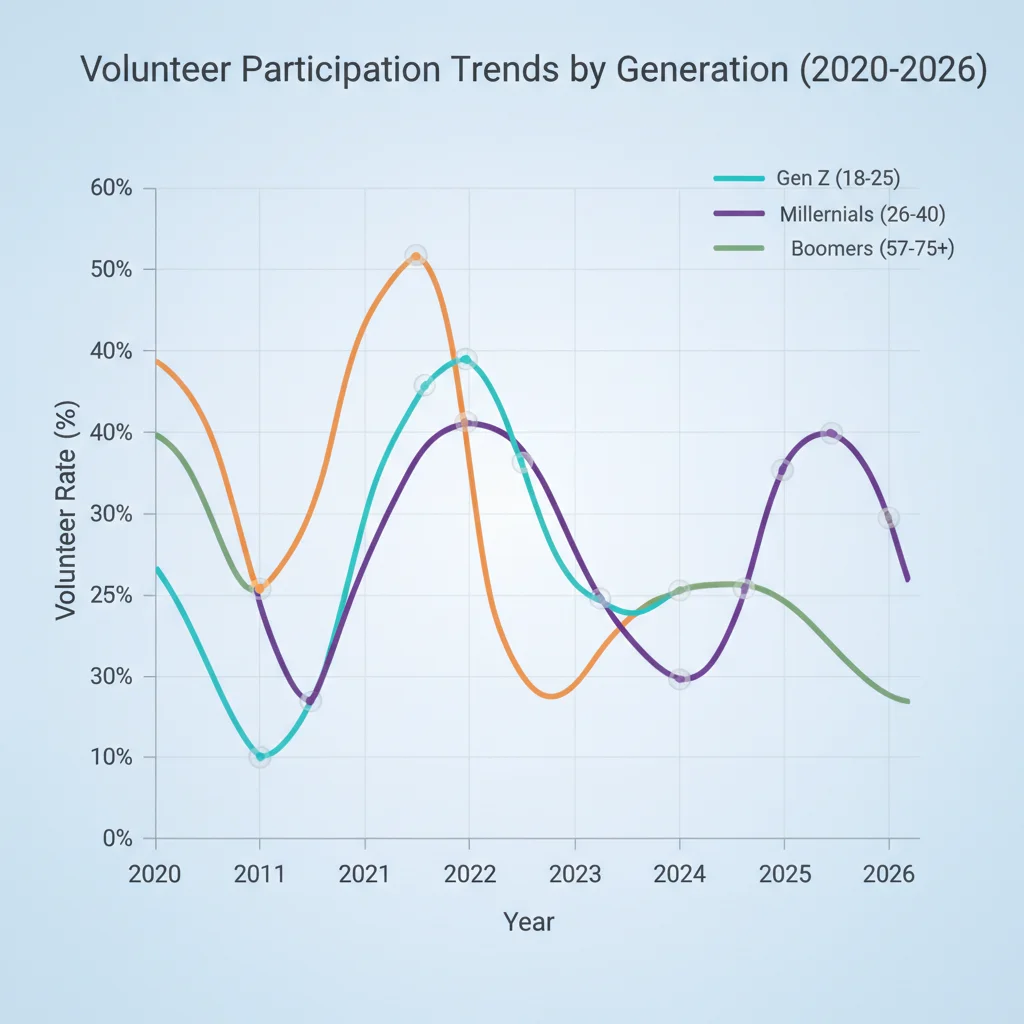
Generation Z (Born 1997-2012): This cohort is characterized by its digital native status and a strong sense of social justice. They are less likely to engage in traditional, long-term volunteering commitments but are highly responsive to short-term, impact-driven projects, often leveraging social media for advocacy and awareness. Their volunteering often intertwines with their online presence, making virtual activism and micro-volunteering increasingly popular. They seek transparency, authenticity, and a clear understanding of the impact of their efforts. Organizations that offer flexible, technology-driven opportunities and align with their values around climate change, equality, and mental health are most successful in attracting Gen Z volunteers.
Millennials (Born 1981-1996): Now firmly established in their careers and often raising families, Millennials continue to be a significant force in volunteerism. They prioritize work-life balance and seek opportunities that offer skill development, networking, or direct benefits to their children’s schools or local communities. Corporate social responsibility (CSR) programs are particularly effective in engaging this demographic, as they often combine professional development with community service. They are also adept at leveraging technology for organizing and participating in volunteer activities, from crowdfunding to online mentorship.
Generation X (Born 1965-1980): Often referred to as the ‘sandwich generation,’ Gen X volunteers are juggling multiple responsibilities. Their engagement is often driven by a desire to make a tangible difference in their local community, particularly in areas affecting their families or immediate environment. They tend to be reliable, committed volunteers who prefer structured roles and clear objectives. Their experience and leadership skills are invaluable, and organizations often find them to be excellent mentors for younger volunteers.
Baby Boomers (Born 1946-1964): Many Boomers are entering or already in retirement, offering a wealth of experience, time, and wisdom. They are often drawn to causes that resonate with their life experiences, such as healthcare, education, and environmental protection. While some embrace virtual opportunities, many still prefer in-person engagement, valuing the social connection and direct interaction that volunteering provides. They are often long-term, dedicated volunteers who form the backbone of many non-profit organizations.
Ethnic and Cultural Influences on Giving
The diverse tapestry of the United States means that volunteerism is also shaped by ethnic and cultural backgrounds. In 2026, we see:
African American Communities: Historically, volunteering within African American communities has been deeply rooted in faith-based organizations and mutual aid networks. This tradition continues, with churches and community centers serving as vital hubs for organizing and delivering services. There’s also a growing emphasis on social justice advocacy and civic engagement, often intertwined with volunteering efforts.
Hispanic/Latino Communities: Family and community (familismo) play a significant role in motivating volunteerism within Hispanic/Latino populations. Many volunteer activities are centered around supporting family members, neighbors, and community events. There’s a strong inclination towards collective well-being, often expressed through informal support networks alongside formal volunteering.
Asian American Communities: Volunteerism in Asian American communities often reflects a strong emphasis on education, youth development, and cultural preservation. Many volunteer efforts are directed towards supporting educational institutions, cultural centers, and organizations that help new immigrants integrate into society. There’s also a growing engagement in broader civic issues.
White Communities: Traditional forms of volunteering, including environmental conservation, animal welfare, and support for established charities, remain strong within white communities. There’s also a significant engagement in professional and skills-based volunteering, leveraging expertise for non-profit growth.
Understanding these cultural nuances is essential for organizations seeking to build inclusive and effective volunteer programs that resonate with the diverse motivations and preferences of different groups. The future of US volunteerism trends depends on this cultural sensitivity.
Socioeconomic Factors and Geographic Disparities
Socioeconomic status continues to play a role in volunteer participation. Individuals with higher levels of education and income tend to volunteer at higher rates, often due to greater flexibility in their schedules and access to resources. However, there’s a growing recognition of the invaluable contributions from all socioeconomic strata, particularly in informal volunteering and mutual aid networks that thrive in communities facing economic hardship.
Geographically, urban areas often present more diverse and numerous formal volunteering opportunities, while rural areas rely heavily on informal networks and a strong sense of community solidarity. Digital volunteering is helping to bridge some of these geographic gaps, allowing individuals in remote areas to contribute their skills and time to causes beyond their immediate vicinity. Analyzing these US volunteerism trends reveals a complex interplay of factors.
The Evolving Nature of Engagement: Beyond Traditional Roles
The definition of volunteering itself is expanding in 2026. No longer confined to traditional roles like serving meals or cleaning parks, modern volunteerism encompasses a wider array of activities, often driven by technology and a desire for more impactful, flexible engagement.
The Rise of Skills-Based and Pro Bono Volunteering
One of the most significant US volunteerism trends is the surge in skills-based volunteering. Professionals are increasingly seeking opportunities to apply their specialized expertise – be it marketing, legal advice, IT support, or strategic planning – to non-profit organizations. This provides immense value to charities, which often lack the resources to hire such talent, and offers volunteers a chance to make a deeper, more meaningful contribution aligned with their professional identity.
Companies are also recognizing the benefits of pro bono work, integrating it into their CSR strategies. This not only enhances their public image but also boosts employee morale, fosters team building, and develops leadership skills among their staff. This mutually beneficial arrangement is set to continue its upward trajectory.
Virtual and Micro-Volunteering: The Digital Frontier
The pandemic accelerated the adoption of virtual volunteering, and by 2026, it has become a staple of the volunteer landscape. Individuals can now contribute from anywhere, anytime, removing geographical barriers and offering unprecedented flexibility. Tasks range from online mentoring and tutoring to data entry, social media management, graphic design, and even crisis text line support. This form of volunteering is particularly appealing to Gen Z and Millennials, who are comfortable with digital platforms and appreciate the convenience.
Micro-volunteering, which involves small, bite-sized tasks that can be completed in minutes, is also gaining traction. Examples include tagging photos for scientific research, transcribing historical documents, or participating in short online surveys for social causes. These low-commitment opportunities lower the barrier to entry, making it easier for busy individuals to contribute, even if only for a few moments. These are crucial US volunteerism trends for maximizing participation.
Advocacy and Activism as Volunteerism
For many, particularly younger generations, volunteering extends beyond direct service to include advocacy and activism. Participating in protests, signing petitions, engaging in online campaigns, and raising awareness about social issues are increasingly viewed as forms of volunteerism. This shift reflects a desire for systemic change and a recognition that policy and public opinion can have a profound impact on the causes they care about. Non-profits are adapting by providing platforms and training for volunteers to become effective advocates.
Social Impact: Measuring the Ripple Effect
The evolving nature of volunteerism has a direct bearing on its social impact. In 2026, organizations are more focused than ever on demonstrating the tangible outcomes of volunteer efforts, moving beyond mere hours logged to quantifiable results. The social impact of US volunteerism trends is profound and far-reaching.
Strengthening Community Resilience
Volunteers are the lifeblood of community resilience. They provide essential services during crises, support vulnerable populations, and build social cohesion. In 2026, with increasing awareness of climate change impacts and social inequalities, volunteer efforts are crucial in preparing communities for challenges and helping them recover. From disaster relief to food bank operations and mental health support, volunteers fill critical gaps that government and market forces cannot always address.
Driving Innovation and Social Change
Skills-based and pro bono volunteers bring fresh perspectives and innovative solutions to non-profits, helping them operate more efficiently and effectively. This infusion of professional expertise can lead to breakthroughs in program design, fundraising strategies, and organizational management. Furthermore, volunteer-led advocacy campaigns are instrumental in pushing for policy changes and raising public awareness, driving significant social change on a larger scale.
Personal Growth and Well-being for Volunteers
The impact of volunteering isn’t solely external; it profoundly affects the volunteers themselves. Research in 2026 continues to highlight the positive correlation between volunteering and improved mental and physical health, increased life satisfaction, and enhanced social connections. For younger generations, volunteering offers opportunities for skill development, career exploration, and building a professional network. For retirees, it provides a sense of purpose and continued engagement, combating isolation. This reciprocal benefit is a powerful motivator for continued participation in US volunteerism trends.
Challenges and Opportunities in 2026
Despite the positive aspects, the volunteer sector faces persistent challenges alongside new opportunities in 2026.
Challenges: Recruitment, Retention, and Resource Allocation
Recruitment in a Crowded Landscape: With numerous causes vying for attention, attracting and retaining volunteers remains a constant challenge. Organizations must effectively communicate their mission, impact, and the unique value proposition for volunteers.
Burnout and Retention: High-commitment volunteer roles can lead to burnout. Strategies for recognizing volunteer contributions, providing adequate support, and offering flexible engagement options are critical for retention.
Resource Constraints: Many non-profits operate with limited staff and budgets, making it difficult to effectively manage and support their volunteer programs. Investment in volunteer management software and dedicated staff is often a luxury.
Digital Divide: While virtual volunteering offers many benefits, it can also exacerbate the digital divide, excluding those without reliable internet access or digital literacy.
Opportunities: Leveraging Technology and Collaborative Approaches
AI and Automation:Artificial intelligence can streamline volunteer management tasks, match volunteers with suitable opportunities, and personalize communication, freeing up staff to focus on more impactful engagement.
Gamification: Incorporating game-like elements into volunteering can boost engagement, motivation, and retention, particularly for younger demographics.
Cross-Sector Partnerships: Collaborations between non-profits, corporations, and government agencies can unlock new resources, expand reach, and create more comprehensive solutions to social problems.
Data-Driven Impact Measurement: Advanced analytics allow organizations to better track and communicate their social impact, which is crucial for attracting funding and volunteers. This improved transparency is a key element of future US volunteerism trends.
Conclusion: The Future of Giving in America
As we look at US volunteerism trends in 2026, it’s clear that the spirit of giving remains strong, albeit expressed in new and evolving ways. The shift towards more flexible, skills-based, and digitally-driven forms of engagement reflects a changing society, particularly the values and preferences of younger generations. While challenges persist in recruitment and resource management, the opportunities presented by technology and innovative approaches are vast.
Non-profit organizations that are agile, adaptive, and willing to embrace these new paradigms will be best positioned to harness the power of volunteerism. By understanding the diverse motivations of different demographic groups, offering varied engagement opportunities, and clearly articulating their social impact, they can ensure a vibrant and effective volunteer force for years to come. Ultimately, the continued dedication of volunteers across the nation will remain an indispensable force for positive social change, strengthening communities and enriching lives throughout the United States.
The future of volunteerism is bright, shaped by innovation, inclusion, and an unwavering commitment to making a difference. As we move forward, fostering a culture of service that resonates with all Americans will be paramount to building a more equitable and resilient society.
Emilly Correa has a degree in journalism and a postgraduate degree in Digital Marketing, specializing in Content Production for Social Media. With experience in copywriting and blog management, she combines her passion for writing with digital engagement strategies. She has worked in communications agencies and now dedicates herself to producing informative articles and trend analyses.