Blockchain in Supply Chain: 2026 US Market Analysis of 5 Leading Platforms

Blockchain in Supply Chain: A 2026 US Market Analysis of 5 Leading Platforms
The global supply chain landscape is undergoing a profound transformation, driven by technological advancements and an increasing demand for transparency, efficiency, and security. In the United States, this evolution is particularly pronounced, with businesses actively seeking innovative solutions to overcome long-standing challenges such as traceability issues, fraud, and inefficient data management. Among the myriad of emerging technologies, blockchain stands out as a game-changer, promising to revolutionize how goods move from origin to consumer. By 2026, the adoption of blockchain in supply chain operations across the US is projected to reach new heights, with several platforms vying for market dominance. This comprehensive analysis delves into the critical role of blockchain supply chain US market dynamics, examining the top five leading platforms that are shaping this future.
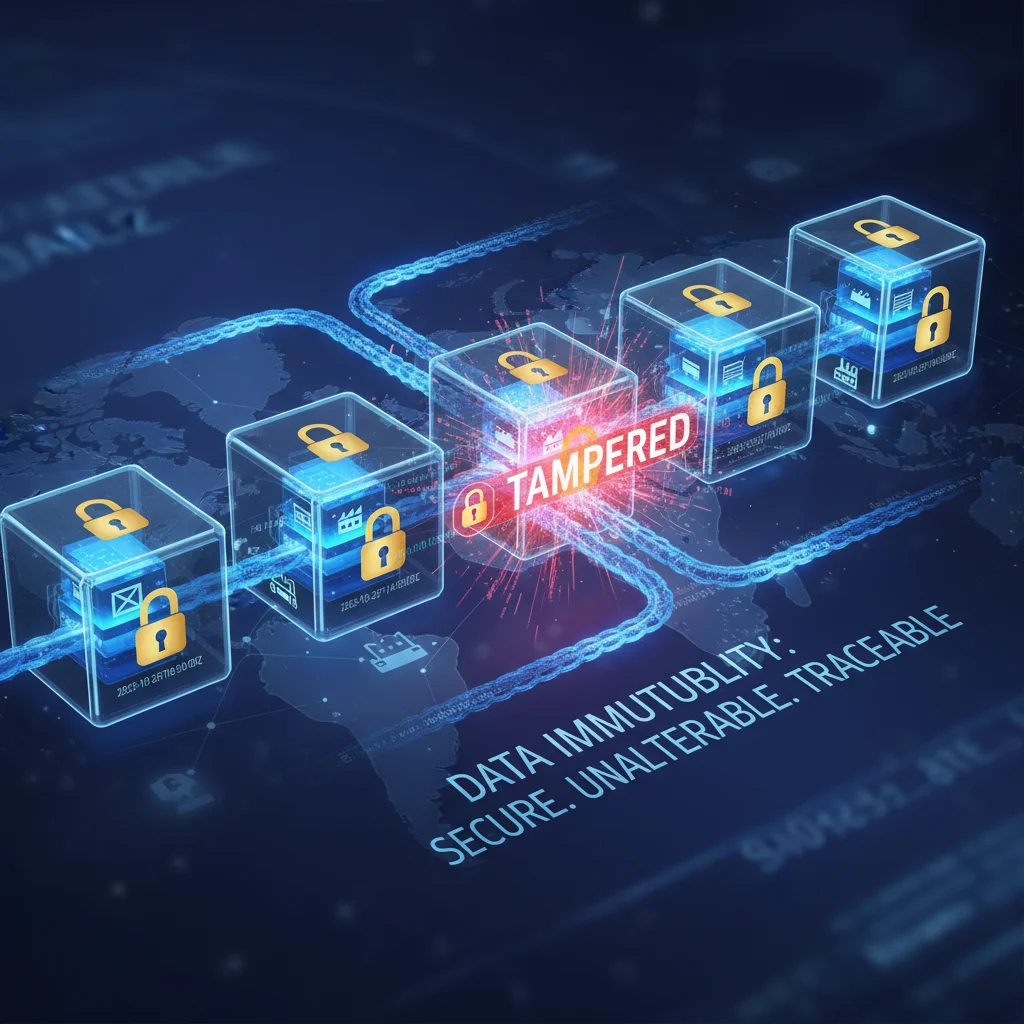
The inherent characteristics of blockchain—decentralization, immutability, and transparency—make it an ideal technology for enhancing supply chain integrity. It creates an unchangeable, shared ledger that records every transaction and movement of a product, providing an end-to-end view for all authorized participants. This not only builds trust among stakeholders but also significantly reduces the potential for errors, delays, and disputes. As the US market continues to embrace digital transformation, understanding the nuances of these leading blockchain platforms becomes paramount for businesses looking to gain a competitive edge.
The Imperative for Blockchain in the US Supply Chain
The United States, with its vast and complex supply chain infrastructure, faces unique challenges that blockchain technology is uniquely positioned to address. From agricultural products to high-tech electronics, the journey of goods often involves multiple intermediaries, diverse geographical locations, and intricate regulatory frameworks. This complexity can lead to a lack of visibility, making it difficult to pinpoint the origin of issues like product recalls, counterfeiting, or ethical sourcing concerns. The demand for greater accountability and sustainability from consumers and regulators alike is pushing companies to adopt more robust and transparent systems.
Consider the food industry, for example. Foodborne illnesses can have devastating consequences, both for public health and for the reputation of brands. With traditional tracking methods, identifying the source of contamination can take weeks, leading to widespread recalls and significant economic losses. A blockchain-powered system, however, could trace a contaminated product back to its farm of origin in seconds, enabling targeted recalls and minimizing harm. Similarly, in the pharmaceutical sector, combating counterfeit drugs is a critical concern, and blockchain offers a secure method to verify the authenticity of medicines at every step of their journey.
Moreover, the drive for operational efficiency is a constant in the US business environment. Manual processes, paper-based documentation, and fragmented data systems contribute to inefficiencies and increased costs. Blockchain automates many of these processes through smart contracts, which are self-executing agreements with the terms directly written into code. This reduces the need for intermediaries, speeds up transactions, and lowers administrative overhead. The ability to monitor goods in real-time, from raw materials to finished products, provides businesses with unprecedented insights, allowing for better inventory management, demand forecasting, and risk mitigation. The growing recognition of these benefits is fueling the rapid expansion of blockchain supply chain US market solutions.
Key Criteria for Evaluating Blockchain Platforms
Before diving into the specifics of the leading platforms, it’s crucial to establish the criteria by which they are evaluated. The effectiveness of a blockchain solution in a supply chain context hinges on several factors:
- Scalability: Can the platform handle a massive volume of transactions and data as the supply chain grows?
- Interoperability: Can it seamlessly integrate with existing enterprise systems (ERPs, WMS, CRM) and other blockchain networks?
- Security: How robust are its cryptographic measures and consensus mechanisms against cyber threats and data manipulation?
- Ease of Use/Deployment: Is the platform user-friendly for businesses without extensive blockchain expertise, and how quickly can it be implemented?
- Ecosystem and Support: Does it have a thriving developer community, strong partnerships, and comprehensive technical support?
- Cost-Effectiveness: What are the upfront and ongoing costs associated with implementation and maintenance?
- Features & Functionality: Does it offer essential supply chain features like traceability, smart contracts, IoT integration, and compliance management?
These criteria serve as a benchmark for assessing the strengths and weaknesses of each platform and understanding their potential impact on the blockchain supply chain US market.
Top 5 Leading Blockchain Platforms in the US Supply Chain Market (2026)
As we project to 2026, several platforms have established themselves as frontrunners in the US blockchain supply chain arena. Each brings a unique set of capabilities and strategic advantages. Let’s explore them in detail.
1. IBM Food Trust (Built on Hyperledger Fabric)
Overview: While named ‘Food Trust,’ IBM’s offering extends its capabilities beyond just food, representing a robust enterprise blockchain solution built on Hyperledger Fabric. It provides a secure and permissioned network for participants across the supply chain to share data. Its focus on traceability and transparency has made it a benchmark in the industry.
Key Features:
- End-to-End Traceability: Tracks products from farm to fork (or raw material to consumer) with granular detail.
- Data Immutability: Ensures that all recorded data is tamper-proof and auditable.
- Permissioned Network: Allows participants to control access to their data, ensuring privacy and regulatory compliance.
- Scalability: Designed to handle large volumes of transactions typical of enterprise-level supply chains.
- Interoperability: Integrates with existing ERP and supply chain management systems.
- Smart Contracts: Automates agreements and processes, such as payments upon delivery or quality checks.
US Market Impact: IBM Food Trust has gained significant traction, particularly in the US food and beverage sector, with major retailers and suppliers adopting it. Its strength lies in IBM’s enterprise-grade reputation and extensive network, providing a trusted framework for collaboration. By 2026, its influence is expected to expand into other sectors requiring high levels of traceability and trust, solidifying its position in the blockchain supply chain US landscape.
Challenges: While powerful, its enterprise focus can mean higher implementation costs and a steeper learning curve for smaller businesses. Network effects, while strong, still require widespread adoption within specific industries to maximize benefits.
2. VeChain Thor
Overview: VeChain Thor is a public blockchain platform designed specifically for enterprise solutions, with a strong emphasis on supply chain management and anti-counterfeiting. It utilizes two native tokens: VET for value transfer and VIPER for transaction costs, offering a stable and predictable economic model for businesses.
Key Features:
- Product Lifecycle Management: Tracks products throughout their entire lifecycle, from manufacturing to recycling.
- Anti-Counterfeiting: Uses NFC chips, RFID tags, and QR codes linked to the blockchain to verify product authenticity.
- Supply Chain Transparency: Provides real-time data on product origin, logistics, and quality control.
- IoT Integration: Seamlessly integrates with IoT devices to capture real-world data directly onto the blockchain.
- Proof of Authority (PoA) Consensus: Offers high transaction throughput and scalability suitable for enterprise use.
US Market Impact: VeChain has made inroads in luxury goods, food safety, and logistics in the US. Its comprehensive suite of tools for product authentication and real-time tracking appeals to brands looking to protect their intellectual property and assure consumers of product quality. As counterfeiting remains a significant issue, VeChain’s solutions are poised for continued growth in the blockchain supply chain US market, particularly in sectors where product authenticity is paramount.
Challenges: As a public blockchain, it faces the challenge of managing public perception and volatility, though its dual-token model aims to mitigate this for enterprise users. Adoption still requires significant integration efforts for businesses.
3. TradeLens (Joint Venture by IBM and Maersk)
Overview: TradeLens is a blockchain-enabled shipping solution developed jointly by IBM and Maersk. It aims to digitize and streamline global trade, connecting the entire supply chain ecosystem, including shippers, freight forwarders, ocean carriers, ports, and customs authorities. It’s built on Hyperledger Fabric, leveraging its strengths for enterprise applications.
Key Features:
- Global Network: Connects a vast network of ocean carriers, ports, and logistics providers worldwide.
- Document Digitization: Replaces traditional paper-based documentation with secure, digital equivalents.
- Real-time Visibility: Provides end-to-end tracking of shipments, enhancing transparency and predictability.
- Collaborative Platform: Facilitates secure information sharing among all participants in a shipping journey.
- Reduced Customs Delays: Streamlines customs processes through shared, verifiable data.
US Market Impact: TradeLens is particularly impactful in the US for international trade and maritime logistics. With major ports and shipping lines actively participating, it addresses critical pain points in cross-border commerce, such as documentation errors, delays, and lack of visibility. Its continued expansion will significantly enhance the efficiency and security of goods entering and leaving the US, making it a pivotal player in the blockchain supply chain US international trade sector.
Challenges: The success of TradeLens heavily relies on network effects and the willingness of a diverse range of stakeholders, including competitors, to join the platform. Overcoming data-sharing reluctance remains a key hurdle.
4. SAP Logistics Business Network (LBN)
Overview: SAP, a global leader in enterprise software, has integrated blockchain capabilities into its extensive suite of supply chain solutions through the SAP Logistics Business Network (LBN). This platform leverages SAP’s deep understanding of enterprise resource planning (ERP) and supply chain management (SCM) to offer a holistic approach to network collaboration.
Key Features:
- Integration with SAP Ecosystem: Seamlessly connects with existing SAP ERP and SCM systems, minimizing disruption for current SAP users.
- Multi-tier Visibility: Provides transparency across complex, multi-tier supply chains.
- Freight Collaboration: Facilitates communication and collaboration between shippers, carriers, and logistics providers.
- Track & Trace: Offers robust capabilities for tracking goods and assets.
- Blockchain as a Service (BaaS): Provides blockchain functionalities as a service, simplifying adoption for enterprises.
US Market Impact: Given SAP’s dominant position in enterprise software across the US, SAP LBN is uniquely positioned to drive widespread adoption of blockchain in supply chains. Companies already using SAP systems can integrate blockchain capabilities with relative ease, leveraging their existing infrastructure. This makes SAP LBN a formidable force in the blockchain supply chain US market, especially among large enterprises seeking to extend their digital transformation efforts.
Challenges: While integration with SAP’s ecosystem is a strength, it can also be a limitation for non-SAP users. The cost of SAP solutions can also be a barrier for smaller businesses.
5. Amazon Managed Blockchain (for Supply Chain)
Overview: Amazon Web Services (AWS) offers Amazon Managed Blockchain, a fully managed service that makes it easy to create and manage scalable blockchain networks using popular open-source frameworks like Hyperledger Fabric and Ethereum. While not a supply chain solution itself, its underlying infrastructure is increasingly being used by businesses to build custom blockchain solutions for their supply chains.
Key Features:
- Fully Managed Service: AWS handles the heavy lifting of setting up and managing blockchain infrastructure.
- Scalability: Leverages AWS’s robust cloud infrastructure to ensure high scalability and availability.
- Flexible Frameworks: Supports Hyperledger Fabric and Ethereum, allowing businesses to choose the best fit.
- Integration with AWS Services: Easily integrates with other AWS services (e.g., IoT, analytics, storage).
- Pay-as-you-go Model: Offers a cost-effective approach to deploying blockchain solutions without large upfront investments.
US Market Impact: Amazon Managed Blockchain is empowering a new wave of innovation in the blockchain supply chain US market. By abstracting away the complexities of blockchain infrastructure, it allows companies, from startups to large enterprises, to focus on developing their specific supply chain applications. Its ease of use and integration with the vast AWS ecosystem make it an attractive option for companies looking to build bespoke or highly customized blockchain supply chain solutions. Its growth is particularly strong among businesses that are already heavily invested in AWS cloud services.
Challenges: While the managed service simplifies infrastructure, businesses still need to develop their specific supply chain applications on top of it, which requires blockchain development expertise. The cost can also scale quickly with extensive usage.
Emerging Trends and Future Outlook for Blockchain in US Supply Chain
The trajectory of blockchain adoption in the US supply chain is not static; several emerging trends will shape its evolution by 2026:
- Increased Interoperability: As more platforms emerge, the need for seamless communication and data exchange between different blockchain networks will become paramount. Solutions facilitating cross-chain transactions and data sharing will gain prominence.
- Integration with IoT and AI: The synergy between blockchain, the Internet of Things (IoT), and Artificial Intelligence (AI) will deepen. IoT devices will feed real-time data directly into blockchain ledgers, while AI will analyze this data to provide predictive insights and automate decision-making, further optimizing supply chain operations.
- Sustainability and Ethical Sourcing: Consumers and regulators are increasingly demanding proof of sustainable and ethical practices. Blockchain’s ability to provide immutable records of origin, labor conditions, and environmental impact will make it an indispensable tool for companies committed to corporate social responsibility.
- Regulatory Frameworks: As blockchain adoption grows, regulatory bodies in the US will likely develop more comprehensive frameworks to govern its use, particularly concerning data privacy, security, and cross-border transactions. This will provide clarity and further accelerate adoption.
- Small and Medium-sized Business (SMB) Adoption: While initial adoption has been driven by large enterprises, the emergence of more user-friendly, cost-effective Blockchain-as-a-Service (BaaS) platforms will lower the barrier to entry for SMBs, enabling them to leverage blockchain benefits.
The blockchain supply chain US market is on the cusp of widespread integration, moving beyond pilot projects to become an integral part of standard operational procedures. The platforms discussed above are not just technological solutions; they are catalysts for a more connected, transparent, and resilient supply chain ecosystem.
Conclusion
By 2026, the integration of blockchain technology into the US supply chain will be far more pervasive than it is today. The imperative for greater transparency, efficiency, and security, coupled with the increasing complexity of global trade, has positioned blockchain as a foundational technology for the future of logistics. Platforms like IBM Food Trust, VeChain Thor, TradeLens, SAP Logistics Business Network, and solutions built on Amazon Managed Blockchain are leading this charge, each offering distinct advantages tailored to different segments and needs within the vast US market.
Businesses looking to thrive in this evolving landscape must carefully evaluate these platforms based on their scalability, interoperability, security, ease of use, ecosystem support, and cost-effectiveness. The choice of platform will depend on specific industry requirements, existing infrastructure, and strategic objectives. However, one thing is clear: embracing blockchain is no longer an option but a strategic necessity for companies aiming to build resilient, trustworthy, and efficient supply chains in the United States.
The journey towards a fully transparent and optimized supply chain powered by blockchain is ongoing, but the significant strides made by these leading platforms indicate a future where every product’s journey is recorded, verified, and accessible, ultimately benefiting businesses, consumers, and the global economy. The blockchain supply chain US market is not just growing; it’s maturing into a cornerstone of modern commerce.
Related Posts: