DeFi in 2026: US Blockchain Outlook & Future Trends
Delve into the transformative landscape of Decentralized Finance (DeFi) in the United States, projecting its trajectory to 2026. Understand the critical factors, from regulatory frameworks to technological innovations, that will define DeFi's evolution and impact on traditional finance.
By: Matheus Neiva on February 4, 2026
Last updated on: July 28, 2026
DeFi in 2026: US Blockchain Outlook & Future Trends
The landscape of finance is undergoing a revolutionary transformation, largely driven by the emergence of Decentralized Finance, or DeFi. This innovative paradigm, built upon blockchain technology, promises to reshape traditional financial systems by offering open, permissionless, and transparent services. As we gaze into the crystal ball towards 2026, the question isn’t whether DeFi will continue to grow, but rather how significantly it will integrate into and influence the United States financial ecosystem. This comprehensive analysis delves into the critical factors, challenges, and opportunities that will define the US DeFi 2026 Outlook, providing a comparison and analysis of blockchain’s next two years.
Understanding the Current State of DeFi in the US
Before projecting into the future, it’s crucial to understand where DeFi stands today in the United States. The US has been a hotbed of innovation in the blockchain space, with a significant portion of DeFi development, investment, and user adoption originating from or operating within its borders. However, this growth has not been without its complexities, particularly concerning regulatory clarity.
Early Adoption and Innovation
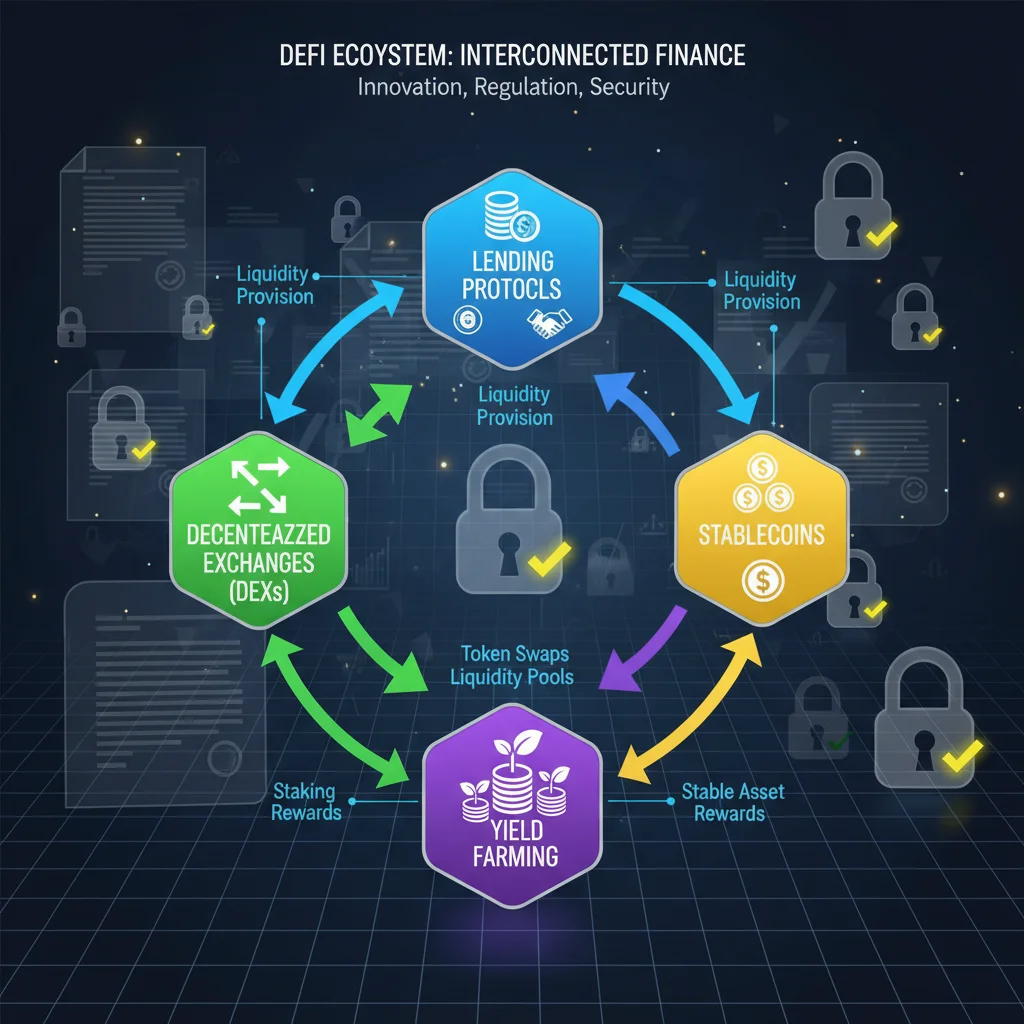
The early phase of DeFi saw rapid experimentation and the creation of novel financial instruments. Decentralized exchanges (DEXs), lending and borrowing protocols, stablecoins, and yield farming strategies quickly gained traction. US-based developers and entrepreneurs have been at the forefront, contributing to major protocols and pushing the boundaries of what’s possible with blockchain. This period was characterized by high risk, high reward, and a strong ethos of decentralization and financial sovereignty.
Regulatory Scrutiny and Uncertainty
The rapid growth of DeFi caught the attention of US regulators. Agencies like the SEC, CFTC, and Treasury Department have expressed concerns regarding investor protection, market manipulation, anti-money laundering (AML), and know-your-customer (KYC) compliance. The lack of a clear, unified regulatory framework has created significant uncertainty, often leading to a cautious approach from institutional investors and traditional financial players. This regulatory ambiguity is perhaps the single most significant factor influencing the US DeFi 2026 Outlook.
Key Drivers Shaping US DeFi by 2026
Several powerful forces will converge to shape the trajectory of DeFi in the US over the next two years. Understanding these drivers is essential for any accurate forecast.
Regulatory Framework Evolution
The most impactful driver will undoubtedly be the evolution of US regulatory frameworks. We anticipate a shift from reactive enforcement to more proactive, comprehensive legislation. This could manifest in several ways:
Clarity on Digital Asset Classification: A clear distinction between securities, commodities, and other asset classes will be paramount. This will provide much-needed guidance for projects and investors.
Stablecoin Regulation: Given their critical role in the DeFi ecosystem, stablecoins are likely to face stringent regulations, potentially requiring issuers to hold reserves in regulated institutions and undergo regular audits.
AML/KYC Implementation: While challenging for truly decentralized protocols, regulators will push for increased AML/KYC compliance at the on-ramps and off-ramps of the DeFi ecosystem, potentially through regulated intermediaries.
Consumer Protection: Expect a greater emphasis on protecting retail investors from scams, rug pulls, and excessive risk-taking within DeFi.
A well-defined regulatory environment, while potentially stifling some aspects of pure decentralization, could unlock significant institutional capital and mainstream adoption, profoundly influencing the US DeFi 2026 Outlook.
Technological Advancements and Interoperability
Blockchain technology itself is continuously evolving. By 2026, we can expect significant strides in:
Scalability Solutions: Layer 2 solutions (e.g., rollups, sharding) will become more robust and widely adopted, addressing the current limitations of transaction speed and cost on major blockchains like Ethereum. This will make DeFi more accessible and efficient for a broader user base.
Cross-Chain Interoperability: The ability for different blockchains to communicate and transfer assets seamlessly will be crucial. Protocols like Polkadot, Cosmos, and various bridge solutions will mature, allowing for a more interconnected and efficient DeFi landscape.
Enhanced Security: Continuous improvements in smart contract auditing tools, formal verification methods, and bug bounty programs will bolster the security of DeFi protocols, reducing the incidence of exploits and hacks.
Privacy-Enhancing Technologies: Zero-knowledge proofs (ZKPs) and other privacy-preserving technologies will see greater integration, allowing users to conduct transactions with enhanced privacy while still maintaining auditability for regulatory purposes.
Institutional Adoption and Traditional Finance Integration
The growing interest from traditional financial institutions (TradFi) is another critical driver. By 2026, we forecast a more pronounced integration:
Tokenized Real-World Assets (RWAs): The tokenization of tangible assets like real estate, art, and commodities will gain momentum, bringing vast amounts of capital into the DeFi space. This bridges the gap between traditional finance and blockchain.
DeFi for Institutions: Specialized DeFi protocols designed to meet institutional compliance and liquidity needs will emerge. These might offer permissioned pools or KYC-compliant interfaces.
Central Bank Digital Currencies (CBDCs): While not strictly DeFi, the development of a US CBDC could significantly impact the digital asset landscape, potentially creating new rails for financial innovation and interaction with private stablecoins and DeFi protocols.
Custodial Solutions: Institutions will require robust, regulated custodial solutions for digital assets, driving innovation and competition in this sector.
This institutional embrace will be a strong indicator of the maturation of the US DeFi 2026 Outlook.
Challenges and Roadblocks for US DeFi by 2026
Despite the immense potential, DeFi in the US faces significant hurdles that could temper its growth or alter its trajectory.
Regulatory Overreach and Innovation Stifling
While clarity is desired, overly restrictive or poorly conceived regulations could stifle innovation and drive DeFi projects offshore. A balance must be struck between protecting consumers and fostering technological advancement. The US must avoid creating a regulatory environment that makes it impossible for new DeFi projects to launch and thrive domestically.
Security Risks and Exploits
Despite technological advancements, smart contract vulnerabilities, flash loan attacks, and oracle manipulation remain persistent threats. High-profile hacks erode trust and deter mainstream adoption. Continuous efforts in auditing, bug bounties, and decentralized insurance protocols will be essential to mitigate these risks.
User Experience and Accessibility
DeFi applications often have steep learning curves, complex interfaces, and require a certain level of technical proficiency. Improving user experience (UX) and making DeFi more intuitive and accessible to the average user will be crucial for mass adoption. Simplification of onboarding, gas fee management, and wallet interactions will be key.
Decentralization vs. Compliance Dilemma
The core ethos of DeFi is decentralization, yet regulatory bodies often require identifiable entities responsible for compliance. This tension creates a fundamental dilemma for projects seeking to operate within legal boundaries while maintaining their decentralized nature. Hybrid models, where certain aspects are permissioned or overseen by DAOs with legal wrappers, might become more common.
Projected Scenarios for the US DeFi 2026 Outlook
Based on these drivers and challenges, we can envision a few plausible scenarios for DeFi in the US by 2026.
Scenario 1: Regulated Integration (Most Likely)
In this scenario, the US establishes a clear, albeit stringent, regulatory framework for DeFi. This leads to a wave of consolidation and professionalization within the industry. Institutional participation surges as legal and compliance risks are mitigated. Retail adoption grows steadily, driven by more user-friendly interfaces and greater trust in regulated offerings. Purely permissionless and anonymous protocols may face significant challenges, potentially operating in a gray area or moving offshore. Tokenized RWAs become a significant asset class, and DeFi protocols integrate more deeply with traditional finance infrastructure. This is the most optimistic yet realistic US DeFi 2026 Outlook.
Scenario 2: Fragmented and Offshore Growth
If US regulators adopt an overly aggressive or unclear stance, innovation could be stifled domestically. Many promising DeFi projects and talent might relocate to more crypto-friendly jurisdictions. The US market would see limited growth in native DeFi innovation, primarily relying on regulated, centralized entities offering tokenized products. A vibrant, albeit riskier, offshore DeFi ecosystem would continue to thrive, with US citizens potentially accessing it through VPNs or other less-regulated channels. This scenario would slow down the mainstream adoption of DeFi within the US.
Scenario 3: Hybrid Evolution and Specialization
This scenario suggests a middle ground where different segments of DeFi evolve along different paths. Highly regulated DeFi (RegFi) for institutions and large stablecoins would integrate with traditional finance, operating under strict compliance. Meanwhile, a more experimental, permissionless DeFi (PureFi) would continue to innovate, perhaps catering to a niche audience willing to accept higher risks. This would lead to a bifurcated market, with distinct use cases and user bases for each segment. The challenge would be to manage the interaction and potential arbitrage opportunities between these two worlds.
Impact on Traditional Finance and the Broader Economy
Regardless of the exact scenario, DeFi’s influence on traditional finance and the broader US economy by 2026 will be substantial.
Increased Efficiency and Reduced Costs
DeFi’s permissionless and automated nature can significantly reduce transaction costs and processing times across various financial services, from remittances to lending. This pressure will force traditional financial institutions to become more efficient, potentially adopting blockchain technology themselves or partnering with DeFi protocols.
Financial Inclusion
DeFi has the potential to offer financial services to the unbanked and underbanked populations within the US, providing access to credit, savings, and investment opportunities without traditional intermediaries. This could lead to greater economic empowerment for marginalized communities.
New Investment Opportunities
The tokenization of assets and the creation of novel financial products within DeFi will open up new investment avenues for both institutional and retail investors, diversifying portfolios and potentially generating new sources of wealth.
Disruption and Competition
DeFi poses a direct competitive threat to many traditional financial services. Banks, brokers, and asset managers will need to adapt or risk being disrupted. This competition can ultimately benefit consumers through better services and lower fees.
Conclusion: A Transformative Period Ahead for US DeFi
The next two years will be a pivotal period for Decentralized Finance in the United States. The US DeFi 2026 Outlook suggests a trajectory of significant growth and integration, albeit one heavily influenced by regulatory developments. While challenges related to security, scalability, and user experience persist, the underlying technological advancements and the increasing interest from both retail and institutional players paint a picture of an industry poised for maturation.
The most probable outcome is a regulated integration, where a clearer legal framework unlocks greater institutional capital and mainstream adoption, leading to a more robust and compliant DeFi ecosystem. This will not be a wholesale replacement of traditional finance, but rather a powerful, complementary force that drives efficiency, innovation, and financial inclusion. As blockchain technology continues to evolve, its impact on the US financial landscape will be profound, ushering in an era of unprecedented decentralization and technological empowerment in finance.
Staying informed about these developments will be crucial for investors, developers, and policymakers alike, as the decisions made today will undoubtedly shape the financial world of tomorrow.
Matheus Neiva has a degree in Communication and a specialization in Digital Marketing. Working as a writer, he dedicates himself to researching and creating informative content, always seeking to convey information clearly and accurately to the public.