Augmented Reality Retail: 2026 Strategies for 10% Sales Growth in US Brands
Unlock significant sales growth for US brands by 2026 with cutting-edge Augmented Reality (AR) retail strategies. This post details two impactful approaches: immersive product visualization and hyper-personalized shopping experiences, demonstrating their financial impact and implementation.
By: Matheus Neiva on April 2, 2026
Last updated on: July 28, 2026
Augmented Reality Retail: 2026 Strategies for 10% Sales Growth in US Brands
The retail landscape is in a constant state of flux, driven by technological advancements and ever-evolving consumer expectations. As we hurtle towards 2026, one technology stands out as a seismic force capable of reshaping how US brands interact with their customers and, more importantly, how they drive sales: Augmented Reality (AR). Far from being a mere gimmick, AR is maturing into a powerful tool for enhancing the shopping experience, blurring the lines between the physical and digital worlds. For brands looking to not just survive but thrive, understanding and implementing effective AR Retail Strategies is no longer optional – it’s imperative for achieving significant growth.
The promise of AR isn’t just about novelty; it’s about tangible financial impact. Projections suggest that the global AR and VR market in retail could reach billions of dollars, with early adopters already reporting impressive returns on investment. US brands, in particular, are uniquely positioned to capitalize on this trend, given the country’s robust tech infrastructure and sophisticated consumer base. This comprehensive guide will delve into two pivotal AR Retail Strategies that, when executed effectively, can realistically deliver over 10% sales growth by 2026. We’ll explore the ‘why’ behind these strategies, the ‘how’ of their implementation, and the expected ‘what’ in terms of financial uplift and enhanced customer loyalty.
The digital transformation accelerated by recent global events has fundamentally altered consumer behavior. Shoppers now demand more immersive, convenient, and personalized experiences. They expect to interact with products in ways that transcend traditional online static images or in-store displays. This is precisely where Augmented Reality shines. By overlaying digital information onto the real world, AR transforms mundane shopping into an engaging, interactive journey. From virtual try-ons to interactive product manuals, AR offers a spectrum of possibilities that can captivate customers and drive purchasing decisions.
For US brands, the competitive edge will increasingly belong to those who can seamlessly integrate AR into their omnichannel retail strategies. This isn’t just about e-commerce; it’s about enhancing the entire customer journey, from initial discovery to post-purchase engagement. The two strategies we will explore – Immersive Product Visualization and Hyper-Personalized Shopping Experiences – represent the vanguard of AR application in retail, offering clear pathways to measurable sales growth and a stronger brand-consumer connection.
Strategy 1: Immersive Product Visualization – Bringing Products to Life
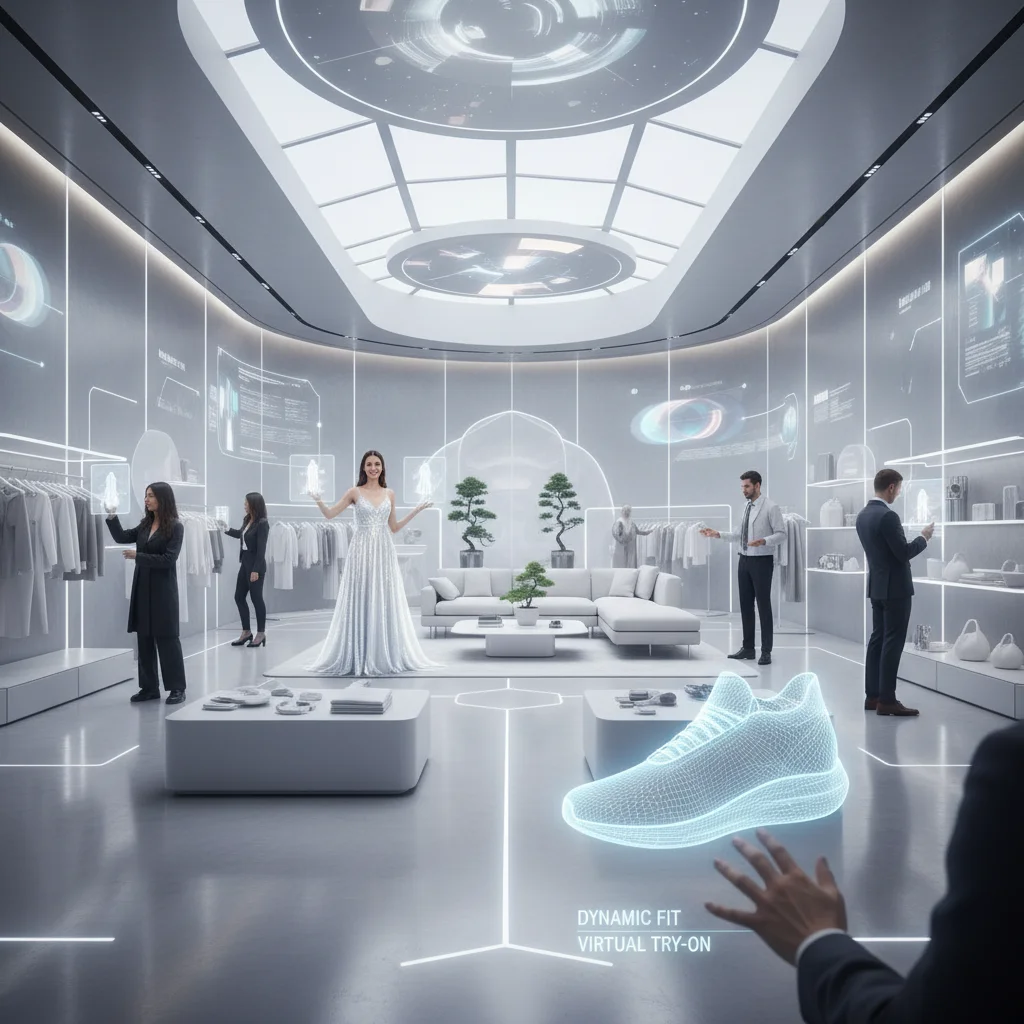
The first and perhaps most impactful of the AR Retail Strategies for driving sales growth is immersive product visualization. This strategy leverages AR to allow customers to virtually ‘experience’ products in their own environment before making a purchase. The core problem it solves is the disconnect between seeing a product online or in a catalog and understanding how it will look, fit, or function in real life. This is particularly crucial for categories like furniture, home decor, apparel, and even makeup.
Consider the challenge of buying a sofa online. Static images and dimensions can only convey so much. Will it fit in your living room? Does the color truly match your decor? Does its scale feel right? These are questions that often lead to purchase hesitation, returns, and ultimately, lost sales. Immersive product visualization with AR directly addresses these concerns, empowering customers with confidence and reducing friction in the buying process. Companies like IKEA and Wayfair have been early pioneers, allowing users to place virtual furniture in their homes using their smartphone cameras. The results have been overwhelmingly positive, with significant reductions in returns and notable uplifts in conversion rates.
How Immersive Product Visualization Drives Sales Growth
Reduced Purchase Uncertainty: By allowing customers to ‘try before they buy’ in a virtual sense, AR minimizes doubts about product suitability. This directly translates to higher conversion rates as customers feel more confident in their decisions.
Decreased Returns: A major cost for retailers, returns can be significantly curtailed when customers have a clearer understanding of a product’s appearance and fit. When a customer knows how a piece of furniture looks in their living room or how a dress fits their body shape, the likelihood of dissatisfaction post-purchase drops dramatically.
Enhanced Engagement and Dwell Time: AR experiences are inherently interactive and novel. Customers spend more time engaging with products when they can manipulate them in 3D, view them from different angles, and place them in their personal space. Increased engagement often correlates with a higher propensity to purchase.
Differentiation and Brand Innovation: Offering cutting-edge AR visualization sets a brand apart from competitors. It signals innovation and a commitment to providing a superior customer experience, attracting tech-savvy consumers and building brand loyalty.
Increased Average Order Value (AOV): When customers are more confident in their purchases, they may be more inclined to buy higher-priced items or add complementary products to their cart. For instance, if they see how a new coffee table perfectly complements their virtual sofa, they might buy both.
Implementation for US Brands by 2026
To effectively deploy immersive product visualization as one of your core AR Retail Strategies, US brands should focus on several key areas:
High-Quality 3D Models: The success of AR visualization hinges on the realism of the 3D models. Invest in creating accurate, detailed, and high-fidelity models of your product catalog. This might involve 3D scanning existing products or working with specialized 3D artists.
User-Friendly AR Applications: Whether integrated into an existing e-commerce app or a standalone solution, the AR experience must be intuitive and easy to use. It should launch quickly, track surfaces accurately, and allow for simple manipulation of the virtual objects. Compatibility across various devices (iOS and Android) is crucial.
Seamless Integration with E-commerce Platforms: The AR experience should be a natural extension of the online shopping journey. Customers should be able to easily switch from product pages to AR views and back, with clear calls to action for purchasing.
Educate and Promote: Customers need to know that this feature exists. Promote your AR capabilities prominently on product pages, social media, and marketing campaigns. Provide clear instructions or short video tutorials on how to use the AR feature.
Start with High-Value or High-Return Products: Begin by implementing AR for products that typically have high return rates or are considered high-ticket items. This allows brands to demonstrate the value of AR quickly and gather valuable data to refine their approach.
The financial impact of this strategy is considerable. A study by Shopify found that products with AR content experienced a 94% higher conversion rate compared to products without AR. For a US brand currently converting at 2-3%, even a modest increase due to AR can translate to millions in additional revenue. Coupled with a potential 10-20% reduction in returns, the net effect on profitability is significant. By 2026, brands that have mastered immersive product visualization will be those that have successfully captured a larger share of the market by offering an unparalleled shopping experience.
Strategy 2: Hyper-Personalized Shopping Experiences – Tailoring the Journey
The second essential component of successful AR Retail Strategies for 2026 is the creation of hyper-personalized shopping experiences. In an era of endless choice and information overload, generic shopping experiences fall flat. Consumers crave relevance, and AR, when combined with data analytics and AI, can deliver this at an unprecedented level. Hyper-personalization goes beyond simply recommending products; it’s about tailoring the entire shopping environment and interaction to an individual customer’s preferences, past behavior, and even real-time context.
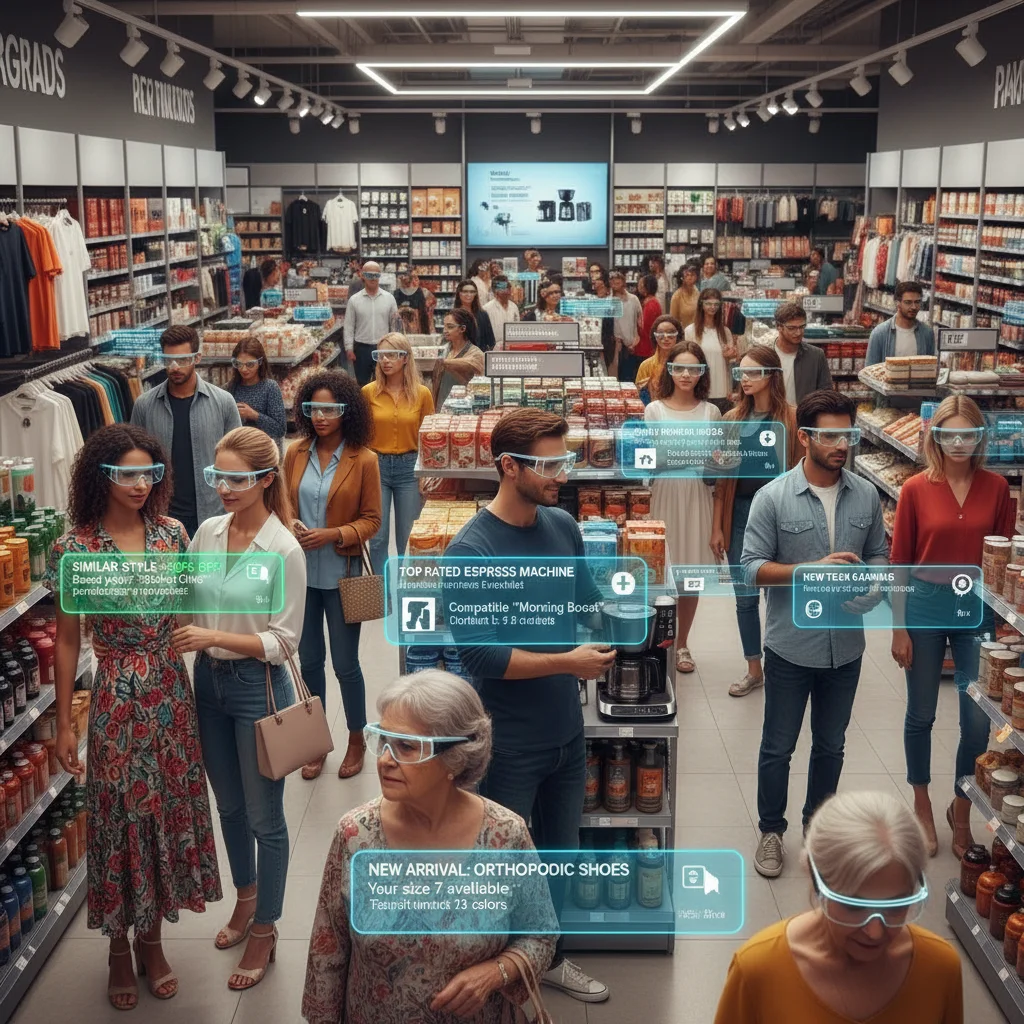
Imagine walking into a store (or browsing an online catalog) where every product recommendation, every promotional offer, and every piece of information presented is specifically curated for you. AR can facilitate this by overlaying personalized data onto the real world. For example, smart mirrors in apparel stores can suggest outfits based on your body type, style preferences, and items you’ve previously purchased. Or, an AR app could highlight products in a grocery store that align with your dietary restrictions or favorite brands.
How Hyper-Personalized Shopping Drives Sales Growth
Increased Customer Loyalty and Retention: When customers feel truly understood and valued, their loyalty to a brand deepens. Personalized experiences foster a stronger emotional connection, leading to repeat purchases and higher customer lifetime value (CLV).
Higher Conversion Rates: Presenting customers with products and offers that are highly relevant to their needs significantly increases the likelihood of a purchase. The friction of sifting through irrelevant options is removed, streamlining the decision-making process.
Upselling and Cross-selling Opportunities: AR-powered personalization can intelligently suggest complementary products or premium alternatives based on individual preferences, leading to higher average transaction values. For instance, if a customer is trying on a virtual dress, the AR system could suggest matching shoes or accessories.
Enhanced Discovery and Exploration: AR can guide customers to new products they might love but wouldn’t have discovered otherwise. By understanding their profile, the AR system can proactively present relevant items, expanding their shopping basket.
Improved Data Collection and Insights: Each personalized AR interaction provides valuable data on customer preferences, engagement patterns, and purchasing behaviors. This data can then be fed back into AI algorithms to further refine personalization strategies, creating a virtuous cycle of improvement.
Implementation for US Brands by 2026
Implementing hyper-personalized AR experiences requires a robust data infrastructure and a sophisticated understanding of customer behavior. Key steps for US brands include:
Robust Customer Data Platform (CDP): A centralized CDP is critical for collecting, unifying, and activating customer data from various touchpoints (online, in-store, social media, etc.). This data forms the foundation for effective personalization.
AI and Machine Learning Integration: AI algorithms are essential for analyzing customer data, identifying patterns, predicting preferences, and delivering real-time, relevant AR content. This includes recommendation engines, predictive analytics, and natural language processing for voice commands.
Multichannel AR Touchpoints: Personalization should be consistent across all channels. This means AR experiences in mobile apps, web-based AR (WebAR), smart mirrors in physical stores, and even AR-enabled packaging should all draw from the same personalized data profile.
Consent and Transparency: As personalization relies on customer data, brands must prioritize data privacy and transparency. Clearly communicate how data is used and ensure customers have control over their information, building trust and compliance.
Iterative Development and A/B Testing: Personalization is not a one-size-fits-all solution. Brands should continuously test different AR personalization approaches, analyze performance metrics, and iterate based on customer feedback and sales data.
The financial upside of hyper-personalization is well-documented. Accenture reports that 91% of consumers are more likely to shop with brands that provide relevant offers and recommendations. For US brands, this translates into not just increased sales but also a significant boost in customer lifetime value. By 2026, brands that have mastered personalized AR Retail Strategies will be seen as innovators who truly understand and cater to their individual customers, forging deeper relationships and securing long-term market dominance.
Measuring the 10% Sales Growth Target: Key Metrics and KPIs
Achieving a 10% sales growth target through AR Retail Strategies requires diligent measurement and analysis. US brands need to establish clear Key Performance Indicators (KPIs) to track the effectiveness of their AR implementations. Some crucial metrics include:
Conversion Rate: Track the percentage of AR users who complete a purchase compared to non-AR users.
Average Order Value (AOV): Monitor if AR experiences lead to customers buying more expensive items or adding more items to their cart.
Return Rates: Measure the reduction in product returns for items that were viewed or tried on using AR.
Engagement Metrics: Track dwell time in AR experiences, number of interactions, and feature usage. Higher engagement often correlates with higher purchase intent.
Customer Lifetime Value (CLV): Analyze if AR users exhibit higher loyalty and repeat purchase behavior over time.
Brand Perception and NPS: Conduct surveys to gauge how AR influences brand perception and Net Promoter Score (NPS).
By rigorously tracking these metrics, US brands can demonstrate the ROI of their AR Retail Strategies and make data-driven decisions to optimize their AR investments. The 10% sales growth is not an arbitrary number; it’s an achievable benchmark for brands that strategically deploy and continuously refine their AR initiatives.
Challenges and Considerations for US Brands
While the potential of AR Retail Strategies is immense, US brands must also be mindful of potential challenges:
Technological Maturity: While AR technology is rapidly advancing, ensuring seamless performance across a wide range of devices and network conditions remains a consideration.
Content Creation Costs: Developing high-quality 3D models and AR experiences can be resource-intensive. Brands need to budget appropriately and potentially leverage AI-powered 3D asset creation tools.
User Adoption: Not all customers are equally tech-savvy. Brands must provide clear onboarding and education to encourage widespread adoption of AR features.
Data Privacy and Security: Hyper-personalization requires access to sensitive customer data. Adhering to privacy regulations (like CCPA) and ensuring robust data security are paramount.
Integration Complexities: Integrating AR solutions with existing e-commerce platforms, inventory management systems, and CDPs can be complex and requires careful planning.
Despite these challenges, the competitive advantages and financial rewards of adopting advanced AR Retail Strategies far outweigh the hurdles. Proactive US brands that invest in overcoming these obstacles will emerge as leaders in the retail space by 2026.
The Future is Augmented: A Call to Action for US Brands
The convergence of advanced mobile technology, AI, and evolving consumer demands has positioned Augmented Reality as a critical driver for retail success. For US brands, the window of opportunity to establish leadership in this domain is now. The two AR Retail Strategies discussed – immersive product visualization and hyper-personalized shopping experiences – are not just futuristic concepts; they are actionable approaches that are already yielding significant returns for early adopters.
By 2026, consumers will expect more than just products; they will demand experiences. Brands that can deliver these rich, interactive, and personalized engagements through AR will be the ones that capture market share, build enduring loyalty, and achieve impressive sales growth. The journey to a 10% sales increase begins with a strategic commitment to Augmented Reality, a willingness to innovate, and a focus on delivering unparalleled value to the customer. Embrace AR, and redefine the future of retail for your brand.
Matheus Neiva has a degree in Communication and a specialization in Digital Marketing. Working as a writer, he dedicates himself to researching and creating informative content, always seeking to convey information clearly and accurately to the public.