The Ethics of AI: Policy Debates and Future Regulations in the U.S. by 2026
Delve into the critical ethical discussions surrounding AI and the evolving policy landscape in the U.S. by 2026. Gain insider knowledge on upcoming regulations and their potential impact.
By: Matheus Neiva on June 2, 2026
Last updated on: July 28, 2026
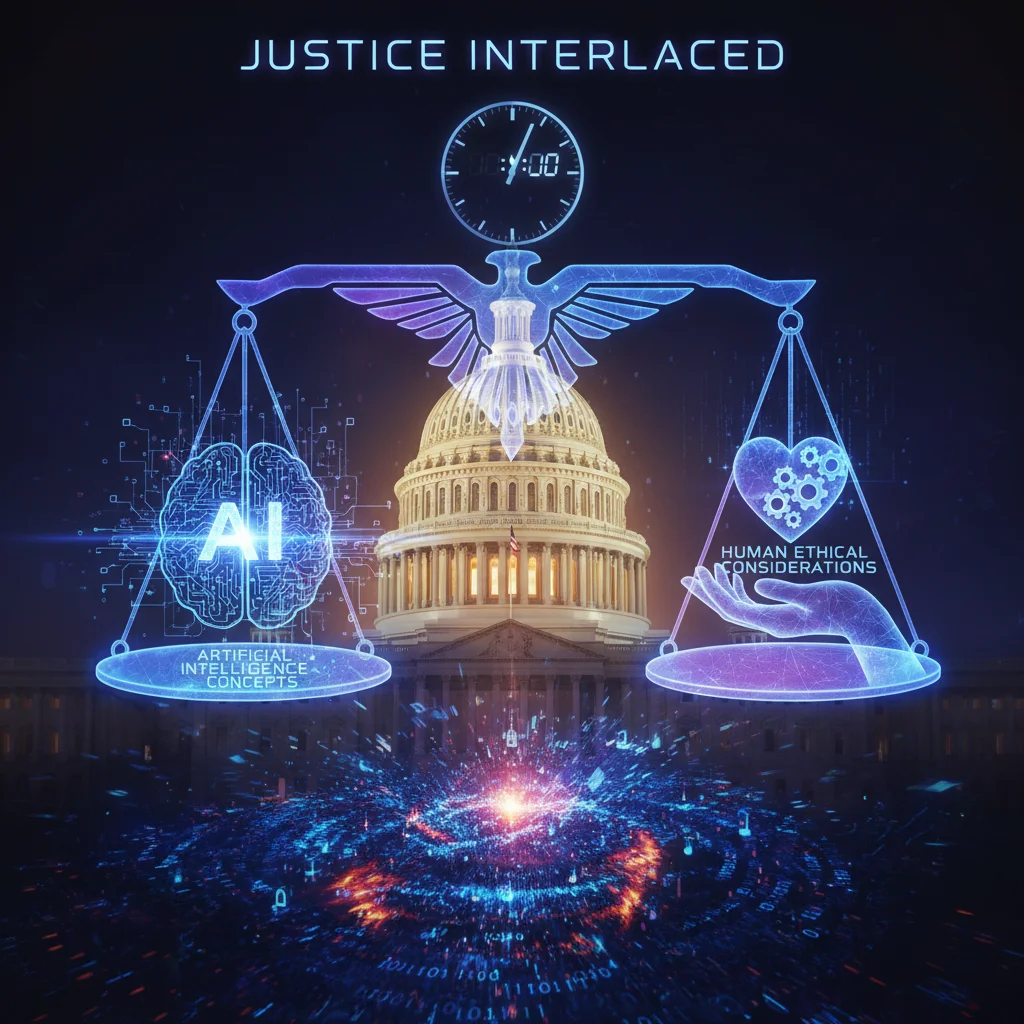
The rapid advancement of artificial intelligence (AI) has ushered in an era of unprecedented technological capability, but with it, a complex tapestry of ethical dilemmas and societal challenges. As we hurtle towards 2026, the United States finds itself at a critical juncture, grappling with how to effectively regulate this transformative technology. The debates are not merely academic; they are shaping the very fabric of our future, influencing everything from job markets and national security to fundamental human rights. Understanding the nuances of AI ethics regulation in the U.S. is no longer a niche concern but a pressing imperative for policymakers, industry leaders, and citizens alike.
This article provides an insider’s look into the intricate policy discussions, the key players involved, and the likely trajectory of AI regulation in the U.S. by 2026. We will dissect the core ethical concerns driving these debates, explore the various legislative and executive approaches being considered, and project the potential impact of these regulations on innovation, competition, and society. The goal is to offer a comprehensive, time-sensitive analysis, shedding light on what to expect as the nation strives to harness AI’s potential while mitigating its risks.
The Urgency of AI Ethics Regulation: Why Now?
The urgency surrounding AI ethics regulation stems from several converging factors. First, the increasing sophistication of AI models, particularly large language models (LLMs) and generative AI, has exposed new vulnerabilities and amplified existing concerns. These systems are capable of generating highly convincing text, images, and audio, raising questions about misinformation, deepfakes, and the erosion of trust in digital information. The potential for misuse in political campaigns, financial fraud, and even psychological manipulation is a growing worry.
Second, AI’s pervasive integration into critical sectors – healthcare, finance, defense, and infrastructure – means that algorithmic errors or biases can have catastrophic real-world consequences. A misdiagnosis by an AI-powered medical tool, a discriminatory lending decision from an AI algorithm, or a malfunction in an AI-controlled autonomous system could lead to severe harm, financial loss, or even loss of life. The black-box nature of many advanced AI systems further complicates accountability and redress mechanisms, making robust AI ethics regulation essential.
Third, the global race for AI dominance has intensified, with major powers like China and the European Union actively developing their own regulatory frameworks. The U.S. recognizes the need to establish its own comprehensive approach not only to protect its citizens but also to maintain its competitive edge and influence global AI norms. Without clear domestic guidelines, American companies could face a patchwork of international regulations, hindering innovation and market access. The window for proactive policymaking is narrowing, making 2026 a crucial benchmark for substantial progress in AI ethics regulation.
Key Ethical Concerns Driving Policy Debates
The debates around AI ethics regulation are multifaceted, but several core ethical concerns consistently emerge as central to policy discussions:
Bias and Discrimination:
AI systems learn from data, and if that data reflects historical or societal biases, the AI will perpetuate and even amplify them. This can lead to discriminatory outcomes in hiring, credit scoring, criminal justice, and more. Regulators are keen to develop mechanisms for identifying, mitigating, and redressing algorithmic bias.
Privacy and Data Security:
AI models often require vast amounts of personal data to train and operate. This raises significant privacy concerns regarding data collection, storage, use, and consent. The potential for AI to infer highly sensitive personal information from seemingly innocuous data points is a major challenge for existing privacy laws.
Accountability and Transparency:
When an AI system makes a harmful decision, who is responsible? Is it the developer, the deployer, the data provider, or the AI itself? Establishing clear lines of accountability is crucial. Furthermore, the “black box” problem – where the internal workings of complex AI models are opaque – makes it difficult to understand how decisions are made, hindering transparency and auditability.
Human Oversight and Control:
As AI systems become more autonomous, questions arise about the appropriate level of human oversight. In critical applications, ensuring that humans retain ultimate control and that AI acts as a tool rather than an unchecked agent is paramount.
Job Displacement and Economic Impact:
The potential for AI to automate tasks traditionally performed by humans raises concerns about widespread job displacement and its socio-economic consequences. Policymakers are exploring strategies to manage this transition, including workforce retraining and social safety nets.
National Security and Malicious Use:
AI has dual-use potential, meaning it can be used for both beneficial and harmful purposes. The development of autonomous weapons systems, AI-powered cyberattacks, and sophisticated surveillance technologies poses significant national security risks, driving calls for robust international and domestic controls.
These concerns form the bedrock of legislative proposals and executive actions aimed at creating a responsible framework for AI ethics regulation.
Current Landscape of AI Policy in the U.S.
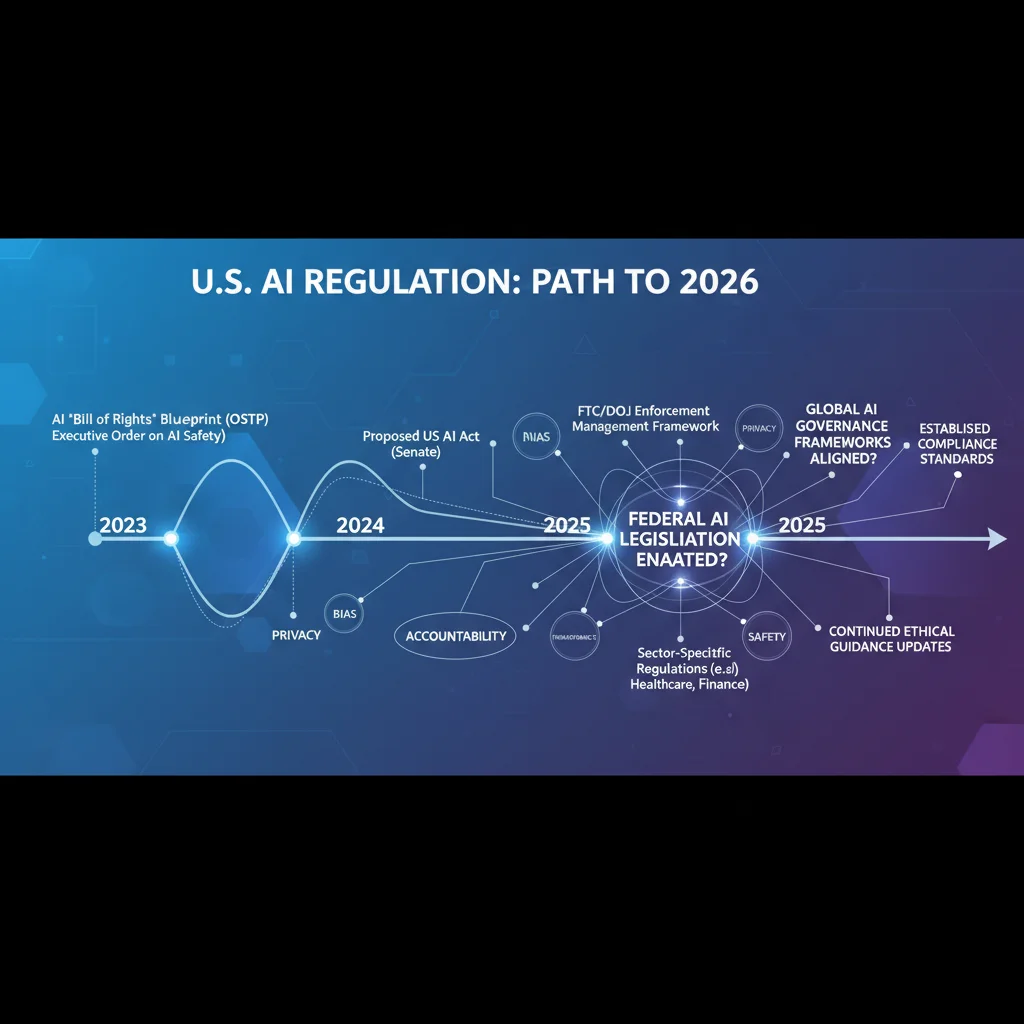
As of late 2023 and early 2024, the U.S. approach to AI ethics regulation has been characterized by a combination of executive orders, voluntary guidelines, and nascent legislative efforts. Unlike the European Union, which has pursued comprehensive, horizontal AI legislation (e.g., the AI Act), the U.S. has favored a more sector-specific or risk-based approach, often relying on existing regulatory bodies.
Executive Actions and White House Initiatives:
The Biden Administration has been particularly active. In October 2023, President Biden issued a landmark Executive Order on the Safe, Secure, and Trustworthy Development and Use of Artificial Intelligence. This comprehensive order mandates actions across various federal agencies, including:
Developing standards for AI safety and security, especially for powerful models.
Protecting American privacy by setting guidelines for data collection and use.
Advancing equity and civil rights, with a focus on mitigating algorithmic bias.
Standing up for consumers, workers, and small businesses.
Promoting innovation and competition.
Advancing American leadership abroad.
This Executive Order signals a significant shift towards a more proactive federal stance on AI ethics regulation and is expected to shape agency-level policies well into 2026. It emphasizes a “whole-of-government” approach, tasking various departments – from Commerce and Defense to Homeland Security and Justice – with specific responsibilities related to AI.
Legislative Efforts in Congress:
Congress has also been actively debating AI, with numerous bills introduced, though few have progressed to law. Bipartisan working groups have been formed, and “AI Insight Forums” have brought together tech leaders, academics, and civil society representatives to inform lawmakers. Key areas of legislative focus include:
Algorithmic Accountability: Proposals to require impact assessments for high-risk AI systems.
Data Privacy: Efforts to establish a comprehensive federal data privacy law that would inherently impact AI systems.
AI R&D Funding: Bills to boost federal investment in trustworthy AI research and development.
National AI Strategy: Calls for a clearer, unified national strategy for AI governance.
Copyright and Generative AI: Debates over intellectual property rights for content generated by AI and the use of copyrighted material for AI training.
While a broad, overarching AI bill similar to the EU AI Act is less likely by 2026 due to the U.S. legislative process and differing political philosophies, we can anticipate targeted legislation addressing specific aspects of AI ethics regulation, such as bias in critical applications or consumer protection.
The Role of Federal Agencies and Industry Self-Regulation
Beyond executive orders and legislative proposals, federal agencies play a crucial role in implementing and enforcing AI ethics regulation. Agencies like the National Institute of Standards and Technology (NIST) have been instrumental in developing voluntary AI risk management frameworks and technical standards. NIST’s AI Risk Management Framework (AI RMF), released in early 2023, provides organizations with a flexible and practical guide to manage AI risks, including those related to bias, privacy, and security.
Other agencies are leveraging their existing authorities to address AI-specific concerns:
Federal Trade Commission (FTC): The FTC is actively using its powers under Section 5 of the FTC Act (prohibiting unfair and deceptive practices) to police AI models that make false claims, discriminate, or harm consumers. They have signaled a strong intent to prevent “AI washing” and ensure transparency.
Equal Employment Opportunity Commission (EEOC): The EEOC is focused on preventing AI tools from causing discrimination in hiring and employment decisions, issuing guidance and pursuing enforcement actions where necessary.
Department of Justice (DOJ): The DOJ is examining AI’s implications for civil rights, antitrust, and criminal justice, including the use of AI in surveillance and predictive policing.
Food and Drug Administration (FDA): The FDA is developing regulatory pathways for AI and machine learning-driven medical devices, ensuring their safety and effectiveness.
Industry self-regulation and the development of best practices are also significant. Many leading tech companies have established their own internal AI ethics boards, principles, and responsible AI development guidelines. While these efforts are valuable, critics argue that they are insufficient without robust governmental oversight and enforcement, making the interplay between industry initiatives and public AI ethics regulation a key dynamic.
Challenges and Debates in Crafting AI Ethics Regulation
Crafting effective AI ethics regulation in the U.S. is fraught with challenges and intense debates:
Pace of Innovation vs. Regulation:
AI technology evolves at an incredibly rapid pace, often outstripping the ability of traditional legislative processes to keep up. This leads to concerns that regulations could be outdated before they are even implemented, stifling innovation or failing to address emerging risks.
Defining “AI” and “High-Risk AI”:
A fundamental challenge is defining what constitutes “AI” for regulatory purposes, especially given its diverse applications. Further, distinguishing between “high-risk” AI systems that warrant stricter oversight and lower-risk applications is crucial to avoid over-regulation.
Jurisdictional Complexity:
The decentralized nature of U.S. governance, with federal, state, and local authorities all having potential roles, complicates the creation of a coherent national strategy for AI ethics regulation. Different states are already exploring their own AI laws, potentially creating a fragmented landscape.
Economic Competitiveness:
There’s a constant tension between regulating AI to ensure safety and ethics, and fostering innovation to maintain global economic competitiveness. Policymakers must strike a delicate balance to avoid imposing burdens that could push AI development overseas.
Enforcement Mechanisms:
Even with regulations in place, effective enforcement requires significant resources, technical expertise, and cross-agency coordination. Building the capacity within federal agencies to monitor, audit, and enforce AI regulations is a substantial undertaking.
International Harmonization:
As AI is a global technology, achieving some level of international harmonization in AI ethics regulation is desirable but challenging, given differing values and legal systems across countries.
These debates are not easily resolved and require continuous engagement, compromise, and adaptation from all stakeholders. By 2026, we expect to see clearer positions emerge, but the underlying tensions will likely persist.
Projected Landscape of AI Ethics Regulation by 2026
Looking ahead to 2026, several key trends and developments are likely to define the U.S. landscape of AI ethics regulation:
Increased Federal Agency Action:
Building on the Executive Order, federal agencies will have developed and started implementing specific guidelines and rules for AI within their respective domains. Expect more enforcement actions from the FTC, EEOC, and DOJ related to AI bias and deceptive practices.
Targeted Legislation:
While a single, omnibus AI bill might still be elusive, targeted legislation addressing specific high-risk areas – such as the use of AI in critical infrastructure, autonomous vehicles, or certain employment decisions – is more probable. A federal data privacy law, if passed, would also significantly impact AI governance.
Emphasis on Transparency and Explainability:
There will be growing demands and potentially regulatory requirements for AI systems to be more transparent and explainable, especially in high-stakes applications. This could involve mandatory impact assessments, model documentation, and mechanisms for human review.
Workforce Adaptation Programs:
Recognizing the potential societal impact of AI on jobs, there will likely be increased federal and state investment in workforce retraining programs and initiatives aimed at preparing the labor force for an AI-driven economy.
International Collaboration (and Competition):
The U.S. will continue to engage in international dialogues on AI governance, seeking to align with allies on shared principles while also maintaining its competitive edge. Expect ongoing discussions with the EU, UK, and G7 nations on common standards.
Litigation and Legal Precedents:
As AI deployment expands, more legal challenges and lawsuits related to AI harms (e.g., discrimination, privacy breaches, intellectual property infringement) will emerge, setting important legal precedents that will further shape the regulatory environment.
By 2026, the U.S. will have moved beyond nascent discussions to a more concrete, albeit evolving, framework for AI ethics regulation. This framework will likely be characterized by a hybrid approach: a combination of executive guidance, sector-specific rules, voluntary industry standards, and a growing body of legal interpretations.
The Role of Stakeholders in Shaping AI Ethics Regulation
The development of AI ethics regulation is not solely the purview of government; it is a collaborative effort involving a diverse array of stakeholders, each bringing unique perspectives and interests to the table. Understanding their roles is crucial for appreciating the complexity and direction of policy debates.
Technology Companies:
Major AI developers and deployers are at the forefront, often advocating for flexible, innovation-friendly regulations that don’t stifle growth. Many have invested heavily in internal responsible AI initiatives, but also lobby extensively to shape legislation. Their insights into the technical capabilities and limitations of AI are invaluable, but their commercial interests must also be balanced.
Academic Researchers:
Universities and research institutions contribute critical expertise on AI’s ethical implications, technical safety, and societal impact. They often provide independent analysis, develop ethical frameworks, and help educate policymakers on complex AI concepts. Their role in informing sound AI ethics regulation is paramount.
Civil Society Organizations and Advocacy Groups:
Groups focused on civil rights, privacy, consumer protection, and labor rights play a vital role in raising awareness about potential AI harms and advocating for stronger protections. They often serve as watchdogs, holding both industry and government accountable and ensuring that the voices of vulnerable populations are heard in the policy-making process.
Legal and Ethical Experts:
Lawyers, ethicists, and philosophers contribute to the theoretical and practical understanding of AI’s implications for law, justice, and human values. They help translate abstract ethical principles into actionable regulatory language and legal frameworks.
International Bodies and Foreign Governments:
Given AI’s global nature, international cooperation is essential. The U.S. engages with organizations like the OECD, UNESCO, and G7/G20, as well as with individual countries, to share best practices and potentially harmonize aspects of AI ethics regulation.
The interplay among these stakeholders creates a dynamic environment where policy proposals are debated, refined, and often contested. The outcome by 2026 will be a reflection of these ongoing negotiations and the power dynamics at play.
Conclusion: Navigating the Future of AI Ethics Regulation
The journey towards robust and effective AI ethics regulation in the U.S. by 2026 is a complex and evolving one. It is characterized by a delicate balance between fostering innovation and safeguarding societal values, individual rights, and national security. The urgent necessity of addressing algorithmic bias, privacy erosion, accountability gaps, and the potential for malicious use of AI has galvanized action across the executive branch, Congress, and federal agencies.
While a single, sweeping legislative act may not materialize in the immediate future, the trajectory points towards a more sophisticated and multi-pronged regulatory approach. This will likely include increased enforcement by existing agencies, targeted legislation for high-risk AI applications, greater demands for transparency and explainability, and continued investment in trustworthy AI research and development. The Executive Order of 2023 serves as a foundational blueprint, guiding federal efforts and setting the tone for a more structured engagement with AI governance.
For businesses, developers, and users of AI, staying abreast of these developments is not optional but essential. Proactive engagement with ethical AI principles, adherence to emerging standards, and a keen awareness of the evolving legal landscape will be critical for navigating the opportunities and challenges that AI presents. As 2026 approaches, the U.S. is poised to establish a more defined framework for AI ethics regulation, one that aims to ensure AI serves humanity responsibly and equitably, rather than becoming a source of unintended harm or unchecked power. The debates are far from over, but the direction of travel is clear: responsible AI is the only sustainable path forward.
Matheus Neiva has a degree in Communication and a specialization in Digital Marketing. Working as a writer, he dedicates himself to researching and creating informative content, always seeking to convey information clearly and accurately to the public.